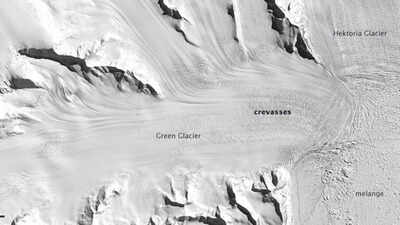
This Antarctic Hektoria glacier retreated 8 kilometres in just 60 days and shocked scientists |

A ‘lightning-fast’ melting event astonished the scientific community when researchers at the University of Colorado Boulder (CIRES) observed the collapse of the Hektoria Glacier in West Antarctica. In a period of only 60 days, the Hektoria Glacier receded 8 kilometres, the quickest observed ground retreat in recent history.“In a staggering display of glacial instability, an…

Read More

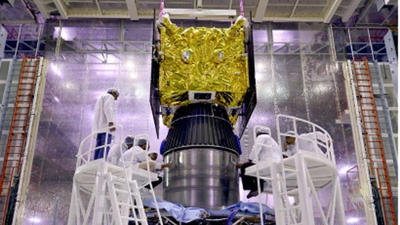
10 years in space: ISRO’s IRNSS-1F completes its 10-year mission life with lasting impact on NavIC |

Imagine a satellite moving around the Earth for an entire decade without any sound, sending precise location details to millions of people on the Earth’s surface. IRNSS-1F, one of India’s navigation satellites, completed its 10-year design mission life on March 10, 2026, marking a key milestone for the country’s regional navigation system. The Indian Space…

Read More

Why astronauts may face a hidden blood clot risk in space |

As we explore more of the universe, the physical impacts of living in microgravity continue to be one of the primary obstacles to long-term space travel. Research on Assessment of Jugular Venous Blood Flow Stasis and Thrombosis During Spaceflight suggests that astronauts may face a potential “silent” risk of developing Venous Thromboembolism during long-duration space…

Read More

South America, Africa and Europe were once connected by land routes: 120-million-year-old dinosaur fossil reveals ancient bridge |

A newly identified dinosaur fossil from Brazil is offering fresh clues about how ancient animals once moved across continents that are today separated by vast oceans. The remains belong to a previously unknown species of giant long-necked dinosaur that lived around 120 million years ago during the Early Cretaceous period. What makes the discovery particularly…

Read More