Scientists rebuilt oyster reefs in Florida; within 18 months, the wider marine animal community began returning |

Restoring damaged oyster reefs can bring back the small marine animals that depend on them. A study examined restored, living, and dead oyster reefs in Florida’s Indian River Lagoon to track how their macroinvertebrate communities changed after restoration. The researchers collected 20,087 marine invertebrates representing 41 species from 14 families. Over time, the communities on…
Read More

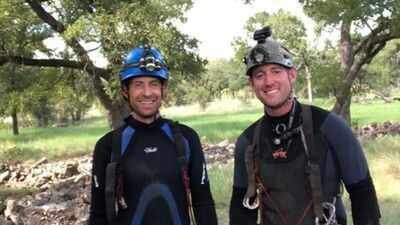
Meet John Moretti: The Texas palaeontologist who put on a wetsuit to search an underwater cave and found Ice Age animals beneath the water |

Paleontologist John Moretti (left) and caver John Young after exploring Bender’s Cave. Image Credit: John Moretti The discovery beneath Bender’s Cave in central Texas began in an underground stream where fossils lay hidden beneath the water. John A. Moretti, a palaeontologist at the University of Texas in Austin, and caver John Young investigated bones preserved…

Read More

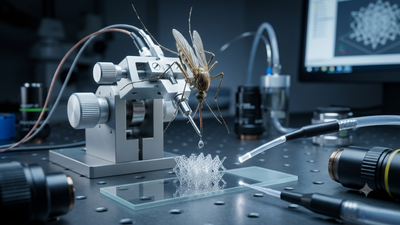
Scientists used a dead mosquito’s tiny proboscis as a 3D-printer nozzle; its natural shape solved a microscopic engineering problem |

A mosquito’s proboscis is built for a very different job from manufacturing. It is a tiny biological structure designed to move through skin and handle fluid at a scale that is difficult to reproduce with conventional engineering. Now, researchers have found a way to put that natural geometry to work after the insect is dead.The…

Read More

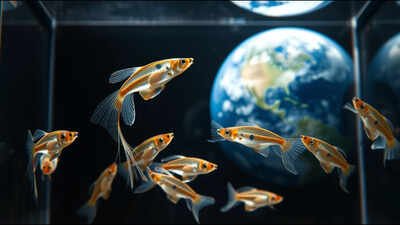
Three pregnant guppies spent five days in space in 1983; one later gave birth to 25 normal fry and six more broods |

Representative Image of pregnant guppies in a small aquarium, with embryos developing inside them and Earth in the background (AI Generated Image) On December 14, 1983, the Soviet Union launched an unmanned biosatellite called Cosmos 1514, carrying more than 60 experiments from nine countries, including 2 rhesus monkeys, 10 pregnant rats and a small group…

Read More

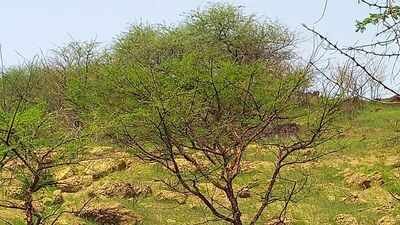
Sudan planted Acacia senegal across drylands; years later, older plantations had more carbon but grasslands still held more soil moisture |

Acacia Senegal. Image Credit: Wikipedia Planting trees in Sudan’s drylands changed the soil in ways that became clearer as the plantations grew older. Acacia Senegal gradually built up more organic carbon and improved the soil’s ability to hold water for plants. A 2018 study titled ‘Changes in soil hydraulic properties, soil moisture and water balance…

Read More

Rowan Atkinson bought an Oxfordshire property in 2006; 16 years later, he finally moved into the Richard Meier-designed glass house |

Rowan Atkinson, Image Credits: Wikimedia Commons In 2006, Rowan Atkinson bought Handsmooth House, a 1930s property set on about 16 acres in Ipsden, Oxfordshire, for a reported £2.6 million. Rather than preserve the existing house, Atkinson wanted to replace it with a completely different kind of home. He eventually commissioned American architect Richard Meier, whose…

Read More

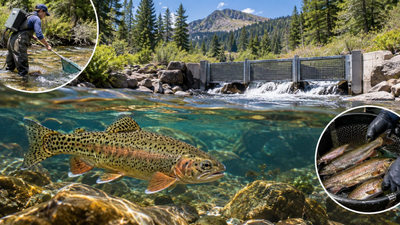
Arizona’s Apache trout was pushed toward extinction by habitat loss and non-native trout; after decades of recovery it was delisted, and a new barrier protects 22 miles of habitat

Representative Image (AI-generated) Arizona’s Apache trout has made a remarkable recovery after decades of pressure from habitat degradation, overfishing and introduced trout. The native fish was once close to disappearing from the cold mountain streams of eastern Arizona, but long-term conservation led by the White Mountain Apache Tribe and supported by state and federal partners…

Read More

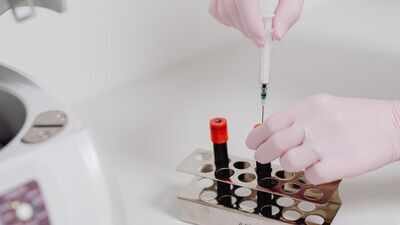
Researchers tested 30 nanometre magnetic particles on 94 blood samples; they detected amoxicillin allergy with 98 percent sensitivity, versus about 17 percent for a standard commercial test

A new blood testing platform could make it easier to identify people who are genuinely allergic to amoxicillin, one of the most widely used penicillin antibiotics. Researchers tested 30 nanometre magnetic particles on blood samples from 94 people, including 50 patients with confirmed amoxicillin allergy and 44 who tolerated the drug. The experimental system detected…

Read More

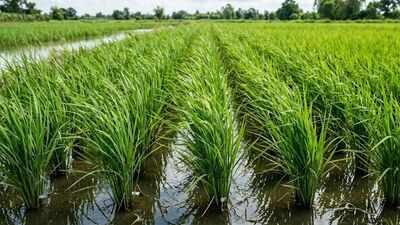
Scientists turned rice plants into tiny power sources; the system also cut methane emissions from paddy cultivation |

In the rice fields, the soil around plant roots is home to countless microorganisms that feed on organic matter released by the plants. As microorganisms break down this organic matter, they release electrons that can produce a small electrical current. Researchers are investigating whether this process can be harnessed without affecting normal rice growth. According…

Read More

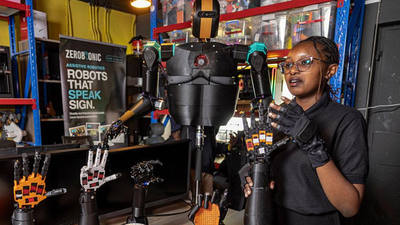
A 22-year-old Kenyan engineer built 3D-printed robotic hands from recycled plastic; she now translates teachers’ voices into sign language for deaf children |

A 22-year-old Kenyan engineer has developed robotic hands designed to help deaf children follow classroom lessons by converting teachers’ spoken words into sign language in real time. Norah Kimathi, co-founder of Nairobi-based startup ZeroBionic, developed the technology to address communication barriers faced by deaf students, particularly when learning science, mathematics and other STEM subjects. The…

Read More