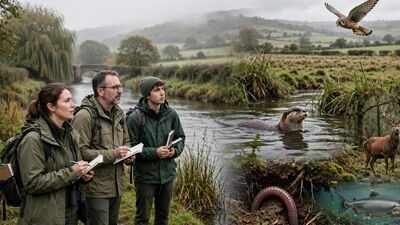
Scientists asked volunteers to live like earthworms, otters and kestrels for weeks; the strange experiment changed how they saw human landscapes |

Human activities can look very different through the senses of a wild animal. A pioneering project in Somerset invited 18 volunteers to see the landscape from the perspective of red deer, otters, earthworms, kestrels and Atlantic salmon. Over six months, they spent time around the River Tone near Taunton, exploring the risks these animals may…

Read More

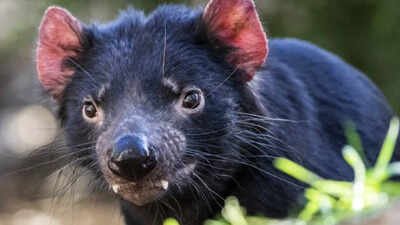
In 2012, Tasmania moved 15 devils to Maria Island to protect the species from facial-tumour disease; after 28 were released by 2013, a 3,000-pair penguin colony disappeared

The facial tumour had severely affected devil populations in many parts of Tasmania In 2012, 28 Tasmanian devils were brought to Maria Island off Tasmania’s east coast as an “insurance population” when facial tumour disease was severely affecting the species. The devils have since thrived, with their numbers reaching up to 90. But their success…

Read More

Scientists removed trout from a California mountain lake; the recovery was visible not just in frogs, but in insects and birds |

In the high-elevation lakes of California’s Sierra Nevada, trout introduced into mountain lakes are affecting more than the water itself. Researchers studied 39 lakes in Sequoia and Kings Canyon National Parks, comparing bird abundance with aquatic insects emerging from the water. A study published in Ecosphere titled ‘Crossing boundaries: Introduced trout alter the bird community…

Read More

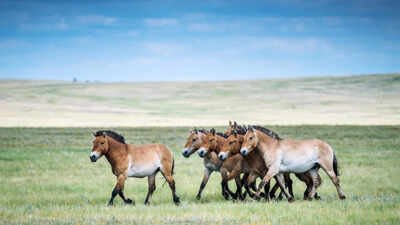
World’s only truly wild horse was once extinct in the wild; 40 years ago China began making efforts to bring it back, and now their population tops 900 and are independently reproducing

​2025 monitoring data showed the horses were reproducing without constant human intervention. The Przewalski’s horse, considered the world’s last truly wild horse, has returned to China’s grasslands after once disappearing from the wild in the country. Forty years after China began its Wild Horse Return Program, the population of the species has grown to about…

Read More

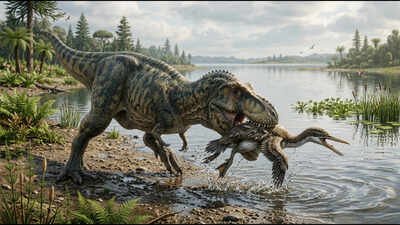
A 66-million-year-old feather was found inside dinosaur poop; it may explain how birds survived the asteroid that killed the dinosaurs

Tyrannosaur preying on an ancient diving bird (Representational AI photo) A 66-million-year-old feather found inside fossilised dinosaur poop may offer a clue to why some birds survived the asteroid impact that wiped out most dinosaurs. Scientists say the feather belonged to a hesperornithiform, an extinct group of aquatic birds that lived alongside dinosaurs.The feather was…

Read More

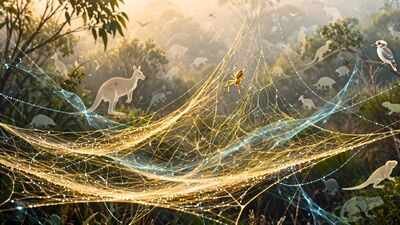
Scientists collected 49 spider webs in Australia; their DNA revealed 85 vertebrate species hiding nearby |

Spider webs may hold a surprising record of the animals living nearby. A study found that genetic traces from terrestrial vertebrates can be collected directly from spider webs, turning the structures into passive filters for environmental DNA. Researchers tested 49 webs from an Australian wildlife sanctuary and Perth Zoo and detected vertebrate DNA in every…

Read More

India needs to launch the space act it keeps scrubbing

India’s growing space industry needs an umbrella Space Act for legal support. India needs a Space Act. It needed it yesterday!The country opened its space sector in 2020, created IN-SPACe to authorise and regulate their activities, and subsequently put in place the Indian Space Policy 2023 and a framework for non-governmental entities. The industry is…

Read More

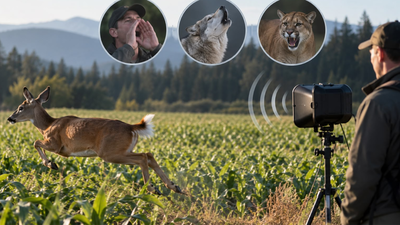
Scientists played human shouts, wolf and cougar calls near British Columbia crop fields; deer fled 64% of the time from human voices, but quickly learned to ignore the deterrents

What scares a deer away from a crop field, a wolf howl, a cougar call or the sound of a human shouting? A 2025 study by researchers from the University of Alberta and King’s University found that, among the sounds tested, human shouts produced the strongest flight response in both deer and elk. But the…

Read More

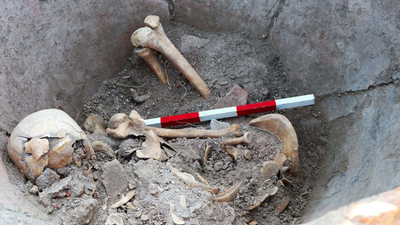
A man climbed inside a giant Roman storage jar around 1,600 years ago and never came out; archaeologists think they know what he was hiding from

More than 1,600 years ago, as fire engulfed a Roman settlement in what is now Bulgaria, a young man appears to have made a desperate decision: he climbed inside a huge storage jar and hid. He never came out. Archaeologists uncovered his remains inside the vessel during excavations at the ancient Roman colony of Deultum…

Read More