Meet Kianoosh Nawai, the West Virginia eighth-grader who built a low-cost 3D-printed bionic hand and became his state’s only finalist in a national STEM contest

Nawai has been selected as one of 30 finalists in the 2026 Thermo Fisher Scientific Junior Innovators Challenge Kianoosh Nawai, an eighth-grader at West Virginia Virtual Academy, wanted to explore how technology could help people with disabilities. His project led him to design and build a 3D-printed prosthetic hand that aims to offer a lower-cost…
Read More

Dublin thought a 13th-century Norman castle had been demolished about 150 years ago; a researcher has now shown its walls, courtyard and medieval features were hiding inside a university building all along

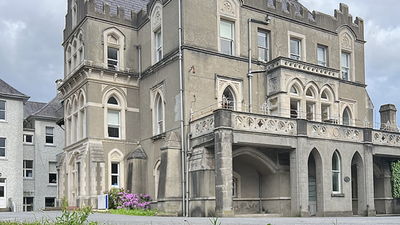
A medieval castle believed to have disappeared around 150 years ago has turned out to be hiding in plain sight inside a university building in Dublin, with researchers finding that its ancient walls and courtyard survived beneath the later structure.The discovery concerns Roebuck Castle on the Belfield campus of University College Dublin (UCD). The Norman…

Read More

Three Harvard students built a low-cost infrared headset designed to screen athletes for possible concussions in about 60 seconds; it won the $6,500 US James Dyson Award but still needs validation

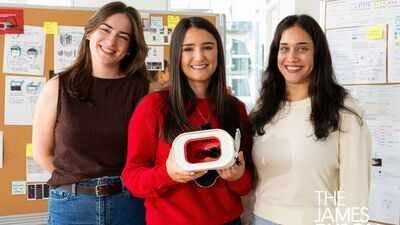
Harvard students– Radhika Saran, Cleo Pontone and Sophia DeVito– build $6,500 award-winning headset to screen athletes for concussions in 60 seconds Three Harvard students have built a low-cost infrared headset that can screen athletes for possible concussions in about 60 seconds, bringing objective eye-tracking data from the clinic to the sideline. Their invention, called Rumble…

Read More

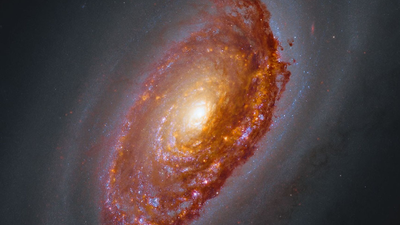
NASA’s Webb telescope captured the Black Eye Galaxy in unprecedented detail; its opposing gas streams reveal a violent cosmic past

At first glance, Messier 64 looks like a classic spiral galaxy. Its bright centre is wrapped in sweeping arms, while a broad, dark band of dust cuts across one side of its nucleus, giving it the distinctive appearance that earned it the nickname Black Eye Galaxy. But beneath that familiar spiral shape lies something much…

Read More

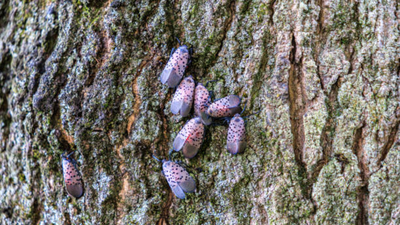
An invasive insect first found in Pennsylvania in 2014 spread across 18 US states; Canada has now confirmed its first spotted lanternfly detection in Windsor, putting grape-growing regions on alert

Canada has recently confirmed the first detection of spotted lanternfly in the country. On September 15, 2026, the Canadian Food Inspection Agency (CFIA) confirmed the first detection of SLF in Canada in Windsor, Ontario. Movement restrictions have been placed to prevent the movement of regulated materials, including potentially infested plant materials. Moreover, surrounding areas are…

Read More

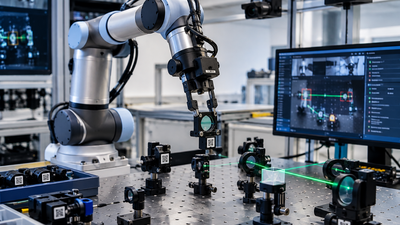
MIT’s robotic optics lab built a working laser cavity in 50 maneuvers and under 30 minutes; when researchers moved components, it realigned them automatically with micron-scale precision

Representative Image (AI-generated) A robot has assembled a working tabletop laser cavity in less than 30 minutes, handling the precise alignment usually done manually. Massachusetts Institute of Technology’s (MIT’s) researchers have developed a reconfigurable robotic optics laboratory that can pick up and position mirrors, lenses and other components, fine-tune them with micron-scale precision and even…

Read More

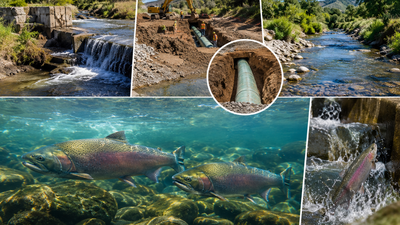
In 2025, California buried a gas pipeline 20 feet below Alameda Creek and removed its final 8-foot barrier; that same week, Chinook salmon reached this part of the watershed for the first time since the 1950s

Representative Image (AI-generated) A barrier that had blocked migratory fish for decades disappeared in California in 2025, and salmon soon followed the newly opened route. Crews relocated a Pacific Gas & Electric (PG&E) natural-gas pipeline and buried the new section about 20 feet below Alameda Creek near Sunol, then removed the concrete structure that had…

Read More

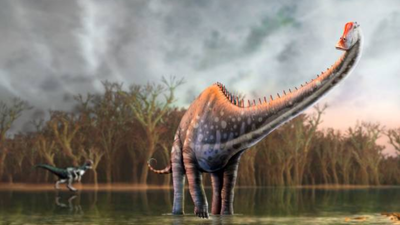
North America loses its monopoly on dinosaur fossils; fourteen tail vertebrae just turned up in Spain and experts have identified it as Diplodocus

Palaeontologists in Spain have discovered the first confirmed Diplodocus fossils outside of North America, marking the first-ever discovery outside the area. For 150 years, every confirmed bone of the animal came from one place, the Morrison Formation of western US. But recently, Sergio Sanchez Fenollosa and his colleagues found the same anatomical signature in a…

Read More

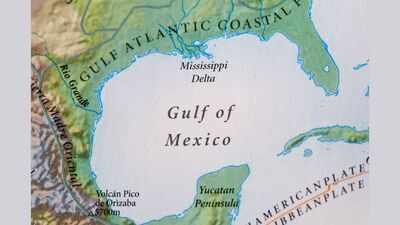
A new study found human activity adds more nitrogen than all natural sources combined in a quarter of the world’s coastal waterways, with the Gulf of Mexico among the major hotspots

Coastal waters that feed billions of people with food, jobs and recreation are being pushed past their limits by a surge of human-made nitrogen. A new studytitled ‘Coastal Nitrogen, Phosphorus, and Silicon Sources: Integrating Land, Sea, and Human Inputs’ led by Washington State University estimates that in about one in four of the planet’s coastal…

Read More