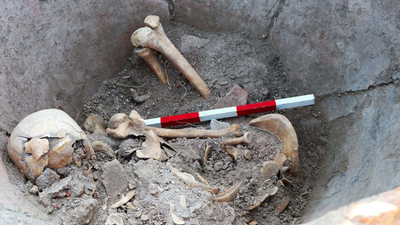
A man climbed inside a giant Roman storage jar around 1,600 years ago and never came out; archaeologists think they know what he was hiding from

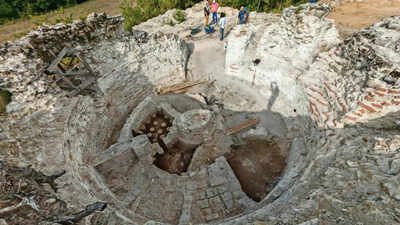
More than 1,600 years ago, as fire engulfed a Roman settlement in what is now Bulgaria, a young man appears to have made a desperate decision: he climbed inside a huge storage jar and hid. He never came out. Archaeologists uncovered his remains inside the vessel during excavations at the ancient Roman colony of Deultum…
Read More

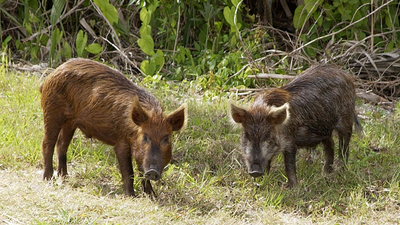
In the 1850s, pigs brought to Santa Cruz Island became feral; golden eagles drawn by piglets helped drive foxes down 95%, then 5,036 pigs were removed as foxes rebounded to 1,300+

An ambitious conservation project off the coast of California has helped save the endangered Santa Cruz Island fox from near extinction. The rescue effort involved removing 5,036 feral pigs, allowing the native island fox (Urocyon littoralis santacruzae) population to recover from fewer than 100 animals to more than 1,300 across the 96-square-mile island. According to…

Read More

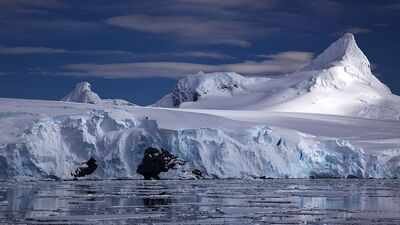
Scientists drilled nearly 1 kilometre into an Antarctic glacier and found meltwater can make the ice suddenly move 20% faster |

Glacier in Antarctica. Image Credit: Jason Auch/Wikipedia Scientists have directly linked surface meltwater to a sudden increase in the speed of an Antarctic glacier, after drilling deep into Langhovde Glacier in East Antarctica. The study titled ‘Acceleration of an Antarctic outlet glacier driven by surface meltwater input to the base,’ found that water from melting…

Read More

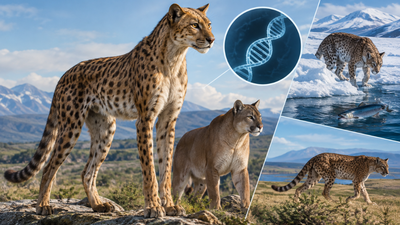
For decades, scientists thought North America had its own cheetah; ancient DNA reveals the extinct cat split from the puma lineage 2.6 million years ago

Representative Image (AI-generated) Its appearance told one story; its DNA tells another. For decades, the extinct Miracinonyx trumani was known as the “American cheetah” because its long legs, slender body and adaptations for speed made it look remarkably similar to Africa’s modern cheetahs. But a new genetic study has overturned that long-held picture. Published in…

Read More

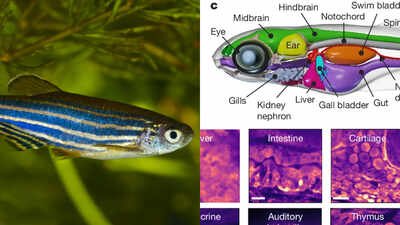
Scientists built a system that watches activity across nearly every cell of a living vertebrate at once; transparent zebrafish revealed body-wide signals moving between organs

The system is called WHOLISTIC, short form for Whole Organism Live Imaging System for recording Tissue and IntraCellular activity. The body is never truly quiet. Even when an animal appears to be resting, billions of cells are sending signals, responding to changes and coordinating with organs far beyond their immediate surroundings. For scientists, the challenge…

Read More

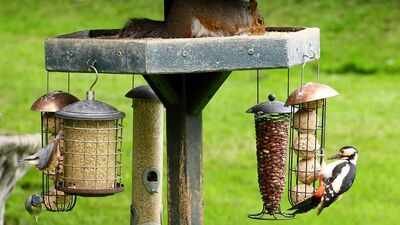
Food and water feeding centres for wild birds can highly increase the risk of a deadly parasite |

A busy bird feeding station. Image Credit: Tim Felce/Wikimedia Commons Food and water stations intended to help wild birds may also help a potentially deadly parasite spread between species, according to a study published in Molecular Ecology. Researchers found that Trichomonas gallinae, a parasite that causes trichomonosis, was widespread among birds and in shared food…

Read More

Around AD 310, a Roman emperor had a private bath built with three pools, heated floors and a sauna; archaeologists have now uncovered its unusual design

The bath was incorporated directly into the emperor’s palace, with its heating system, bathing areas and sophisticated architecture working together within a relatively compact space. Nearly 1,700 years ago, an emperor could retreat from the demands of the Roman court without leaving his palace. Beneath a monumental tower in what is now eastern Serbia, he…

Read More

Archaeologists found a shellfish-covered island in Fiji dating back 1,200 years, possibly created by ancient food processing |

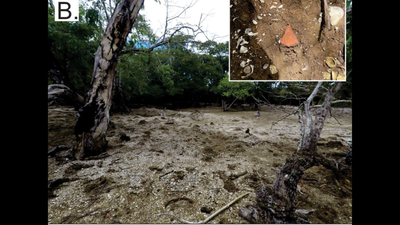
PC: Study: Shell-Dense Island Off Culasawani, Vanua Levu Island, Fiji: Midden or Muddle? Archaeologists investigating Fiji’s Vanua Levu have identified a small coastal island whose sediments are made up largely of discarded shellfish remains. The site, near Culasawani on the island’s north coast, covers about 3,000 square metres and contains a shell-rich deposit that makes…

Read More

Scientists turned coconut waste into a water-cleaning material. It removed 95.5% of textile dye in 80 minutes |

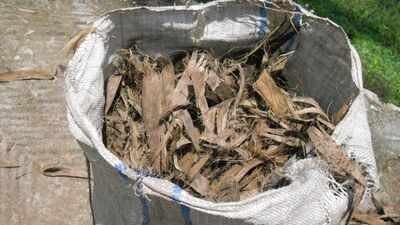
Coconut Husk. Image Credit: Wikimedia Commons Royal Society of Chemistry(RSC) Advances published a study which found that green coconut husk waste could remove 95.5% of Congo red dye from water within 80 minutes. The researchers modified the coconut-derived lignin by adding nitrogen-containing groups, creating what they called aminated lignin. Under the best conditions tested, only…

Read More