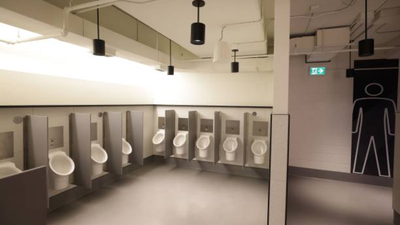
Dutch scientists pipe office urine into bacteria-filled cells that generate electricity and recover nitrogen and phosphorus, while a related system can produce hydrogen

Pee breaks are one of the most relaxing times in the office when you finally get to have some sane moments to yourself. Which is why most employees take numerous such breaks within a day. But what if your normal pee break had you secretly contributing to the generation of electricity?Two hundred and sixty men…
Read More

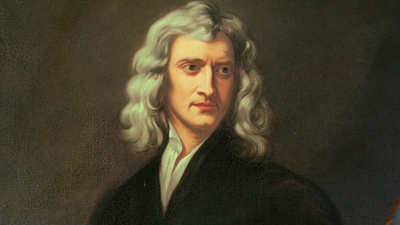
Quote of the day by Isaac Newton: “Truth is ever to be found in simplicity, and not in the multiplicity and confusion of things” |

Isaac Newton, one of history’s most influential scientists, spent much of his life trying to understand the laws governing the natural world. His work transformed physics, mathematics and astronomy, but his approach to discovery was rooted in careful observation, experimentation and the search for underlying principles. One of his enduring observations was that truth is…

Read More

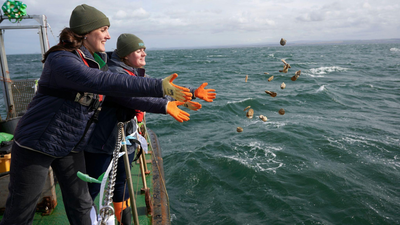
A Scottish river project set out to revive oysters that once covered an area the size of Edinburgh; now, 60,000 have been returned |

A Scottish restoration project has returned 60,000 native oysters to the Firth of Forth, reviving a species that once formed vast oyster beds across an area roughly comparable to the size of Edinburgh. The Restoration Forth partnership originally aimed to return 30,000 European flat oysters to the estuary, but the target was later doubled after…

Read More

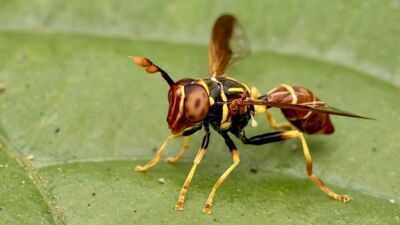
Meet Franklin Howley-Dumit Serulle, the amateur naturalist whose online insect photo helped reveal a new hoverfly species |

PC: Swiss Academy of Sciences A photograph shared online has helped scientists identify a hoverfly species that had remained a mystery for years. The insect, named ‘Monoceromyia ndidiae’, was photographed in the Dominican Republic and posted on iNaturalist. Its unusual appearance caught the attention of an entomologist, who began asking whether the fly represented something…

Read More

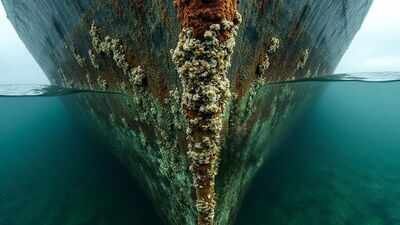
From 2012 to 2022, nearly 30,000 commercial vessel arrivals brought 430 sq km of submerged hull surface to Alaska; biofouling habitat grew 50%, increasing invasive-species risk

Biofouling happens when marine organisms attach to or occupy submerged parts of a vessel The submerged surfaces of nearly 30,000 commercial vessels arriving in Alaska over 11 years created more opportunities for marine organisms to hitchhike to new locations, according to a research.The study, published in Frontiers in Marine Science, examined 29,799 commercial vessel arrivals…

Read More

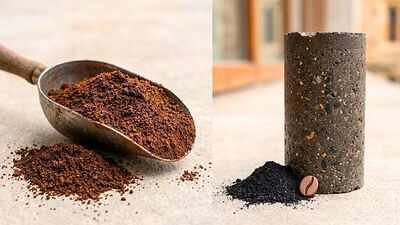
Australian researchers heated used coffee grounds to 350°C and turned them into material that made concrete 29% stronger, replacing part of the sand |

After a cup of coffee is brewed, the grounds left behind are often discarded as waste. But researchers have found a way to turn them into a useful material for concrete. A 2023 study examined whether spent coffee grounds (SCG) could replace part of the sand used in concrete after being converted into biochar through…

Read More

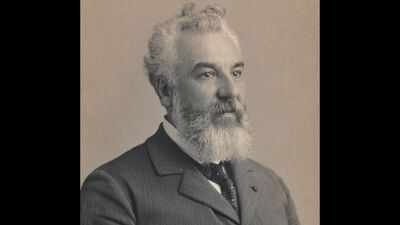
Quote of the day by Alexander Graham Bell: “Concentrate all your thoughts on the task at hand. The sun’s rays do not burn until…” – lesson about turning potential into results |

Quote of the day by Alexander Graham Bell (Image: Wikipedia) In an age of constant notifications, endless open tabs and competing priorities, Alexander Graham Bell’s words feel genuinely surprising in how modern they still sound. “Concentrate all your thoughts on the task at hand,” he said. “The sun’s rays do not burn until brought to…

Read More

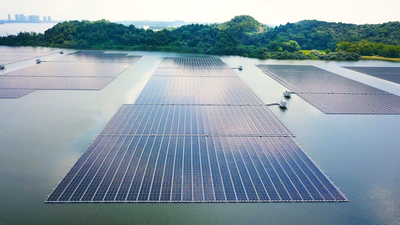
Singapore covered a reservoir with 122,000 floating solar panels; it now powers 5 water-treatment plants and cuts 32,000 tonnes of CO₂ every year |

Singapore has turned part of a reservoir into a giant renewable-energy installation, covering about one-third of Tengeh Reservoir with more than 122,000 floating solar panels spread across 10 floating islands. The 45-hectare Sembcorp Tengeh Floating Solar Farm has a capacity of 60 MWp and generates electricity used to support five local water-treatment plants. The project…

Read More

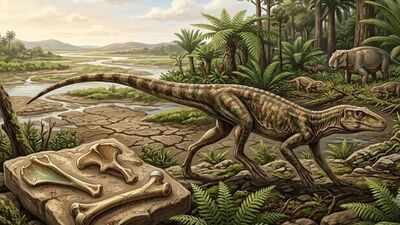
A 240-million-year-old fossil disappeared for 20 years, then its rediscovery revealed a new reptile related to dinosaurs and crocodiles |

A fossil found in southern Brazil is giving researchers a closer look at the reptiles that lived near the beginning of the archosaur lineage, the group that would eventually include dinosaurs and crocodile-line animals. The animal has been named ‘Silescelida acristata’ and is identified as an early-diverging eucrocopodan archosauriform from the Middle Triassic. A recent…

Read More

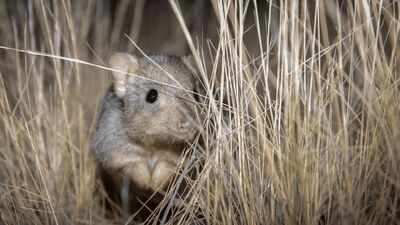
Australia brought digging mammals back to an 8,000-hectare sanctuary; 8 years later, scientists found they had reshaped underground insect communities |

Image Credit: Brad Leue/AWC Australia’s effort to bring digging mammals back to an 8,000-hectare wildlife sanctuary has produced changes below the surface. Researchers studying Scotia Sanctuary in south-eastern Australia found that 8 years after reintroduced mammals were given access to areas, the communities of insects emerging from the soil had changed. The mammals, including greater…

Read More