Ugandan communities planted 4,053 trees beside one of Africa’s great rainforests; now the new forest is rebuilding a damaged wildlife buffer |

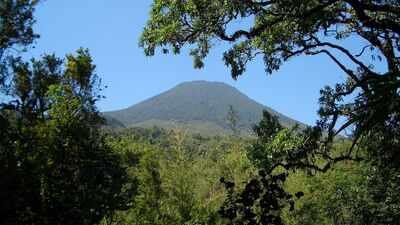
Bwindi Impenetrable Forest. Image Credit: Ron Van Oers/Wikipedia Communities living beside Uganda’s Bwindi Impenetrable National Park have planted 4,053 agroforestry trees across 40 hectares of land, beginning the restoration of a damaged buffer zone around one of Africa’s most important rainforest landscapes. The work aims to improve habitat, support local livelihoods and reduce pressure on…
Read More

Volunteers removed nearly 100,000 sea urchins in Norway; the underwater deserts are now turning into forests with fish nurseries returning |

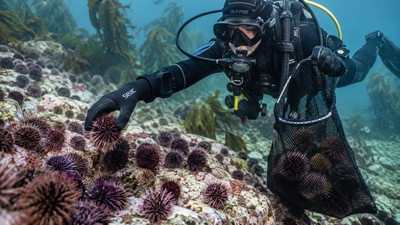
Nearly 100,000 sea urchins have been removed from three coastal sites in northern Norway by almost 500 volunteers working to bring back underwater kelp forests. Between April 2024 and May 2026, Rissa Citizen Science organised 23 restoration events at Sørsjetéen, Telegrafbukta and Øksfjord, with divers spending more than 20,000 minutes underwater clearing urchin barrens. The…

Read More

Scientists analysed thousands of immune cells from ordinary blood samples without adding dyes; their imaging method identified activated cells with nearly 94% accuracy within 2 hours

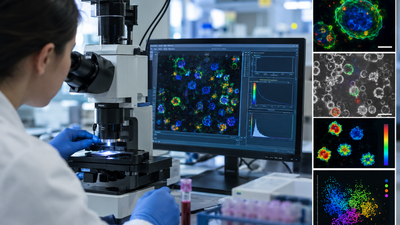
Representative Image (AI-generated) A routine blood sample contains a surprisingly detailed record of what the immune system is doing. Scientists have now demonstrated a way to read some of that information without adding fluorescent dyes or other chemical labels. The approach examines the natural light emitted by molecules inside immune cells, allowing researchers to assess…

Read More

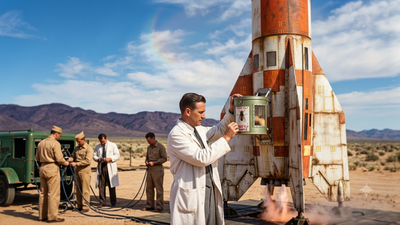
In 1947, fruit flies were sent into space using captured German rocket. Decades later, NASA studied how space affects immunity |

A tiny insect became one of the earliest living passengers sent towards space, long before astronauts were routinely orbiting Earth. In 1947, fruit flies were loaded onto a captured German V-2 rocket in New Mexico as scientists began testing what happened to life above the atmosphere. The experiment was primitive by modern standards, but it…

Read More

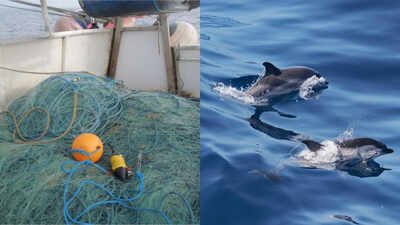
Underwater sensors caught a rare event off Cornwall: one porpoise became trapped in a net while two animals exchanged possible distress calls

Bycatch, the accidental capture of animals in fishing gear is considered the world’s greatest direct human-caused threat to dolphins and porpoises. Off the coast of Cornwall, a set of underwater sensors was listening to the ocean when it detected something researchers rarely get to see. According to an online report by Phys Org, two harbor…

Read More

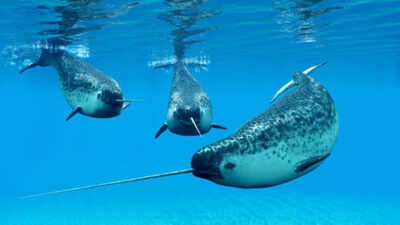
A narwhal can grow a single 10-feet tooth through its upper lip; scientists used 3D X-rays and 3 particle accelerators to discover how nature’s only straight tusk stays straight

An international team of biologists, chemists and physicists has used sophisticated 3D X-ray technology to investigate the tooth at an unprecedented level. A unicorn may be a mythical creature, but nature made something very similar under the Arctic ice. Wondering what? Well, the narwhal has a strange tusk that can reach nearly 10 feet long…

Read More

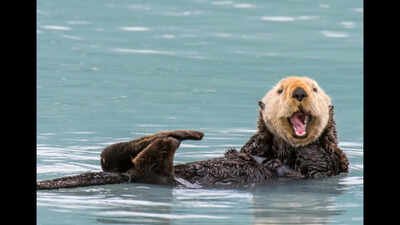
Sea otters returned to a polluted California estuary in 1984; eelgrass expanded 600%, while marsh-edge erosion later slowed by 69% on average

Sea otters returned to California’s Elkhorn Slough in 1984 when pollution had severely affected its ecosystem. When sea otters returned to California’s Elkhorn Slough in 1984, the estuary was already facing severe environmental pressure. The coastal wetland had high nutrient levels linked to its agriculture-dominated watershed, while eelgrass had fallen to an all-time low of…

Read More

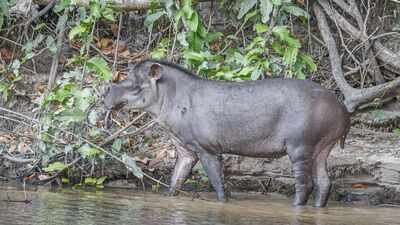
Brazil restored a former cattle landscape with native trees; decades later, lowland tapirs returned after disappearing for 100 years |

South American tapir. Image Credit: Charles J. Sharp/Wikipedia A former cattle landscape in Brazil’s Atlantic Forest has been transformed into a thriving wildlife refuge through years of restoration and the planting of native trees. At the Guapiaçu Ecological Reserve in Rio de Janeiro State, land that was once cleared and used for grazing has gradually…

Read More

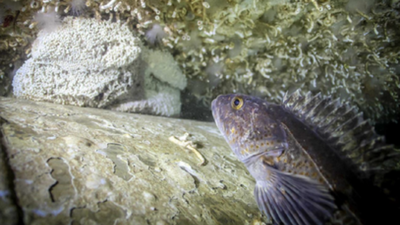
In 2015, Canada sank a 113-metre retired warship off British Columbia; five years later, monitoring had recorded more than 170 marine species on the wreck

A lingcod guards its egg mass on the Annapolis (Image Credit: Michel Joseph via Artificial Reef Society of British Columbia) A retired Canadian warship that was deliberately sunk off British Columbia in 2015 has become an artificial reef supporting a growing community of marine life. The former HMCS Annapolis, measuring 113.1 metres in length, was…

Read More

Human hair, receipts, fishing nets, and eggshells were among 17 waste materials tested to create stronger, lower-carbon cement building products |

Cement is one of the most widely used materials in construction, but its production comes with a high environmental cost. Circular Design Cement, a 2026 James Dyson Award project, is exploring a new approach to construction materials. The project uses everyday waste and industrial byproducts as recycled aggregates in cement-based materials designed for architectural applications….

Read More