
Quote of the day by Alexander Fleming: “I did not invent penicillin. Nature did that. I only discovered…” – why one accident changed the history of medicine |

Two scientists can notice the exact same odd result in a failed experiment and walk away from it completely differently. One sees a ruined sample, clears it off the bench, and moves on to the next attempt. The other stops, looks closer, and asks what could have caused something that was never supposed to happen….

Read More

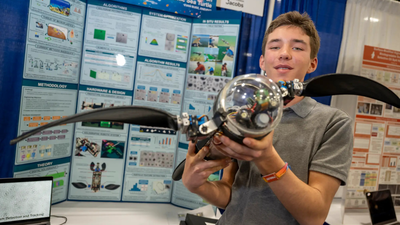
Meet Evan Budz: The 16-year-old Canadian who built an AI-powered robot turtle to detect microplastics with 94% accuracy |

At just 16 years old, Canadian student Evan Budz has developed an autonomous AI-powered robot turtle that could help scientists tackle one of the world’s fastest-growing environmental problems: microplastic pollution. Inspired by the graceful swimming of a snapping turtle he encountered during a family camping trip, Budz spent nearly 4,000 hours designing and refining a…

Read More

Thousands of idle ships trapped near the Strait of Hormuz could become floating nurseries for invasive marine species and spread them worldwide when trade resumes |

(Representative Image) Image source: Getty Images Having escalated into open hostilities on February 28, 2026, the current United States and Iran war has been going on for nearly five months. In this period, the Strait of Hormuz, the only open-ocean exit for major producers like Saudi Arabia, Iran, Iraq, Kuwait, and the UAE has been…

Read More

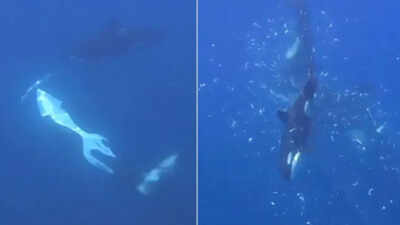
Orcas in the Gulf of California were filmed using a coordinated ramming technique that made a giant sunfish break into thousands of pieces, possibly to help a juvenile feed

The animals worked together to hold and ram giant sharp-tail sunfish. (Picture: Live Science) Orcas have been filmed using a hunting technique that scientists say has not been recorded before. Researchers observed the marine predators working together to hold and ram a giant sunfish so forcefully that its body broke into thousands of small pieces.The…

Read More

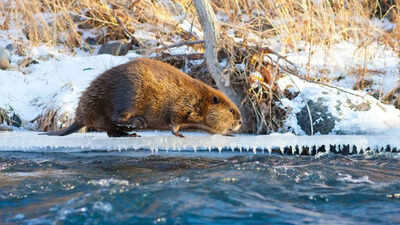
Arctic: Climate change is making Beavers expand into Canada’s Arctic, where their dams are changing the landscape

North American beavers began colonising parts of Arctic in 2008. (Getty images) Beavers who are normally found in forests and woodlands, are steadily moving farther north into the Canadian Arctic. A new study has found out when they reached different parts of the Arctic by studying scars on shrubs and comparing them with satellite images…

Read More

Quote of the day by Marie Curie: “I was taught that the way of progress was…” – why real progress is never as fast as we expect |

Two people can start the same ambitious project and expect completely different timelines for it to pay off. One assumes real progress should be visible within weeks, gets discouraged when it isn’t, and quietly abandons the work. The other accepts from the outset that meaningful results might take years, and keeps going long after the…

Read More

Gunaikurnai Rituals: Grass burned for magic, healing and cursing: 25,000-year-old cave discovery reveals ancient Australian rituals

For 25,000 years, the GunaiKurnai (an Australian Aboriginal nation) people carried grass into Cloggs Cave and burned it. Archaeologists have finally found physical evidence that proves the ritual existed. These people burned the grass as part of rituals tied to magic, healing and the spiritual realm. Researchers unearthed layers of ash rich in phytoliths, microscopic…

Read More