Scientists found 31 new species in the ocean’s vast midwater zone, including nine new jellyfish using underwater robots and new imaging technology |
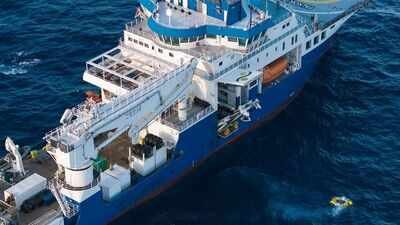
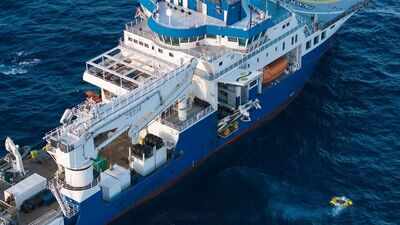
An international team of marine scientists has discovered 31 new species in the ocean’s vast midwater zone during an expedition in the tropical South Atlantic off the coast of Brazil. The two-week mission aboard Schmidt Ocean Institute’s research vessel Falkor (too) brought together specialists who used underwater robotics, advanced imaging systems and genetic analysis to examine animals living between the sunlit surface and the seafloor. The discoveries included nine jellyfish, seven siphonophores, seven comb jellies, four larvaceans, an amphipod, a gossamer worm and two giant single-celled rhizarians. The expedition also achieved a first for seagoing research by capturing living internal cellular structures in 3D. The work shows how much remains hidden in the midwater, an enormous habitat that scientists say is difficult to explore because of its sheer size, depth and inaccessibility. Even familiar-looking creatures can hide details that change scientific understanding.
What makes the ocean’s midwater so difficult to explore
The midwater is the enormous region of the ocean between the sunlit upper waters and the seafloor. According to the Schmidt Ocean Institute’s expedition report, it is Earth’s largest and least explored habitable ecosystem. Its immense volume and difficult-to-reach depths make studying the animals that live there particularly challenging.Many of its inhabitants are also extremely delicate. Jellyfish, siphonophores and other gelatinous animals can be easily damaged when they are collected using conventional methods. This can make it difficult for scientists to understand what the animals actually look like in their natural state. The expedition therefore brought together researchers with different areas of expertise and gave them access to technologies designed to study these fragile creatures without disturbing them too much.The University of Alaska Fairbanks, in its report on the expedition, noted that scientists can sometimes take decades to identify and formally describe new species. On this cruise, however, the combination of specialist knowledge, advanced imaging and genetic analysis allowed 31 species to be confirmed as new within days.
Which new species were found during the expedition
The discoveries revealed an unusually wide variety of life forms. The Schmidt Ocean Institute reported that the newly identified species included one ‘amphipod,’ a small crustacean related to crabs and lobsters, as well as a previously undescribed ‘gossamer worm.’ The researchers also identified 9 new ‘jellyfish’ species and ‘7 siphonophores,’ which are colonies made up of specialised organisms and are related to jellyfish and corals.7 new ‘comb jellies,’ or ctenophores, were also identified. These animals are known for the rows of tiny hair-like structures they use to move through the water, which can produce a striking glittering effect. 4 new ‘larvaceans’ were among the discoveries as well. These small, tadpole-like animals create mucus houses that help them filter food from the surrounding water. Despite their simple appearance, larvaceans are more closely related to humans than they are to many other invertebrates.The final two discoveries were giant ‘rhizarians’, single-celled organisms large enough to be seen without a microscope. Together, the findings demonstrated the remarkable variety hidden within the midwater environment.
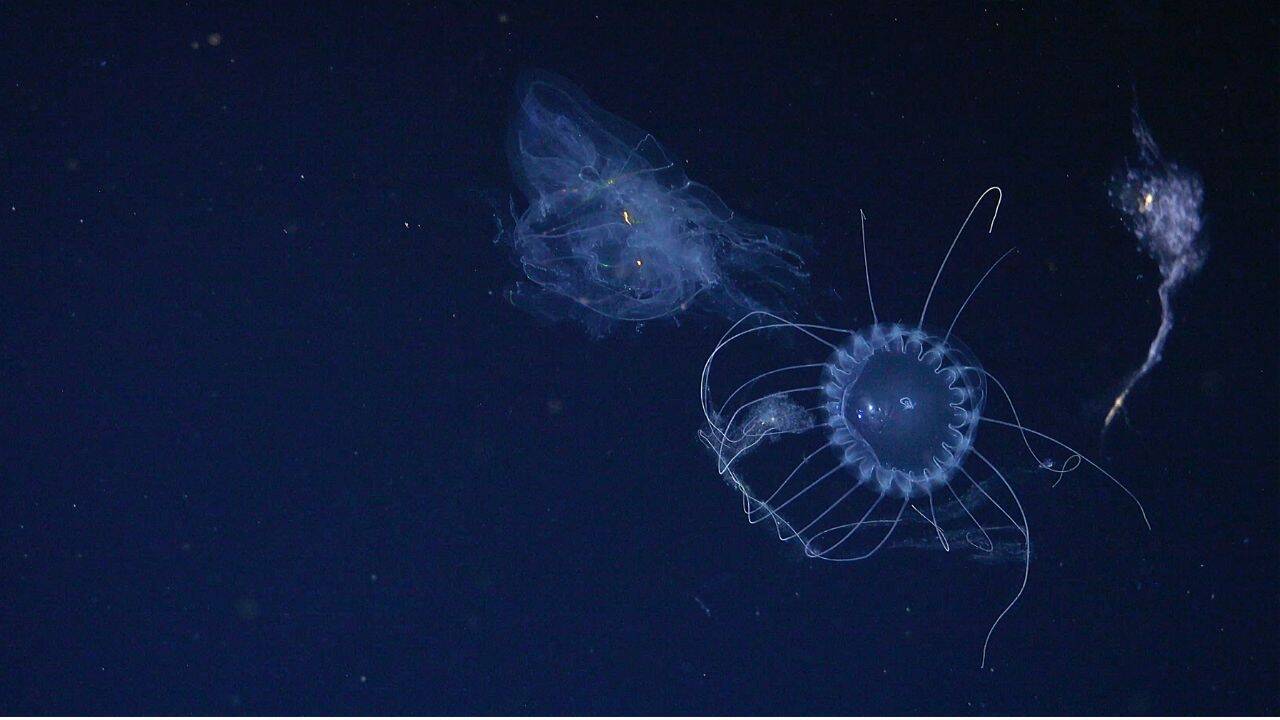
A Solmissus, or dinner plate jellyfish, preys upon a ctenophore, commonly known as a comb jelly. Image Credit: ROV SuBastian / Schmidt Ocean Institute
How did underwater technology help scientists identify the species
A major part of the expedition’s success came from the remotely operated vehicle ‘SuBastian,’ which carried several advanced imaging systems into the deep ocean. The Schmidt Ocean Institute explained that two of the main instruments, known as DeepPIV and EyeRIS, used lasers to scan marine animals and create detailed 3D-images. These systems allowed scientists to study the shape and structure of animals without necessarily having to collect them.A shadowgraph camera developed by the Japan Agency for Marine-Earth Science and Technology added another layer of detail. It could capture features that were not visible in the 3D scans, helping researchers examine fine external and internal structures. This approach was particularly useful for gelatinous animals whose soft bodies can be damaged during collection. Instead of relying entirely on physical specimens, scientists could examine high-resolution images made while the animals were still in the water.

Dr. Dhugal Lindsay of JAMSTEC (Japan Agency for Marine-Earth Science and Technology) installs a shadowgraph camera on ROV SuBastian. Image Credit: Alex Ingle / Schmidt Ocean Institute
Why was genetic analysis important
The expedition did not rely on appearance alone to determine whether an animal was new to science. Scientists also sequenced genomes from specimens collected aboard Falkor (too). According to the Schmidt Ocean Institute, this genetic information was combined with the high-resolution images to help researchers identify new species rapidly.The University of Alaska Fairbanks highlighted the importance of this approach because there is a shortage of specialists capable of identifying unusual marine animals. Russ Hopcroft, a UAF professor who took part in the expedition, labelled 4 previously undescribed midwater species ranging from around half a centimetre to two centimetres long. Having taxonomists and other specialists from countries including Japan, Australia and Brazil working together meant that animals could be examined by people familiar with different groups of marine life.
What other discovery made the expedition unique
The expedition produced another scientific first beyond the discovery of new species. Researchers used an open-source confocal microscope developed at Stanford University, called ‘Squid,’ to examine living internal cellular structures in 3D while still at sea. The Schmidt Ocean Institute reported that the microscope was used to study a large single-celled organism known as a ‘protist.’ Scientists could see how its internal cellular structure interacted with its glass skeleton.This provided a close look at the biology of an organism adapted to life in the deep ocean, where darkness and intense pressure create demanding conditions. The expedition also used other specialised equipment, including a ‘virtual reality chamber’ and a device known as a ‘gravity machine,’ which functions like a microscopic treadmill for studying microbes in controlled conditions.
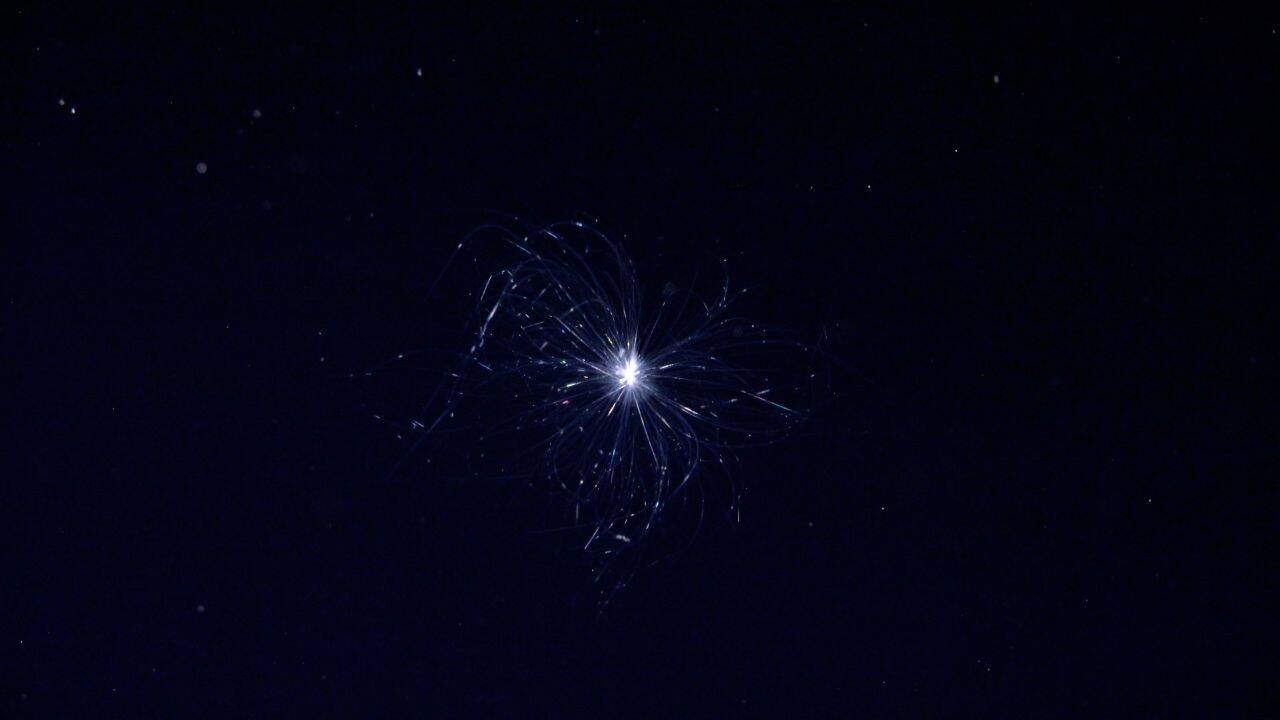
The expedition science team documented this Hastigerinella at a depth of 630 meters. Hastigerinella is a foram, a single-celled ocean organism large enough to be seen with the naked eye. Image Credit: ROV SuBastian / Schmidt Ocean Institute
What do the discoveries reveal about life in the deep ocean
The findings suggest that the midwater contains far more biological diversity than scientists have been able to document so far. Researchers observed more organisms, and a greater variety of them, than they had expected during the expedition. Among the encounters was a ‘pelagic octopus’ feeding on a bright red jellyfish at about 800 metres below the surface.Understanding which animals eat one another and how they interact can reveal how the midwater ecosystem works. The expedition also demonstrates how new technology can change marine research. Instead of simply bringing animals back to the surface, scientists increasingly have tools that allow them to observe delicate creatures in three dimensions and examine their structures in much greater detail. As the Schmidt Ocean Institute noted, the technology used during the cruise offers a glimpse of how marine scientists may study this hidden world in the future.