Meet the snail that can rebuild a complete eye from scratch in just 30 days |
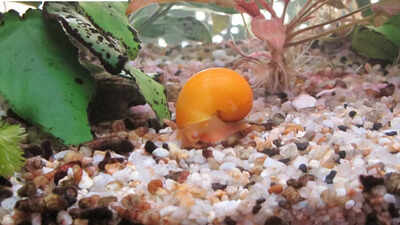
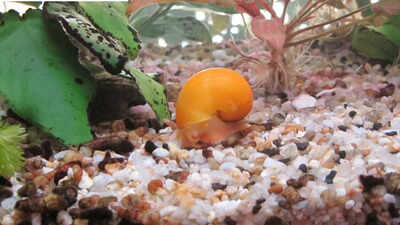
A freshwater snail that can regrow a fully formed eye is beginning to attract quiet attention from researchers studying vision loss. The golden apple snail, Pomacea canaliculata, can rebuild a complete camera-type eye even after it has been entirely removed. Few animals are known to do this, especially in adulthood.The findings were reported in Nature Communications. Scientists describe the snail as the first genetically workable species shown to regenerate the entire structure of a camera type eye. They also developed gene editing tools for it, opening the way to test which genes are active during rebuilding rather than simply observing the outcome.
Regrows eyes in 30 days: The snail behind a new blindness breakthrough debate
The snail’s eye contains a cornea, lens and layered retina arranged in a single chamber. Light passes through the cornea and is focused by the lens onto the retina. Under magnification, the retinal tissue shows organised layers of photoreceptor cells. A defined optic nerve connects the eye to the nervous system.Although the animal is an invertebrate, parts of its eye architecture resemble that of vertebrates. Certain genes switch on in patterns that researchers recognise from other species with image-forming vision. The similarity is not exact, but it is close enough to make the snail useful in laboratory studies.
Regeneration unfolds over several weeks
When an adult snail loses an eye, the wound surface seals within about a day. Cells begin gathering at the site and divide steadily. A blastema forms, a cluster of unspecialised cells that will later differentiate into eye tissue.Within roughly two weeks, visible structures start to reappear. A lens can be identified. Retinal layers take shape. The optic nerve begins to reconnect. Even after four weeks, gene activity has not fully returned to the pattern seen in an uninjured eye, suggesting the tissue is still maturing. Behavioural tests to confirm how well the restored eye functions are ongoing.
Gene editing links regeneration to known eye genes
Researchers adapted CRISPR Cas9 tools specifically for Pomacea canaliculata. When they disrupted the gene pax6 in embryos, the snails did not develop eyes. Pax6 is widely recognised as a key regulator of eye formation in many animals, including humans.Its role in the snail points to shared developmental pathways. Future experiments will look at whether the same genes are required not only for forming the eye in embryos but also for rebuilding it in adults.
A possible model for studying organ repair
Some fish and amphibians can repair parts of the retina or lens, but full regeneration of a complete camera type eye has not been documented in adult vertebrates. The apple snail appears to fill that gap.It is small, breeds throughout the year and now has stable mutant lines available for study. For scientists interested in how complex organs might be rebuilt after severe injury, this species offers a system that can be tested directly rather than inferred from partial repair.