Meet Peter Beck: Rejected by NASA and Boeing, the self-taught engineer who built a $2.9 billion space company without a college degree |
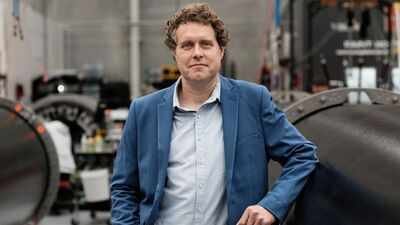
Peter Beck never earned a university degree or landed the aerospace job he hoped would launch his career. Instead, the New Zealand engineer turned rejection into an opportunity that reshaped his future. After an unsuccessful trip to the United States in 2006, where attempts to gain experience with organisations including NASA and Boeing fell short, Beck returned home with a different plan: build his own rocket company, he revealed in an interview with CNBC.He founded Rocket Lab later that year, growing it from a small New Zealand start-up into one of the world’s leading commercial space firms. Today, Rocket Lab is the third most frequent orbital launch provider globally, while Beck’s fortune has climbed to an estimated $2.9 billion, making him one of New Zealand’s richest entrepreneurs despite taking an unconventional path into the aerospace industry.
How Peter Beck built engineering skills without a university degree
Beck grew up fascinated by engineering and rockets, but he chose an unconventional route. As reported by Aerospace Industries Association (AIA), Instead of attending university, he began an apprenticeship as a precision engineer at New Zealand appliance manufacturer Fisher & Paykel in 1993.The hands-on work gave him experience designing machinery, analysing products and solving manufacturing problems. Away from work, his attention remained fixed on rockets. He spent years experimenting with model rockets, propulsion systems and increasingly ambitious projects, teaching himself through trial, testing and repeated failures.After roughly a decade in manufacturing, Beck joined a government research institute where he worked on advanced composite materials and engineering programmes involving technologies such as wind turbines and superconductors. Even then, rocketry remained his personal pursuit rather than his profession.
Peter Beck’s failed attempt to join NASA and Boeing
Reportedly, in 2006, Beck travelled to the United States hoping to find a place inside the aerospace industry. He visited facilities connected with organisations such as NASA and Boeing, believing that his engineering projects and practical experience might help him secure an internship or technical role. The visit turned out very differently.As a foreign visitor asking detailed questions about rockets at highly secure sites, Beck drew suspicion instead of interest. He has since recalled being escorted away from several rocket laboratories rather than being invited inside. Looking back, he acknowledged that the situation understandably raised concerns from a security standpoint.The disappointment, however, produced an unexpected insight. During his visits, Beck realised there were very few companies focused on building lightweight launch vehicles dedicated to placing small satellites into space. That gap stayed with him long after he boarded his flight home.
How Peter Beck founded Rocket Lab after returning home
The return flight to New Zealand became a turning point. Instead of thinking about how to join an existing aerospace company, Beck began sketching out plans for one of his own. He even drafted an early version of Rocket Lab’s logo on a napkin before landing. Rocket Lab was founded later that year.Starting a rocket company in New Zealand sounded ambitious enough. Doing it without a university degree, a large investor network or an aerospace background made the challenge even greater.
How Rocket Lab survived despite limited funding
Finding financial backing proved far more difficult than designing the early technology. According to Rocket Lab official reports, Beck initially sought around $5 million to get Rocket Lab moving, but investors were hesitant. At the time, commercial launch companies were rare. SpaceX itself was still in its infancy, and the idea of funding another private rocket business particularly one based in New Zealand appeared risky to many investors.Because funding came in gradually, Rocket Lab learned to operate with limited resources. Every engineering decision mattered, budgets stayed tight and efficiency became part of the company’s culture rather than simply a management philosophy.Beck has often said those early financial constraints helped shape Rocket Lab into a disciplined engineering organisation.
The first steps into space
Reportedly, Rocket Lab reached its first major milestone in 2009 with the successful launch of Atea-1, believed to be the first commercially developed rocket launched from the Southern Hemisphere to reach space. The achievement demonstrated that Beck’s vision could move beyond experimental projects.Attention then shifted towards developing Electron, a small orbital launch vehicle designed specifically for the growing number of customers sending compact satellites into orbit. Instead of competing immediately in the heavy-lift market, Rocket Lab focused on providing dedicated launches for smaller payloads that often struggled to find space aboard larger rockets.The company also adopted manufacturing techniques that distinguished it within the aerospace industry. Electron introduced 3D-printed rocket engines, electric pump-fed propulsion systems and lightweight carbon-composite fuel tanks, helping reduce manufacturing time while supporting a higher launch cadence.
Rocket Lab built its own private launch site in New Zealand
Rocket Lab’s ambitions soon extended beyond launch vehicles. Reportedly, the company established Launch Complex 1 on New Zealand’s Mahia Peninsula, creating one of the world’s few privately operated orbital launch sites. Developing the facility required new legal agreements between New Zealand and the United States so that American launch technology could legally be used from foreign soil.Those efforts gave Rocket Lab greater control over launch schedules while allowing it to expand commercial operations.As the business grew, its headquarters moved to Long Beach, California, reflecting its increasingly international customer base.
Scaling a space business
Growing from one successful rocket into a company capable of launching regularly presented an entirely different challenge.Beck has described building the first rocket as only the beginning. Manufacturing rockets consistently, maintaining reliability and increasing launch frequency demanded entirely new systems and processes. Engineers who once concentrated on a single launch now had to support continuous production.Rocket Lab gradually expanded beyond launch services into satellites, spacecraft components and wider space systems for commercial companies, defence customers and government agencies.Among its missions was launching a NASA satellite bound for the Moon, illustrating how the company had progressed from its modest beginnings.
Rocket Lab grew into the world’s third busiest orbital launcher
As reported by Reuters, Rocket Lab went public in 2021 through a special purpose acquisition company (SPAC) merger that valued the business at approximately $4.1 billion.Since then, the company has continued expanding its position within the commercial space sector. According to the official reports by Rocket Lab, during 2025, Rocket Lab generated approximately $600 million in revenue, reflecting growing demand across launch services, satellite systems and spacecraft manufacturing.The company has become the third most frequent orbital launch provider globally, trailing only SpaceX and China’s government-backed launch programme. Its next major step is Neutron, a larger reusable rocket designed to carry heavier payloads and compete in markets traditionally dominated by much larger launch providers.
Peter Beck net worth 2026
Rocket Lab’s growth has transformed Beck’s personal fortunes alongside the company.According to Forbes’ Real-Time Billionaires List on 30 July 2026, Beck has an estimated net worth of $2.9 billion, placing him among the world’s wealthiest entrepreneurs. He owns nearly 10% of Rocket Lab, with most of his wealth tied to the company’s performance.Now 49, Beck remains a New Zealand citizen and continues to lead Rocket Lab as its founder and chief executive. Married with two children, he has built one of the country’s most successful technology businesses despite never earning a university degree.
Recognition beyond business
Over the years, Beck has received several honours recognising his contributions to engineering and aerospace. He has been awarded medals by the Royal Aeronautical Society and the Royal Society of New Zealand, while the University of Auckland appointed him an adjunct professor of aerospace engineering.In 2024, he was made a Knight Companion of the New Zealand Order of Merit for services to the aerospace industry, business and education.