Inside Earth’s ‘black box’ in Tasmania: A doomsday project built to capture the end of the modern world |
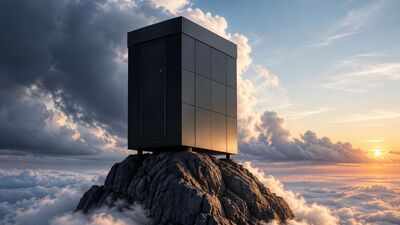
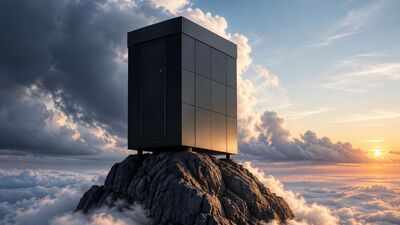
In a quiet stretch of Tasmania’s west coast, where the weather shifts without much warning and the land feels older than anything built on it, a large steel structure has been slowly entering the conversation around climate records. The project, known as Earth’s Black Box, has been described in plain terms by its creators, though the idea behind it tends to stretch that simplicity. It gathers environmental readings and fragments of human activity, storing them with the assumption that someone, somewhere far in the future, might try to make sense of it all. The idea sits somewhere between infrastructure and message, though its designers tend to avoid framing it too neatly. What is being built is not reactive technology in the usual sense, nor is it quite an artwork that can be interpreted on sight. It behaves more like a continuous archive that assumes continuity will not always be guaranteed.
How the Earth’s black box gathers environmental and social data together
The scope of the data being collected is wide, though not random. Temperature shifts across land and sea, atmospheric changes, ocean chemistry, carbon levels, and land use patterns. These are standard climate measurements, the kind already tracked by institutions around the world.Australian Broadcasting Corporation reports, the Earth’s black box willl gather the following information:It will gather data on land and sea temperatures, ocean acidification, atmospheric CO₂ levels, species loss, land-use change, as well as human population trends, military expenditure, and energy consumption.Alongside this, it will also capture contextual information such as newspaper headlines, social media activity, and coverage of major events including the Conference of the Parties (COP) climate change summits.
How this black box captures everything without selection
Alongside environmental readings, the project gathers material that would usually be considered ephemeral. Social media posts, public statements, and news cycles tied to climate negotiations and policy announcements. These are not filtered for importance in a traditional editorial sense.That decision creates a different kind of archive, one that does not try to distinguish signal from noise at the moment of capture. Instead, everything is stored with similar weight, as though future interpretation might depend on details that currently feel irrelevant. Reportedly, the developers also estimate enough capacity to store data for the next 30 to 50 years.As reported by the Earth, “If the worst is to happen and as a civilisation we crash as a result of climate change, this indestructible box will be there and will record every detail of that,” the executive creative director Jim Curtis at Clemenger BBDO said.
How the black box became active before completion
Although construction continues in stages, the data stream did not wait for completion. Recording began during international climate meetings in 2021, with systems designed to capture material as it becomes available.That early start creates a strange situation where the archive already exists in partial form, expanding while the physical container is still being finalised. It is not uncommon for digital systems to precede their hardware now, but in this case, the gap between idea and structure feels unusually visible.The result is something that exists in two states at once: operational and incomplete.
Why Tasmania was chosen for a black box system site
The chosen site in Tasmania feels almost indifferent to the object placed there. A steel monolith rising from rock does not blend in, even when the landscape already feels harsh.As reported by the Earth, the structure itself is expected to be heavy, overbuilt in a way that suggests it is less interested in current utility than long duration. Solar panels sit on top, not as an innovation statement but as a necessity. Inside, the plan is for storage systems layered with redundancy, alongside networking equipment that quietly pulls in streams of data whenever conditions allow.The decision to place the structure in Tasmania is often explained in logistical terms, but geography inevitably carries its own associations. The West Coast is remote enough to avoid easy interference, yet not entirely cut off from visitors or researchers who might want to see it. Local officials have expressed cautious support, partly because it brings attention to a region that is usually outside major technological narratives.