Inside Chrysalis: This 36-mile generational starship could keep 1,000 humans alive for 250 years beyond the Solar System |
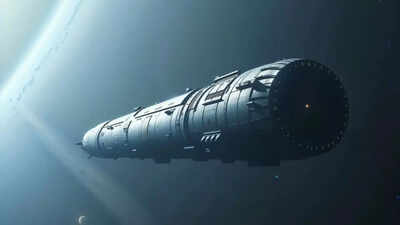
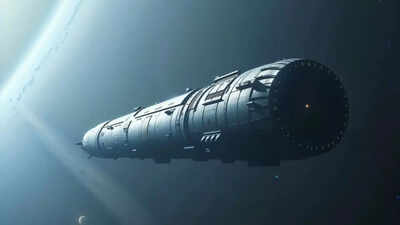
The proposed interstellar spacecraft, called Chrysalis, can carry 1,000 people on a one-way trip into interstellar space. It was proposed as part of the Project Hyperion Design Competition. The idea behind this spacecraft is that it could be a generational vessel capable of sustaining human life for centuries. This is different from most spacecraft that have a capacity for a few people on a trip that may last for a few months or a few years. This spacecraft has the capacity for multiple generations of humans on a trip that will last for approximately 250 years.
How Chrysalis could keep 1,000 humans alive for centuries
However, the main concept of Chrysalis is the rotating ring that makes use of centrifugal force, which acts as gravity. This allows the human inhabitants to live with a form of gravity, which is essential for the human body. The 36-mile diameter of the habitat allows for a lower rate of spin, which reduces the motion sickness experienced by the inhabitants. This, in turn, reduces the difference between the gravitational force experienced at the head compared to the feet, which is a common problem with a smaller diameter.Chrysalis is a completely integrated, closed system, which means that the food, oxygen, and waste systems are integrated with the habitat. The food systems, which are essentially a form of vertical farm, use the controlled lighting systems to create food for the crew, which, in turn, produces carbon dioxide, which is recycled as a nutrient for the crops. The habitat’s interior features a social area, which is essentially a green zone for the crew, thereby creating a stable ecosystem for the crew.
Chrysalis protects humans from radiation and is built in space
Living outside the protective atmosphere and magnetic fields means that humans are exposed to high-energy radiation. This is addressed by the chrysalis design, which has substantial shielding. Water reservoirs are located along the outer layers for radiation absorption, while composite materials are used for the hull for temperature control. This design will be able to withstand extreme temperature fluctuations that occur in space. In space, structures are exposed to high temperatures on one side and near absolute zero on the other. This design protects the inhabitants.The size of the vessel means that building the chrysalis on Earth would be extremely inefficient. The proposed method for building the vessel is based on a concept that involves building it at a Lagrange point in the Earth-Moon system. This point has balanced gravity, which means that structures will remain relatively stable without the need for constant propulsion. Once built, propulsion systems will be used for the vessel’s departure from the Solar System. This method will be more efficient than traditional propulsion systems.
How Chrysalis supports governance, education, and life beyond Earth
The survival of a human population over time requires planning for governance, education, and knowledge retention. The design of the Chrysalis spacecraft has provisions for education, research, and community governance. The children born on board the spacecraft would eventually be responsible for the maintenance of the critical systems. The design also has provisions for autonomous robotic systems to monitor the condition of the hull, repair any mechanical components, and control the stability of the environment to minimise any risk to human populations during deep space missions.The design of the Chrysalis spacecraft is an example of the possibilities for generational spacecraft designed for interstellar travel. The design is a balance of technological, ecological, and social considerations for the survival of human populations beyond the Solar System. The design is conceptual, but it is an example of the possibilities for understanding the needs, challenges, and solutions for self-sustaining spacecraft for long-duration space travel.