In 2022, French researchers used moving solar panels to shade apple trees, cutting sunburn damage from 13% to 2% |
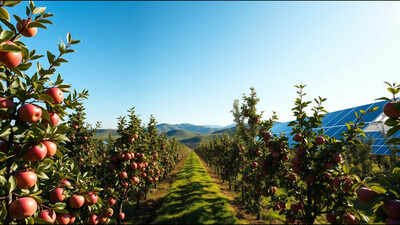
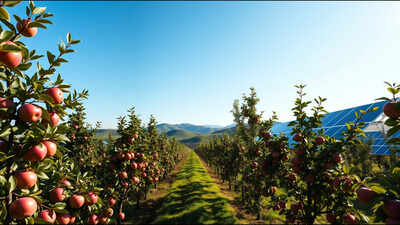
In 2022, researchers running a field experiment in southern France found that moving solar panels installed above an apple orchard sharply reduced sunburn damage on the fruit. The system, known as a dynamic agrivoltaic setup, tilts photovoltaic panels through the day to track the sun and cast shade over trees during periods of intense heat and light. Installed above a 10-year-old Golden Delicious orchard, the panels reduced daily incident solar radiation reaching the trees by 50%, easing heat and light stress on the fruit. Sunburn affected 13% of apples grown without shading, compared with just 2% of apples grown beneath the moving panels that year. Air temperature around the shaded trees was also lower than in the nearby unshaded control plot. The findings suggest solar shading could help fruit growers protect crops from increasingly intense heat while simultaneously generating electricity from the same agricultural land.
How the dynamic agrivoltaic system protects apple orchards from heat
The orchard was equipped with a single-axis tracking system carrying bifacial monocrystalline photovoltaic panels mounted approximately 4.5 metres above the trees. Unlike fixed solar panels, the structure could rotate throughout the day to follow the sun and adjust the amount of shade reaching the canopy. During periods when radiation and temperature were particularly high, the panels could provide greater protection, while their position could be adjusted when the trees required more sunlight. According to the study Sun Protection for Fruit: Dynamic Agrivoltaics Reduces Apple Temperature and Sunburn Damage, the system was intended to find a balance between protecting fruit from excessive solar exposure and allowing sufficient light to reach the trees for normal growth and photosynthesis. This made the approach fundamentally different from permanent shading systems such as fixed structures or conventional protective nets, because the panels could be repositioned rather than leaving the orchard under continuous shade. The system also produced electricity, creating a potential additional source of value from agricultural land that would otherwise be used solely for crop production.
Why sunburn is such a costly problem for apple growers
Apple sunburn occurs when fruit exposed to intense sunlight reaches damaging temperatures, leaving visible injuries on the skin that can reduce its marketability and, in severe cases, contribute to significant crop losses. The problem is particularly concerning in regions experiencing increasingly frequent periods of extreme heat, when high air temperatures combine with intense solar radiation. Growers already use several methods to reduce the risk, including overhead irrigation, reflective sprays and shade nets, but these approaches can involve additional water, materials, labour or maintenance. Dynamic agrivoltaics offers a different possibility by using photovoltaic panels to provide shade precisely when it is most valuable while allowing greater exposure during less stressful periods. That dual function is one of the main attractions of the technology: the same infrastructure can potentially protect a crop from extreme weather while producing renewable electricity. For orchards facing rising temperatures and increasing energy costs, the researchers’ results therefore suggest that agricultural production and solar generation do not necessarily have to compete for land.
What the 2022 season data showed about apple sunburn reduction
The strongest result came during the 2022 growing season, when researchers compared fruit beneath the tracking panels with apples growing in an unshaded control plot. According to the study, sunburn affected 13% of the apples in the control area but only 2% of those growing under the dynamic agrivoltaic system. The panels also reduced the amount of solar radiation reaching the orchard by approximately half, helping to moderate the conditions experienced by the fruit during periods of intense sunlight. Researchers continued the experiment into the following season, when they used small sensors attached directly to apples to measure fruit surface temperature. Those measurements showed that shaded fruit reached maximum temperatures up to 3.3°C lower than fruit exposed to full sunlight, although overall sunburn incidence was relatively low in that year. Importantly, fruit diameter remained broadly similar between shaded and unshaded trees, indicating that the reduction in solar exposure did not appear to compromise fruit growth during the experiment. The findings do not mean that dynamic panels will eliminate sunburn in every orchard or under every climate, but they provide evidence that adjustable solar shading can reduce heat exposure at the fruit level while preserving agricultural production. As extreme heat becomes a greater challenge for fruit growers, systems capable of combining renewable-energy production with targeted crop protection could become an increasingly useful form of climate adaptation.