
In 1870, a former slave and Union soldier staked a homestead in Nebraska; drought and grasshoppers cost him the claim, but he eventually owned more than 2,000 acres
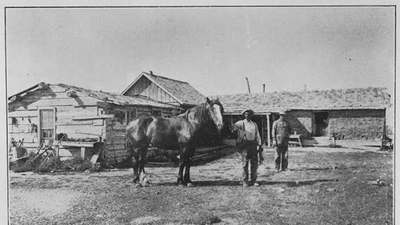
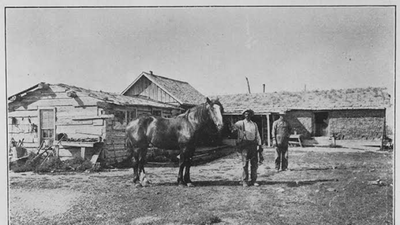
In 1870, Robert Ball Anderson, a former slave and Union Army veteran, filed a claim for a 160-acre homestead in Butler County, Nebraska. Severe drought and grasshopper swarms destroyed his crops, forcing him to give up the property.Instead of abandoning his goals, Anderson spent years working as a railroad cook and farmhand to rebuild his savings. He later moved to Box Butte County in the Nebraska Panhandle, where he built a farm of more than 2,000 acres.According to historical records from History Nebraska and the National Park Service about African American homesteaders on the Great Plains, Anderson became one of the largest landowners in western Nebraska. He overcame natural disasters, financial losses, and racial discrimination to build his agricultural estate.
Escape from slavery and Civil War service
Anderson was born into slavery on 1 March 1843 on the Ball plantation in Green County, Kentucky. In his autobiography, From Slavery to Affluence: Memoirs of Robert Anderson, Ex-Slave, he described his childhood in small log cabins where enslaved families lived “pretty much as pigs in a pen.”When Anderson was six, his mother was sold to a slave trader. He never saw her again. After years of physical abuse that left deep scars on his back, Anderson decided to escape.In the autumn of 1864, during the American Civil War, Anderson told his owner that he planned to join the Union Army. He walked 20 miles to enlist and became a soldier in the 125th United States Colored Infantry.After the war ended, Anderson completed his military service at several posts across the American frontier. His assignments included Fort Leavenworth in Kansas and military posts in New Mexico, Texas, and Colorado.
Early farming failure in Nebraska
After receiving an honourable discharge from the army, Anderson moved to Iowa. He worked in a local brickyard and as a hired farmhand.The Homestead Act of 1862 offered 160 acres of public land to citizens or people intending to become citizens who agreed to live on and improve the land for five years. Seeking financial independence, Anderson moved to Butler County, Nebraska, in 1870 and filed his first homestead claim.His first attempt at farming failed because of severe natural conditions. Years of drought and large grasshopper infestations during the 1870s destroyed crops across the Great Plains. Anderson eventually had to give up his claim.The National Park Service’s article African American Homesteaders in the Great Plains notes that many Black and white homesteaders abandoned their claims during this difficult period. Anderson, however, chose to stay in the region and rebuild his finances.
Building capital and acquiring western land
To earn money again, Anderson spent three years working as a farmhand in Kansas. He later returned to Nebraska and worked as a cook for railroad construction crews.By 1884, he had saved $1,600. He then moved to the sparsely settled Box Butte County in the Nebraska Panhandle. There, he filed another homestead claim, built a sod house, and later added a log cabin.Anderson soon faced another serious setback. A man who had borrowed his $1,600 savings left the state without repaying him. Anderson was once again left without money.He took out personal loans to keep his farm operating and spent the next decade paying off his debts through hard manual work.Records in the History Nebraska collection (RG2973.AM) show that Anderson continued acquiring land through homestead and timber culture claims as well as direct purchases. Over the years, these efforts steadily increased his property holdings.
Legacy and historical record
By the early twentieth century, Anderson owned more than 2,000 acres of valuable farmland in Box Butte County. His farm was fully equipped and included horses, cattle, and modern machinery.Looking back on his life in his memoir, Anderson wrote: “A slave at the age of twenty, penniless at the age of forty-five, I am a rich man today.”On 19 March 1922, when he was 79, Anderson married 21-year-old schoolteacher Daisy Graham. She helped him dictate and prepare his life story for publication.Anderson died on 30 November 1930 at the age of 87 after a motor vehicle accident near Union, Nebraska. He was buried in Hemingford Cemetery in Box Butte County.His life remains an important example of African American landownership on the Great Plains. His records show how, despite slavery, poverty, natural disasters, financial setbacks, and racial prejudice, Anderson built one of the largest African American-owned farms in western Nebraska.