A Maya astronomer studied the movements of Venus and Mars in AD 781, and archaeologists have now discovered his name |
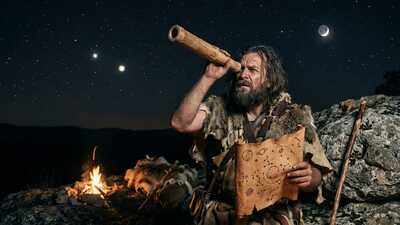
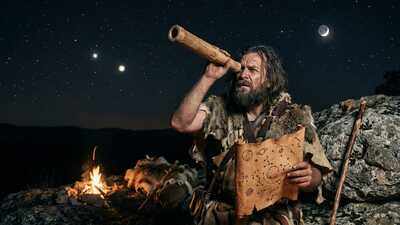
For centuries, the ancient Maya have been celebrated for their remarkable achievements in astronomy, mathematics and calendar-making. They tracked the movements of planets with extraordinary precision, developed one of the world’s earliest concepts of zero and created complex calendars that guided agriculture, religion and governance. Yet the brilliant minds behind these discoveries have largely remained anonymous. That has now changed. Archaeologists have identified what is believed to be the earliest known named scientist in the ancient Americas, a Maya astronomer and mathematician whose name survived for more than 1,200 years in a set of hieroglyphic inscriptions. The discovery not only puts a face to one of the Maya’s greatest intellectual traditions but also offers a rare glimpse into how scientific knowledge was created and shared in the ancient world.
Who was the earliest known named scientist in the ancient Americas?
The earliest scientist discovered in ancient Americas is Sak Tahn Waax, who was an astronomer-mathematician from the Maya civilization during the eighth century AD, late classic period. The name “White-Chested Fox” was discovered by the scientists studying the hieroglyphics found in Structure 10K-2 of the Maya civilization city of Xultun, Guatemala.As reported by National Geographic, Sak Tahn Waax is believed to have been one of the highly trained scholars responsible for making astronomical observations and mathematical calculations that helped shape Maya society. These specialists monitored celestial bodies such as the Sun, Moon and planets to determine ceremonial dates, agricultural cycles and important political events. Until now, historians had admired the sophistication of Maya science but had no named individual directly linked to its development. The discovery gives researchers the first opportunity to credit a specific scientist for this extraordinary body of knowledge.
How archaeologists identified Sak Tahn Waax
The breakthrough came from a re-examination of a small room uncovered in Xultun in 2010. The chamber had already gained international attention because its walls were covered with murals, astronomical tables and mathematical calculations, earning it comparisons to an ancient scientific workspace.According to National Geographic, archaeologists spent years analysing faint painted and engraved hieroglyphs that had previously been difficult to interpret. Using advances in Maya epigraphy and high-resolution imaging, they successfully deciphered an 11-glyph inscription. The final glyphs read “che-he-na,” meaning “so says…”, followed by the name Sak Tahn Waax, identifying him as the author or authority behind the calculations.Nearby, researchers found sophisticated astronomical computations tracking the movements of Venus and Mars, including a 2,920-day cycle corresponding to five synodic cycles of Venus. The calculations were dated to approximately AD 781, making them the earliest known mathematical work in the Americas directly attributed to a named scientist.Lead author Franco Rossi of the Massachusetts Institute of Technology (MIT) in ‘The identification and work of an eighth-century Maya mathematician’ said the discovery only became possible after years of carefully studying the faded inscriptions. Archaeologist David Stuart of the University of Texas at Austin told National Geographic that identifying the scientist by name makes Maya science “much more human,” comparing the room to “an old whiteboard in someone’s abandoned office.”
Why Sak Tahn Waax’s discovery changes our understanding of Maya science
The Maya are widely regarded as one of the most scientifically advanced civilisations of the ancient world. Their astronomers calculated planetary movements with remarkable accuracy, developed sophisticated mathematical systems and produced calendars so precise that many continue to fascinate researchers today.The identification of Sak Tahn Waax transforms these achievements from anonymous accomplishments into the work of identifiable scholars. It suggests that scientific expertise was recognised and recorded within Maya society, much like artists, rulers and scribes whose names also appear in inscriptions.Researchers believe Sak Tahn Waax probably worked as part of a community of elite intellectuals who collaborated on astronomical observations and mathematical research. His name offers rare evidence that knowledge in the Maya world was not simply passed down collectively but could also be associated with individual expertise and authorship.
What the discovery reveals about the ancient Maya civilisation
The discovery of Sak Tahn Waax is unique because it provides insight into the intellectual environment of the ancient Maya. It becomes evident that scientific information was not anonymously transferred but it could be attributed to individuals too. Both astronomy and mathematics played an essential role in the civilisation of the Maya people. They influenced the way in which the Maya conducted their religious ceremonies, built temples, calculated when to plant crops, when to organise important rituals and how kingship was established.It should be emphasised that the identification of Sak Tahn Waax allows one to know more about the individuals who made contributions to the scientific development of the Maya culture. As mentioned by Science, Sak Tahn Waax could have been a member of a group of specialists including astronomers and scribes in the royal court of Xultun, where they could work together to create mathematical models and observe the skies. It seems that there were more named scientists who lived in Central America and whose names are still hidden in Maya inscriptions.Every improvement in imaging technology and hieroglyphic decipherment increases the chances of identifying additional scholars whose work has remained anonymous for more than a thousand years. The discovery of Sak Tahn Waax not only humanises Maya science but also reminds us that some of the world’s earliest scientific breakthroughs were made by individuals whose names are only now beginning to re-emerge from history.