In 1973, a California homeowner paid $5,000 for a city-permitted backyard pool; 53 years later, a sanitation district says it must go as the 29-property easement dispute heads to trial
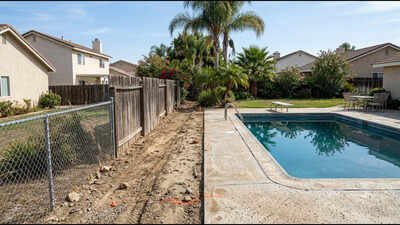
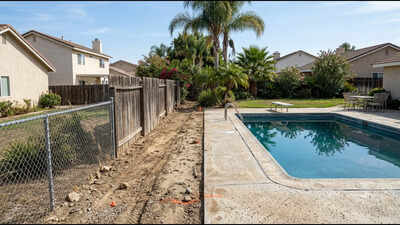
In 1973, California homeowner Frank Clarke paid $5,000 for a backyard swimming pool after getting the required city permits. More than five decades later, the pool is part of a legal dispute over a sewer easement in Huntington Beach, LA Times reported. The Orange County Sanitation District (OC San) says it needs access to the area, while homeowners say they built their backyard structures with city approval.The dispute involves 29 properties on Rhone Lane, where a 30-foot-wide sewer easement runs through the backyards. The easement contains a 69-inch wastewater pipeline installed in 1959, when much of Huntington Beach was farmland. The pipeline carries roughly 10 million gallons of wastewater daily and is part of the regional sewer system.The dispute has now reached court. In May 2026, an Orange County Superior Court judge denied OC San’s motion, allowing the homeowners’ case over the easement to proceed to trial. Judge Deborah Servino said OC San had arguably shown that the full 30 feet could be needed for equipment during an emergency flow bypass. However, she said the district had not shown that the structures and other objects on the properties were interfering with its full use of the easement as a matter of law.The court decision came after OC San started the Miller-Holder Rhone Lane Sewer Easement Cleanup Project in March 2026. The district says the work is needed to keep the pipeline accessible for maintenance, inspections and future repairs. In July, OC San said the cleanup was about 50% complete.
Why homeowners are fighting the easement
The sewer easement was recorded with the County of Orange in the early 1960s. The homes on the affected section of Rhone Lane were built during the 1960s and 1970s.Clarke, who has lived at his home since the early 1970s, installed his swimming pool a few years after buying the property. He said he obtained the necessary city permits and did not realise there was a problem until OC San contacted him.A December 2023 letter from OC San listed structures and other items that homeowners needed to remove from the easement. In Clarke’s backyard, these included the swimming pool, pool equipment, decking, a block wall, wood fencing and landscaping.“To me, somebody should have flagged the construction and said, ‘No, you can’t do it, because you’re on an easement,’” Clarke said. “The communication process should have been better.”
OC San says pipeline access is necessary
OC San says the easement needs to remain clear so its workers can safely reach the pipeline. The district says encroachments currently limit its ability to carry out routine and preventive maintenance.The pipeline is almost six feet wide and carries about 10 million gallons of wastewater each day. OC San says the sewer line serves tens of thousands of people and carries wastewater to its reclamation plants for treatment and recycling.The district has also said that the pipeline, installed in 1959, remains an important part of the regional sewer system.“The sewer pipeline within the Miller-Holder Rhone Lane easement serves thousands of residents and plays an essential role in preventing sewage spills and system failures,” OC San said in a statement. “Maintaining clear and safe access to this infrastructure is necessary for worker safety, regulatory compliance and long-term system reliability.”
Residents question removal
Several homeowners have said they obtained permits for their backyard structures and believed they were following the rules.Andrea and Phillip Rizzo are among those affected. Their backyard has an above-ground pool, a swing and a fire pit. The pool has a ramp for their 19-year-old son, A.J., who has cerebral palsy and uses a wheelchair.Andrea Rizzo said the family had not been told exactly where the sewer pipe was located. “If you judge it according to the manhole, the pipe is somewhere between where the ramp is and the fence is,” she said. “They haven’t told us where the pipe is.”Phillip Rizzo said he would be willing to move the pool while OC San accessed the easement. However, he said the reduced backyard space would make it impossible to put the pool back.“If the pipe’s at the end of its life, then let’s discuss it when the pipe’s scheduled to be replaced,” he said. “If it’s replaced in 2025, then give us until 2025 to remove the alleged encroachments.”
Some homeowners have settled
OC San said agreements were in place with owners of 13 of the 29 properties. The district has continued work at properties where homeowners signed settlement agreements, while other residents remain involved in the litigation.Scott Monastra, whose pool is due to be demolished, signed an agreement in 2024. After the May court ruling, he asked OC San to pause the planned work at his property. The district replied that the ruling did not affect work covered by his agreement.Monastra said OC San representatives came to his home and planned to remove structures, including a covered patio that he had paid to install. The patio was to be dismantled and stored beside his house.“I’m so happy for the guys that didn’t sign the agreement, so they can keep continuing to fight this,” Monastra said. “I hate to use the word, but we caved. I could see how much the fight was going to cost. It’s just a frustrating situation.”The homeowners’ case is now headed towards trial, while OC San continues its cleanup project at the affected properties.