Soviet scientists drilled 12 kilometres into the Earth, but the world’s deepest borehole barely scratched the planet’s crust |
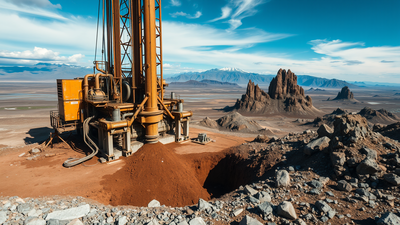
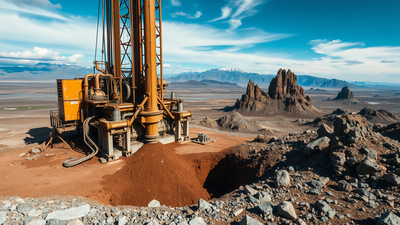
In 1970, Soviet scientists began drilling into the ground on the Kola Peninsula in the far northwest of the country, hoping to reach deeper into the earth than anyone before them. Almost two decades later, in 1989, the project hit its final depth of 12,262 metres, making it the deepest vertical borehole ever created by humans. Yet despite the scale of that achievement, the hole reaches barely 0.2 percent of the way to the centre of the planet. The project was never meant to search for oil or minerals. It was designed purely to study the earth itself, and what scientists found underground turned out to be far stranger than expected.
Why the Kola Superdeep Borehole was built as a science project
The drilling site sat within the Pechenga structure of the Baltic Shield, a region known for exposing very old continental crust close to the surface. The main shaft, known as SG-3, was not built to extract resources of any kind. Soviet geologists wanted actual rock samples from deep within the continental crust so they could compare them with the layered structure that seismic waves had only allowed them to guess at. According to a paper published in Tectonophysics by researcher Yuri Popov and colleagues, the well was designed to go beyond 10 kilometres into the ancient basement rock of the East European Platform, with an original target of reaching 15 kilometres, a mark the project never managed to hit.
How Soviet engineers reached the record depth in 1989
Reaching such extreme depths was never a smooth, straight process. Deep drilling regularly runs into broken equipment, unstable rock and bends that build up over thousands of metres, forcing crews to create multiple branches off the main shaft whenever a section becomes impossible to extend. The project crossed the 12-kilometre mark in 1983, and after further setbacks, one branch of the borehole finally reached its record depth of 12,262 metres in 1989. Drilling work came to a complete stop in 1992. A more recent review published in Communications Earth and Environment confirms that this borehole remains the deepest vertical hole ever attempted, a distinction that matters since many modern oil wells now travel further in total length by curving sideways through underground reservoirs rather than going straight down.
What the borehole revealed about ancient rock layers
As drilling went deeper, the shaft passed through close to 6,842 metres of younger volcanic and sedimentary rock before entering much older gneiss rock shaped by intense heat and pressure billions of years earlier. Around 4,000 metres of rock core were recovered across the entire drilling programme, and scientists later tested the heat-conducting properties of more than 8,000 individual samples to build a detailed picture of conditions at different depths. Before drilling began, scientists had expected a clear boundary a few kilometres down marking a shift from granite-rich rock to denser basalt rock beneath it. Instead, the borehole revealed a far messier picture of ancient crystalline rock cut through by fracture zones, showing that seismic signals alone could not tell the full story of what lay underground.
Discovery of fluids deep inside solid rock
One of the more surprising results from the project was that deep continental rock was not as dry or sealed off as many assumed. A study published in Scientific Reports led by researcher Vadim Prokofiev found signs of aquifer fluids as deep as 11 kilometres, mostly concentrated in areas where the borehole crossed major fracture zones. The same research also examined ancient fluid trapped inside rock formations alongside gold-bearing minerals found between roughly 9.5 and 11 kilometres down. This did not mean there was a hidden underground lake waiting to be tapped, since the fluids were simply held within tiny pores and cracks in solid rock, some of it trapped there long before drilling even started.
Why intense heat eventually stopped the drilling
Every additional kilometre made the engineering involved far more difficult. A drill string stretching several kilometres had to withstand enormous pressure while carrying broken rock back up to the surface, all while resisting a shaft that constantly wanted to bend or narrow around it. Temperatures at depth turned out to be higher than early models had predicted, and combined with shifting rock, this made continuing the project increasingly difficult. By the time drilling finally ended, the Soviet Union itself had collapsed, and the loss of funding arrived at almost the same moment as the technical limits of the equipment, leaving the original 15-kilometre target permanently unfinished.
Why the deepest hole ever dug still barely touched the crust
Despite everything achieved at Kola, the borehole passed through only around one third of the Baltic Shield’s continental crust, and never came close to reaching the mantle, which extends for thousands of kilometres beneath it. When measured against the Earth’s average radius of about 6,371 kilometres, the borehole reached just 0.19 per cent of the distance toward the planet’s centre. More than fifty years after drilling began, no other project has managed to go deeper in a straight vertical line, and most of what scientists know about the deep earth still comes from indirect methods such as earthquake waves, gravity readings and rocks carried upward by natural geological activity, rather than direct drilling of this kind.