Spider eggs: What they look like and where you might find them in your home |
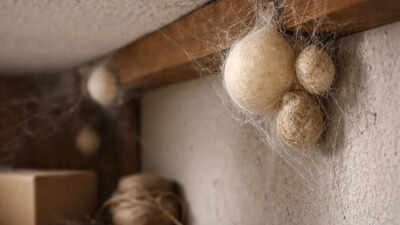
Spider eggs are usually not easily noticed unless, of course, they become an issue. Contrary to what many think, spiders do not leave their eggs exposed. Rather, spiders protect their eggs by covering them with silk to create egg sacs. These egg sacs provide protection to the spider eggs from any potential harm, be it physical, predatorial, or environmental. These egg sacs comprise well-organised spider eggs and not loose egg clusters. If you want to avoid a sudden influx of spiders inside your home, you should be aware of what an egg sac looks like and where it is usually found. These egg sacs are usually found inside homes, especially in areas where spiders have spun their nests.
What spider eggs look like
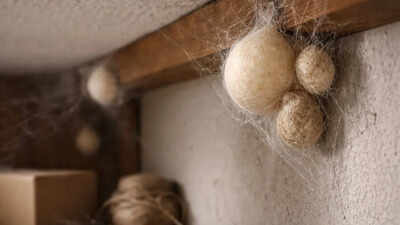
Spider eggs are rarely seen outside their protective coverings. These eggs are found inside a spider silk sac. According to a study published in the Journal of Natural Fibres, these spider egg sacs are multilayered structures containing spider silk produced by different spider silk glands. These structures are used for protecting spider eggs from environmental damage and biological attacks.Regarding their look, spider egg sacs vary according to their species. Most spider egg sacs are small in size, spherical in shape, and light in colour. Their colours may range from white, cream, or light brown. These spider egg sacs may appear smooth and compact or fuzzy or cottony in appearance. These spider egg sacs may vary in size from small, such as those resembling a pea in size, to larger ones, depending on the number of eggs contained within.Due to their light colours and textures, these spider egg sacs are easily confused with dust, lint, or small debris. However, unlike random debris, these spider egg sacs are securely attached to surfaces via spider silk. Thus, these spider egg sacs are slightly more organised if you look at them closely.
Where spider eggs are found in your home
Spiders like to lay their eggs in quiet and undisturbed areas. If we talk about the interior of houses, then egg sacs are usually found in the corners of the ceiling, behind furniture, or inside storage boxes.It is not random where spiders lay their egg sacs. Studies have shown that spiders have special glands to make egg sacs, and their eggs are kept secure and controlled in specific areas. Dark and less cleaned areas are preferred by spiders because the chances of disturbance are low. Closets, basements, attics, and garages are the most preferred areas inside houses. If you have found spider webs in a specific area, then the chances are high that egg sacs might be found nearby.
How spider eggs develop
After the eggs have been laid, they then begin to hatch inside the sac. In this case, the silk sheath is very important. This is because the silk sheath is responsible for the regulation of moisture, temperature, and air circulation.Scientific studies have shown that the membranes found in the egg sacs are permeable. This means that air circulation is possible while at the same time offering protection to the eggs inside.It is possible that egg hatching takes several weeks or months. Once the eggs hatch, the spiderlings will then appear in large numbers. This is why you might find several spiders appearing in your house.
Why spider eggs often go unnoticed
One of the key reasons why the egg sacs of these spiders go unnoticed is their size and location. They are placed in locations where they can be hidden.Another reason is that the location of the egg sac is usually an area that is rarely cleaned or checked. This means that the egg sac can remain unnoticed until the time of hatching.Another reason is the timing. This is because, since the egg sac is located inside, there are no indications of movement until the time of hatching.
Should you remove spider eggs
The decision on whether to remove the spider egg sacs or not will depend on the location. For instance, in cases where they are found indoors, it is normally recommended that they should be removed.When they are found outside, however, they play a significant role in controlling the insect population. In this case, it would be beneficial not to remove the egg sacs.When you decide to remove the egg sacs, it is crucial to do so in a careful manner.Understanding their appearance and behaviour makes it easier to identify them early and decide whether action is needed. While they may seem small and harmless, each sac holds the potential for a much larger spider presence if left unnoticed.