How did Mars lose so much of its water? Rare dust storms may hold the answer |
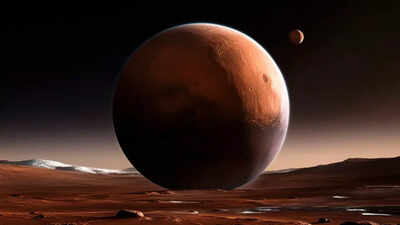
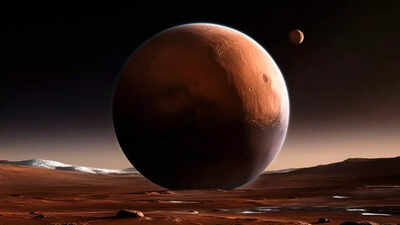
Mars, the Red Planet, seems to have had rivers, lakes, maybe even seas. Minerals, channels, and rock formations all hint at water once flowing freely. Scientists have long wondered what happened. Recently, researchers reported a rare dust storm might have played a role not just any storm, as cited in the study published by the Royal Belgian Institute for Space Aeronomy titled ‘An unusual dust storm on Mars reveals how the Red Planet lost some of its water’. The study hints that the intense events might have helped Mars lose water over time, to understand the planet’s mysterious history, which hints at how Mars might have lost water.
How dust storms change the game of Mars
Most Martian summers in the northern hemisphere are quiet. Water usually stays low in the atmosphere. Southern summers are different. Mars’ orbit is elliptical, so the south gets hotter. Dust lifts, air heats, water rises, hydrogen escapes. But this time, in Martian Year 37 (2022–2023), something unusual happened. A dust storm appeared in the northern hemisphere. It triggered water to surge upwards to 60–80 kilometres which is approximately 10 times higher than normal. Observers reportedly couldn’t recall anything like it in almost twenty years.
Rare Mars dust storm reveals new clues about how the planet lost its water
The storm caused water to spread rapidly around the planet. Weeks later, dust settled. Water dropped back down. But not before hydrogen escaped in higher amounts. Experts estimate the escape jumped 2.5 times compared to normal northern summer levels.Over time, Mars lost water enough to cover hundreds of metres across the planet. These findings give new insight into a piece of that story. They also hint at how unpredictable Mars’ climate might be. Short-term, intense events are apparently significant.Observers reportedly watched hydrogen increase in the uppermost layers too. For scientists, it was a rare opportunity. To see Mars changing in real time.