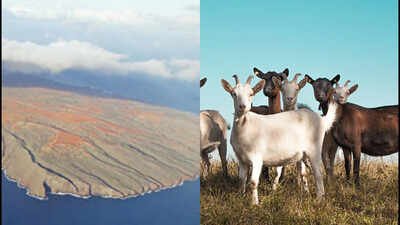
In 1793, goats were introduced to Hawaii’s Kahoʻolawe; their population later reached about 50,000, and 200 years later the last feral goat was removed after severe vegetation loss and erosion

The cultural importance of the island is demonstrated by the some 3,000 archeological and historical sites and features that were documented through 2004. From an island carved by voyagers, farmers and sacred traditions comes the unlikely story of thousands of hungry goats. They grew on Kaho’olawe from a small 18th-century introduction into a herd of…
Read More

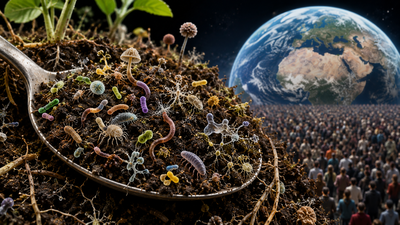
A teaspoon of healthy soil contains more living organisms than there are humans on Earth, yet scientists say most species remain unknown |

Beneath every footstep lies a world most of us will never see. A single teaspoon of soil, scooped from a healthy forest floor, holds more living organisms than there are humans on the planet, bacteria, fungi, protists and nematodes packed together in numbers that barely make sense on a human scale. Stranger still, the vast…

Read More

Humans stepped back from this UK dairy farm in 2023; three years later, wildlife returns as 27 more bird species appear and butterfly numbers more than double | World News

Image: The Guardian/Jenny Vickers A former dairy farm in the UK has undergone a striking transformation after humans stepped back and allowed natural processes to reshape the land. At Heal Somerset, a 460-acre site in Somerset acquired by the rewilding charity Heal in December 2022, the first three years of nature recovery have brought a…

Read More

In the 1800s, red foxes were brought to California for hunting. Decades later, the light-footed Ridgway’s rail declined to just 5 breeding pairs |

A red fox introduced to California more than a century ago might seem far removed from the fate of a small marsh bird. Yet the two became linked in the coastal wetlands of Southern California, where the light-footed Ridgway’s rail has struggled to survive. The bird spends much of its time concealed among cordgrass and…

Read More

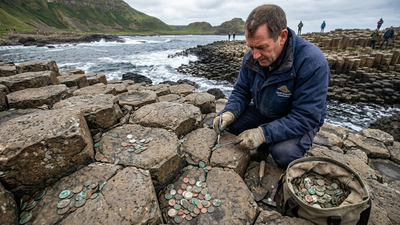
For years, visitors left coins for luck in Giant’s Causeway’s ancient rocks. Years later, more than 10,000 coins have been removed to protect the World Heritage Site | World News

For years, visitors to the Giant’s Causeway have left behind more than photographs and memories. Coins were pushed into gaps between the site’s distinctive basalt columns, sometimes as a gesture of luck or affection. What might have seemed harmless began to leave a physical mark on the rocks. As reported by the BBC, conservation work…

Read More

ICE arrests nearly 50,000 immigrants in July, highest monthly tally under Trump’s second term

US Immigration and Customs Enforcement (ICE) US Immigration and Customs Enforcement (ICE) arrested 49,571 people in July, marking the highest monthly arrest tally during President Donald Trump’s second term, according to government data analysed by The Associated Press.The figure was 15 per cent higher than the 43,021 arrests recorded in June and about 70 per…

Read More

From Tokyo to London, heatwaves send men to work in shorts

Major retailers said linen shorts and suits were flying off the shelves in Britain WARSAW/LONDON: Scorching summer temperatures have done what decades of dress-down Fridays have failed to do — get men to the office in shorts.Japan’s capital led the way. This year the metropolitan govt’s long-standing no-tie, no-jacket “Cool Biz” campaign took a step…

Read More

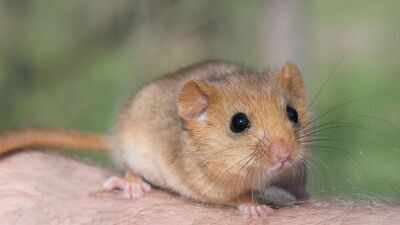
In 1902, edible dormice were released at an English estate; by 2018 Britain had an estimated 23,000, and the government now pays £40 per hectare a year to control damage to trees, crops and nesting birds

dormouseRepresentative image from Canva In 1902, a small population of edible dormice was released at Tring Park, a private estate in Hertfordshire, as part of a Victorian-era fascination with exotic wildlife. More than a century later, that single introduction has grown into a national problem: by 2018, the Mammal Society estimated around 23,000 edible dormice…

Read More