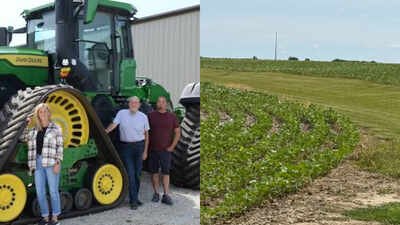
An Ohio farmer watched gullies repeatedly cut through his family’s 700-acre farm and decided to change how he worked the land; decades later, the family operation has grown to 8,000 acres while becoming a conservation showcase

The Kellogg story is also one of persistence. He began farming at 14 after his father left agriculture to care for his ill wife. By his senior year of high school, Bill was managing 700 acres, much of it through relationships with older farmers in the community. For Bill Kellogg, conservation did not begin with…

Read More

Should Indian students abandon the ‘American Dream’ amid F-1 visa volatility? 4 things immigration experts suggest

Students planning to study in the US in the next 1-2 years should prepare differently, immigration experts suggest. International students in the US faced immense volatility this year because of several new rules — some are being proposed, some are coming into effect. Amid fears that this would significantly reduce the number of foreign students…

Read More

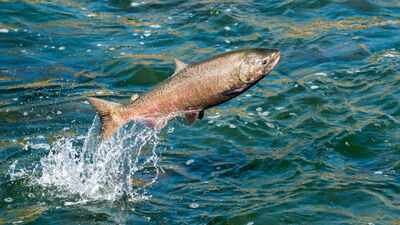
In 2024, California removed an 18-foot dam from Neefus Gulch and restored 1,600 feet of stream; by January 2026, 8 spawning nests were recorded above barriers salmon had been unable to pass for 70+ years

In 2024, California removed an 18-foot dam from Neefus Gulch and restored 1,600 feet of stream, reopening habitat that salmon had been unable to reach for more than seven decades. By January 2026, surveys recorded eight spawning nests, known as redds, in the newly accessible reaches above the former barrier, a sign that endangered Central…

Read More

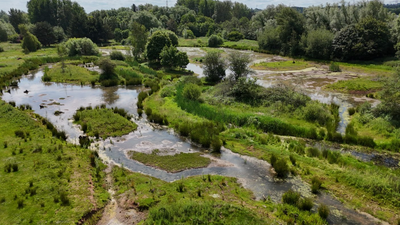
In 2017, a 64-acre golf course built for workers at England’s Rugeley Power Station closed; nine years later, work is turning it into wetlands, meadows and ponds with a 1.5km public trail

For years, the land beside the River Trent in Rugeley had a very different purpose. It formed part of the former Rugeley Power Station site and included a golf course used by the station’s staff. According to Staffordshire Wildlife Trust, the course closed in 2017, and the 64-acre site is now being transformed into a…

Read More

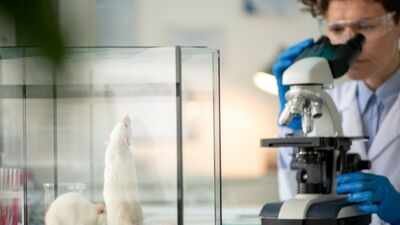
Stanford scientists transplanted human brain tissue into mice missing most of their cortex; within months, it grew to occupy more than 90% of the space

Stanford scientists have created a new model for studying human brain development by transplanting lab-grown human brain tissue into mice that were engineered to lack most of their cerebral cortex. Within months, the human tissue not only survived but expanded to occupy more than 90 percent of the cortical space, forming working connections with the…

Read More

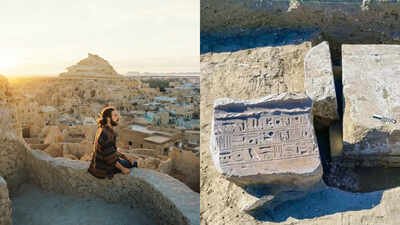
Around 1200 BC, an inscription named the ancient Egyptian city of Mesen; 3,200 years later it may have helped archaeologists locate the lost city

A view of the inscriptions and city view of Mesen For more than three millennia, the name Mesen survived in ancient records without a confirmed place on the map. Now, a battered stone inscription found in Egypt’s northern Sinai may have given archaeologists their strongest clue yet to the city’s whereabouts, states an online report…

Read More