
Once-in-170,000-year comet is streaking across the sky with glowing blue-green light: Spot it over Australia and New Zealand |

A rare long-period comet, C/2025 R3 (PanSTARRS), is currently visible in southern skies, offering a brief observing window before it fades from view. The object, which originates from the distant Oort Cloud, has already passed its closest approach to the Sun and is now moving away, causing its brightness to gradually decline. Astronomers estimate its…


Read More

Eta Aquarid meteor shower to peak overnight on May 5–6: Best viewing times, visibility tips, and how to catch the brightest shooting stars |

This year’s Eta Aquarid meteor shower is reaching its maximum activity, and the skies at night are about to put on an interesting show for observers. For many, the notion of witnessing shooting stars seems rather straightforward; however, it all boils down to the timing of observation. The margin between seeing no meteors and seeing…

Read More

Quote of the day by Michael Faraday: “Nothing is too wonderful to be true, if it be consistent with the laws of nature.” |

Michael Faraday (Image: Wikipedia) In science, it’s rare to find lines that sound both simple and deep at the same time. This is one example of a quote by Michael Faraday. It talks about being curious, finding new things, and staying grounded in reality. This statement seems especially important right now, when science is making…

Read More

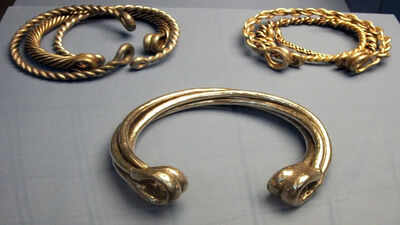
In 1966, a tractor driver uncovered twisted gold in a Norfolk field, revealing the massive Snettisham hoard |

A routine ploughing in Snettisham, Norfolk, unearthed Europe’s greatest Iron Age treasure trove, a hoard of over 175 torcs and other precious metal objects. Image Credits: Johnbod, via Wikimedia Commons The mundane routine of agricultural tasks in Snettisham, Norfolk, quickly gave way to an unexpected episode of serendipity. The plough blade came across some stubborn…

Read More

NASA just turned a retired Boeing 777 into a powerful airborne science lab: How a passenger jet became a flying laboratory for 100 scientists |

NASA’s Boeing 777 has returned to Langley Research Centre in Virginia after undergoing major modifications that have transformed it from a commercial passenger aircraft into a powerful airborne science laboratory. The aircraft reportedly spent months in Waco, Texas, where engineers carried out extensive structural upgrades to prepare it for its new role. Its return marks…

Read More