Antarctica hides Earth’s strongest gravity hole: What this mysterious gravity could mean for the planet |
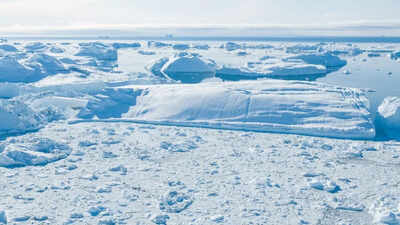
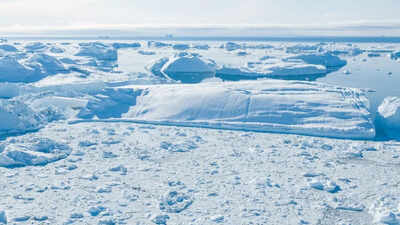
Gravity seems constant but it turns out, Earth is weirder than that. Gravity actually wobbles a bit across the planet. And the weakest spot isn’t the oceans or the mountains but right under Antarctica. Scientists now say this part of the frozen continent sits above Earth’s strongest “gravity hole.” And it seems, the reason has been building for millions of years.New research suggests slow-moving rocks deep under the surface have shaped this strange low. These shifts aren’t flashy, just an almost small flow of rock. But over tens of millions of years, it might have influenced more than just gravity. Some experts say it could even be connected to the growth of Antarctica’s massive ice sheets.
Antarctica’s gravity hole and its ocean effects
The idea of a gravity hole sounds sci-fi. But it’s real. And it’s measured. Where gravity is weaker, the oceans actually dip slightly. Sea levels sit lower than you’d expect. Water moves away toward areas with stronger gravity. It seems small, but over millions of years, it can reshape coastlines.Scientists Alessandro Forte and Petar Glišović reportedly mapped the hole using earthquakes. Think of it like a CT scan for the planet, but instead of X-rays, they use seismic waves. The waves illuminate the rocks deep below, revealing densities that shift how gravity behaves on the surface. Their models matched satellite measurements almost perfectly.
When Antarctica’s ice and gravity changed together
The researchers didn’t just map today’s gravity. They went back in time around seventy million years ago, to the age of dinosaurs. Using physics-based models, they tracked how the flow of rocks changed. It turns out the gravity hole started weaker. Slowly, between roughly 50 and 30 million years ago, it got stronger. It overlaps with major shifts in Antarctica’s climate. Ice sheets began to grow. Glaciation spread. Experts aren’t claiming a smoking gun, but it appears that the changing gravity and the ice sheet growth might be linked. It’s the kind of thing that makes you rethink how Earth’s deep interior and climate interact.
Why scientists care about hidden gravity
Gravity variations influence oceans, sea levels, and maybe even ice sheet stability. Experts say understanding these slow-moving rocks might help explain past climate changes. It could also improve predictions for the future.Forte noted that this is just the beginning. Future research will focus on connections between the gravity hole, ice sheets, and continental elevations.