
Quote of the day by Michel Foucault: ‘Maybe the target nowadays is not to discover what we are but to refuse what we are’ and how every self-help guru got it wrong
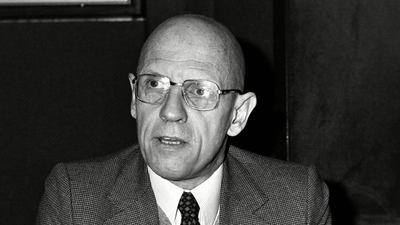
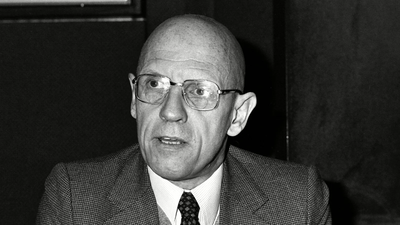
In 1971, during a televised debate hosted by Dutch philosopher Fons Elders, French philosopher Michel Foucault sat across from linguist Noam Chomsky. Chomsky argued that human beings have a natural, universal human nature that political systems should help develop. Foucault disagreed completely. He argued that what society calls “human nature” is often created by powerful institutions to classify, control and manage people.More than a decade later, Foucault summed up this idea in a single statement: “Maybe the target nowadays is not to discover what we are but to refuse what we are.”The quote challenges the common belief that people should “find themselves.” Instead of looking inward for a true, fixed identity, Foucault argues that many of the labels shaping our identity, including medical diagnoses, gender roles, consumer identities and political categories, are created by society rather than by ourselves. In this view, freedom comes not from discovering a hidden self but from questioning and rejecting the labels placed upon us.
An essay for a changing world
The quote comes from Foucault’s 1982 essay “The Subject and Power,” published in the academic journal Critical Inquiry. Written near the end of his life, the essay brings together decades of his research on prisons, psychiatric hospitals, medicine and sexuality.By the early 1980s, Western societies had moved away from the open displays of power seen in earlier centuries. Governments no longer relied mainly on public punishments to control people. Instead, power became quieter and worked through institutions and administration. Foucault argued that modern power mainly operates by shaping individual identity. Institutions tell people who they are, whether as a patient, a criminal, a consumer or a productive worker.Writing for political theorists and social scientists, Foucault argued that the biggest struggle of the modern age was no longer only against religion or economic inequality. It was also against systems of power that define people’s identities and expect both individuals and society to accept those identities as truth.The quote is correctly attributed to Foucault. The Subject and Power remains one of his most widely cited works and explains many of his later ideas about power and resistance.
How identity is created
To understand Foucault’s philosophy, it is important to understand his idea of “subjectification” (assujettissement). In French, the word has two meanings. It describes becoming an independent individual while also becoming controlled by others.Since the Enlightenment, many Western philosophers believed that discovering the truth about yourself leads to freedom. René Descartes searched for certainty through the thinking mind, while Sigmund Freud explored the unconscious to understand human behaviour. Foucault challenged this tradition. He argued that when people receive psychological diagnoses, attend therapy or complete surveys, they are taking part in systems that define what is considered normal and abnormal.In Foucault’s view, knowledge and power cannot be separated. When medicine defines mental health, or economics defines a successful citizen, those definitions also create social boundaries. People then begin to judge themselves according to those standards.Refusing what we are becomes a way of resisting these institutional limits. Instead of asking, “Who am I?”, Foucault asks, “How has society shaped who I am, and how can I move beyond those limits?” His thinking builds on Immanuel Kant’s idea that people should think for themselves. It also adds another challenge. We should question the ideas and categories that society gives us.
Why the idea matters today
More than four decades after Foucault wrote The Subject and Power, his ideas seem especially relevant in today’s digital world.In 2026, technology companies and artificial intelligence systems collect huge amounts of personal data. Algorithms study browsing history, location, typing habits and shopping behaviour to build detailed profiles of each user. These systems predict what people will buy, what opinions they may hold and even which communities they belong to. Social media often rewards people for fitting into these digital identities, creating echo chambers that reinforce them.When people accept these algorithm-created profiles as their true identity, they reflect the concern Foucault raised. Applying his ideas today means questioning these categories instead of simply accepting them. It may mean rejecting a workplace culture that measures personal worth only through productivity, or treating a mental health diagnosis as a useful medical tool instead of allowing it to become a person’s entire identity.For Foucault, refusing an imposed identity is not about withdrawing from society. It is an active choice to resist allowing institutions to decide what a person’s life should be.Foucault never offered a perfect vision of what people should become after rejecting these labels. Instead, he believed freedom is an ongoing process of questioning the identities and definitions handed down by authority while creating space to live beyond them.