
New study suggests many dinosaurs may have died within hours, not months, after the asteroid struck Earth |
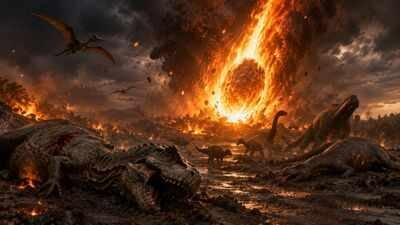
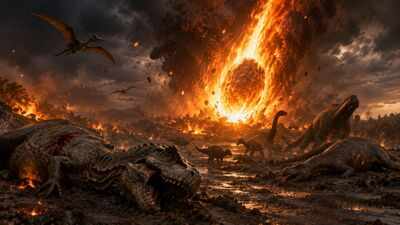
For decades, the extinction of the dinosaurs has usually been pictured as a slow collapse. An asteroid struck Earth, sunlight faded behind dust, temperatures changed, and ecosystems gradually unravelled. That broad sequence still stands, yet a new study argues that the first chapter of the catastrophe may have unfolded far more quickly than many imagined. According to new research published in the Journal of Geophysical Research on July 28 2026, titled “Heat and Wildfires During the K-Pg Mass Extinction Enhanced by Fine Dust”, some of the deadliest conditions appeared almost immediately after the Chicxulub impact, exposing much of the planet’s land surface to an intense burst of heat that could have killed many animals within hours rather than over weeks or months.The work does not claim that every dinosaur died on the same day. Instead, it proposes that for countless animals unable to shelter from the extreme conditions, survival may have ended during the very first hours after the asteroid struck what is now Mexico around 66 million years ago.
How fine dust intensified heat during the dinosaur extinction
The researchers revisited a long-debated question surrounding the end-Cretaceous extinction: what actually delivered the fatal blow to life on land? While scientists have long recognised the role of the Chicxulub impact, there has been continuing debate over whether immediate heat, global fires, prolonged climate disruption or volcanic activity caused most deaths.According to the study, enormous amounts of molten rock and vaporised material were blasted high above Earth’s atmosphere during the collision. Tiny glass-like droplets, known as spherules, eventually fell back through the atmosphere at tremendous speed. As they slowed, their kinetic energy was converted into heat, producing a worldwide pulse of thermal radiation. The authors argue that previous models underestimated how much material entered the atmosphere. They suggest that a large fraction of vaporised rock later condensed into extremely fine dust, and this dust fundamentally changed how heat behaved. Instead of allowing much of the radiation to escape into space, the dust trapped it, increasing the amount of thermal energy reaching the Earth’s surface.
How microscopic dust intensified the dinosaur extinction, according to the study
A key part of the new research focuses on microscopic dust rather than the asteroid itself. This fine material formed after hot rock vapour separated from the larger molten droplets while travelling through the atmosphere. Geological evidence from sites marking the Cretaceous-Paleogene boundary appears to support this sequence. Deposits at the Tanis fossil site, where fish believed to have died on the day of the impact contain impact spherules in their gills. Above those remains sits a separate layer rich in fine silicate dust and iridium, but lacking the larger spherules. The researchers interpret this as evidence that the dust settled later after remaining suspended in the atmosphere. Similar observations from another boundary site in the Raton Basin also support the idea that this fine material became globally distributed.Once present in such enormous quantities, the dust would have made the atmosphere exceptionally opaque. It prevented heat from escaping efficiently into space, allowing the thermal pulse generated by returning impact debris to become much more intense than earlier calculations suggested.
Study explains why burrowing animals survived the dinosaur extinction
The authors argue that this enhanced heat pulse could explain why animals capable of sheltering were more likely to survive than those exposed on the surface. Burrowing mammals, animals living in water and plants protected by roots or buried seeds appear to fit this survival pattern, something earlier studies had already noted. The paper estimates that once the effects of fine dust are included, radiation reaching the surface exceeded the ignition threshold for dry grasses, lichens and pine needles, making widespread fires much more likely. The heat itself may also have proved lethal without flames. As a modern comparison, the researchers cite studies showing that exposure to intense thermal radiation can rapidly become fatal. They suggest that non-sheltering terrestrial animals, including dinosaurs, would have received far greater heat than those lethal reference levels, with severe burns and heat stroke likely contributing to their deaths.Because this heating occurred as impact debris re-entered the atmosphere, the process would have unfolded within hours of the asteroid strike rather than during the prolonged environmental collapse that followed.
Scientists say heat and fire may have triggered the dinosaur extinction before climate change
The findings do not overturn everything known about the dinosaur extinction. The researchers acknowledge that debates continue over the role of the Deccan Traps volcanic eruptions and the months to years of climatic disruption that followed the impact. Darkness, falling temperatures, collapsing food chains and long-term environmental change almost certainly shaped which species ultimately disappeared.Even so, the study argues that for many land-dwelling organisms, the decisive moment may have come much sooner than previously thought. Heat and fire triggered by the Chicxulub impact were likely the primary kill mechanisms for exposed terrestrial life, while the later climatic effects compounded an extinction already set in motion.