International Space Station’s $23 million toilet does far more than collect waste. It helps recycle about 98% of the station’s water into drinking water |
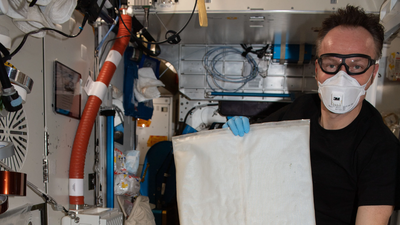
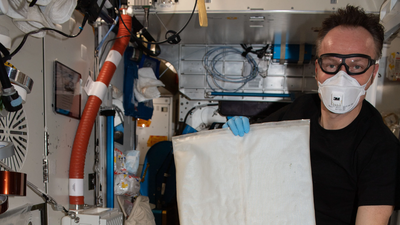
Life aboard the International Space Station (ISS) depends on making the most of every available resource, especially water. Transporting supplies from Earth is enormously expensive, so astronauts cannot simply rely on regular deliveries for drinking water. Instead, the ISS uses one of the most sophisticated recycling systems ever built. At the heart of that system is a space toilet worth millions, which helps recover water from astronauts’ urine, sweat and even moisture in the cabin air. Working together with advanced filtration and purification technology, the system now recycles about 98% of all water used on the station, allowing crews to remain in orbit for months while dramatically reducing the need for resupply missions.
Why astronauts recycle almost every drop of water and why the system is worth millions
Every kilogram launched into space adds significantly to mission costs, making water one of the most valuable resources aboard the ISS. A crew of seven astronauts requires hundreds of litres of water each week for drinking, food preparation and hygiene. Carrying all of that water from Earth would be impractical for long-duration missions.To overcome this challenge, Nasa and its international partners developed the Environmental Control and Life Support System (ECLSS), a closed-loop life-support system designed to recover water from multiple sources. Rather than treating urine as waste, the station views it as a valuable resource that can be purified and reused.The system also captures water vapour released through breathing, perspiration and everyday activities before recycling it into clean drinking water.
How the $23 million space toilet turns urine into drinking water
Unlike toilets on Earth, the ISS toilet relies on airflow rather than gravity to move waste. Once urine is collected, it is sent to the Urine Processor Assembly (UPA), where a specially designed centrifuge spins the liquid at high speed. The spinning motion mimics gravity, separating water from salts and other waste products in the microgravity environment of space.The recovered water is then transferred to the Water Processor Assembly (WPA). Here, it passes through multiple stages of filtration, catalytic oxidation and chemical treatment that remove contaminants, kill microorganisms and ensure the water meets or exceeds Earth’s drinking-water standards.The recycling system does not rely solely on urine. It also processes humidity condensed from the cabin air and moisture released through astronauts’ breath and sweat. Together, these technologies now recover around 98% of the station’s water, making the ISS one of the most efficient water-recycling environments ever created.
A system Nasa spent decades perfecting
NASA began developing regenerative life-support technologies in the 1980s as engineers recognised that future missions to the Moon and Mars would require astronauts to become far less dependent on Earth.Over the following four decades, researchers refined every stage of the recycling process, improving filtration systems, chemical purification methods and wastewater recovery technologies. In 2023, Nasa announced that engineers had achieved a new milestone by increasing the system’s overall water recovery rate to 98%, the highest ever demonstrated aboard the ISS.According to Nasa, this level of efficiency means that less than two per cent of water is lost during each recycling cycle, greatly reducing the amount that must be launched from Earth.
Why this technology matters beyond the ISS
The ISS water-recycling system is helping prepare humanity for future deep-space exploration. Missions to Mars could last two to three years, making frequent resupply missions impossible. Astronauts will therefore need highly reliable systems capable of recovering almost every drop of water available.The same technologies are also finding applications on Earth. Advances in water purification, filtration and wastewater treatment developed for spaceflight have contributed to more efficient recycling systems in remote communities, disaster-relief operations and regions facing water scarcity.What may seem like an unusual fact that astronauts drink recycled urine actually represents one of the greatest engineering achievements in modern spaceflight. After four decades of development, Nasa’s closed-loop water recovery system has transformed what was once waste into one of the International Space Station’s most valuable resources.