Scientists may have solved the 252 million-year-old mystery behind Earth’s greatest mass extinction |
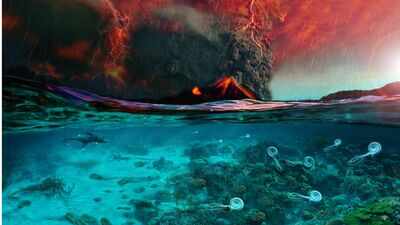
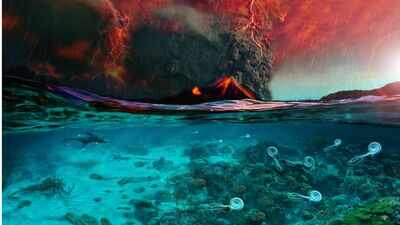
The story of life in the oceans changed long before dinosaurs appeared and vanished. Around 252 million years ago, the planet experienced the most destructive biological crisis known in the fossil record, wiping out almost all marine species and reshaping life beneath the waves. Although scientists have spent decades examining what happened during the Permian-Triassic mass extinction, one question has remained unresolved: why did some groups disappear almost entirely while others recovered and eventually came to dominate the seas? A new study led by Stanford University argues that the answer lies not simply in the scale of environmental change but in how different animals functioned. Their findings suggest that the way organisms used oxygen and generated energy determined whether they survived a rapidly warming, increasingly oxygen-starved ocean. That ancient shift still defines marine ecosystems seen around the world, from rocky coastlines to sandy beaches.
How the Great Dying mass extinction reshaped marine life
Before the extinction event, the seafloor looked very different from the one familiar to divers or marine biologists today. Brachiopods were among the most widespread shell-bearing animals, accompanied by sea lilies, ancient corals and other creatures that spent their lives fixed to the seabed, filtering food from the surrounding water.As reported by the study published in PNAS, titled ‘Differences in physiological tolerance to global warming caused the Permian–Triassic transition between the Paleozoic and Modern faunas’, when the extinction passed, many of those long-established groups had almost vanished, while clams, snails, sea urchins and fishes became increasingly common. The balance of marine life shifted permanently, and the descendants of those survivors continue to shape ocean ecosystems millions of years later.ScienceDaily reported that scientists have long connected the Great Dying with vast volcanic eruptions that released enormous quantities of greenhouse gases into the atmosphere. Rising carbon dioxide and methane warmed the planet dramatically, while oxygen levels in the oceans declined.Those broad environmental changes have been accepted for some time. What remained less certain was why certain branches of marine life suffered far greater losses than others despite experiencing the same environmental conditions.The new research approaches that question from a biological rather than purely geological perspective, comparing the physical capabilities of animals that flourished before the extinction with those that became dominant afterwards.
The hidden role of metabolism in Earth’s greatest mass extinction
Instead of focusing only on fossil evidence, the research team examined how living representatives of ancient animal groups respond to changing water temperatures and oxygen availability.Metabolism, which governs how organisms convert energy to remain alive, became the central focus. Animals with body plans adapted to active movement generally consume more oxygen under normal conditions, yet they are also better equipped to increase oxygen intake when temperatures rise.Many of the marine animals that dominated before the extinction followed a different strategy. Brachiopods and several other Paleozoic groups lived relatively inactive lives attached to the seafloor. They survived comfortably in cooler, oxygen-rich conditions, but warming water placed increasing pressure on their physiology.Laboratory experiments suggested these older groups reached their physiological limits much sooner as temperatures climbed. Their oxygen requirements rose faster than they could compensate for, making survival increasingly difficult as the oceans warmed and oxygen became scarcer.
Recreating conditions from an ancient world
To investigate those differences, researchers gathered living marine species representing both ancient and more modern evolutionary lineages. Some of the work involved collecting brachiopods from the San Juan Islands in Washington State, one of the few places where these animals remain relatively abundant.Back in laboratories and marine field stations, scientists measured oxygen consumption while gradually altering water temperatures. The tests allowed them to compare how different species coped with conditions resembling those thought to exist during the Permian-Triassic crisis.The results showed that although brachiopods could tolerate low oxygen levels under stable conditions, rising temperatures rapidly increased the strain on their bodies. More mobile animals, despite having higher energy demands overall, were better able to continue functioning as conditions deteriorated.
Why beaches are covered with clam shells
The work also helps explain a simple observation familiar to almost anyone who has walked along a shoreline.Modern beaches are littered with shells from clams, mussels and snails, while brachiopod shells are exceptionally rare. That imbalance reflects a transformation that began during the Great Dying rather than a recent ecological change.Before the extinction, brachiopods greatly outnumbered bivalves across the world’s oceans. Their fortunes reversed afterwards. While only a few hundred brachiopod species survive today, bivalves diversified into many thousands of species and occupy habitats across nearly every marine environment.
A changing climate with familiar warning signs
The findings also carry relevance beyond ancient history.Scientists point out that the oceans before the Great Dying shared several characteristics with those that existed before modern industrial emissions began altering Earth’s climate. They were relatively cool and contained abundant dissolved oxygen.As greenhouse gas concentrations increased during the Permian period, ocean temperatures rose while oxygen levels declined. Those same processes are now being observed, although over a much shorter timescale.Ocean acidification is also recognised as an additional source of stress because more acidic seawater makes shell-building increasingly difficult for many marine organisms. The researchers suggest acidification probably contributed to the ancient extinction, though their analysis indicates warming and oxygen depletion played the larger role.