The world’s tallest trees are tricking gravity to survive drought by widening their internal water pipes and rewiring their water transport system |
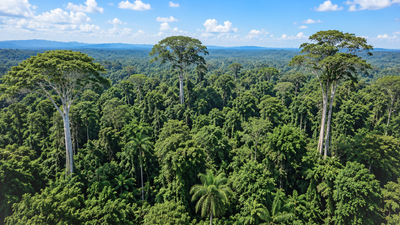
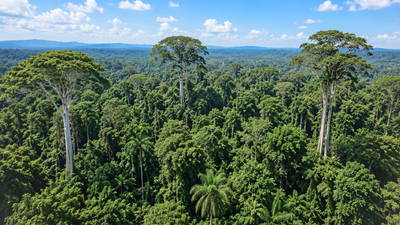
For decades, scientists believed the world’s tallest trees faced a fundamental disadvantage during drought. The higher a tree grows, the harder gravity makes it for water to travel from the roots to the leaves, leading researchers to assume that towering rainforest giants would be especially vulnerable as the climate becomes hotter and drier. A new study has challenged that long-held idea. By climbing some of the tallest tropical trees in the world and studying how they move water through their trunks and leaves, researchers discovered that these giants have evolved remarkable adaptations that allow them to overcome the challenges of height, helping them survive drought far better than previously thought.
Why scientists thought tall trees were more vulnerable to drought
Water travels through specialised tubes inside a tree known as xylem, carrying moisture from the roots to the leaves. As trees grow taller, this journey becomes much longer, increasing the resistance water encounters along the way. Gravity further reduces the pressure that pulls water upwards, making it increasingly difficult to keep the upper branches hydrated.For years, plant scientists believed this combination of gravity and longer water pathways made giant trees especially susceptible to drought. Surprisingly, however, that assumption had never been tested directly in some of the world’s tallest tropical forests.
How researchers climbed giant rainforest trees to find the answer
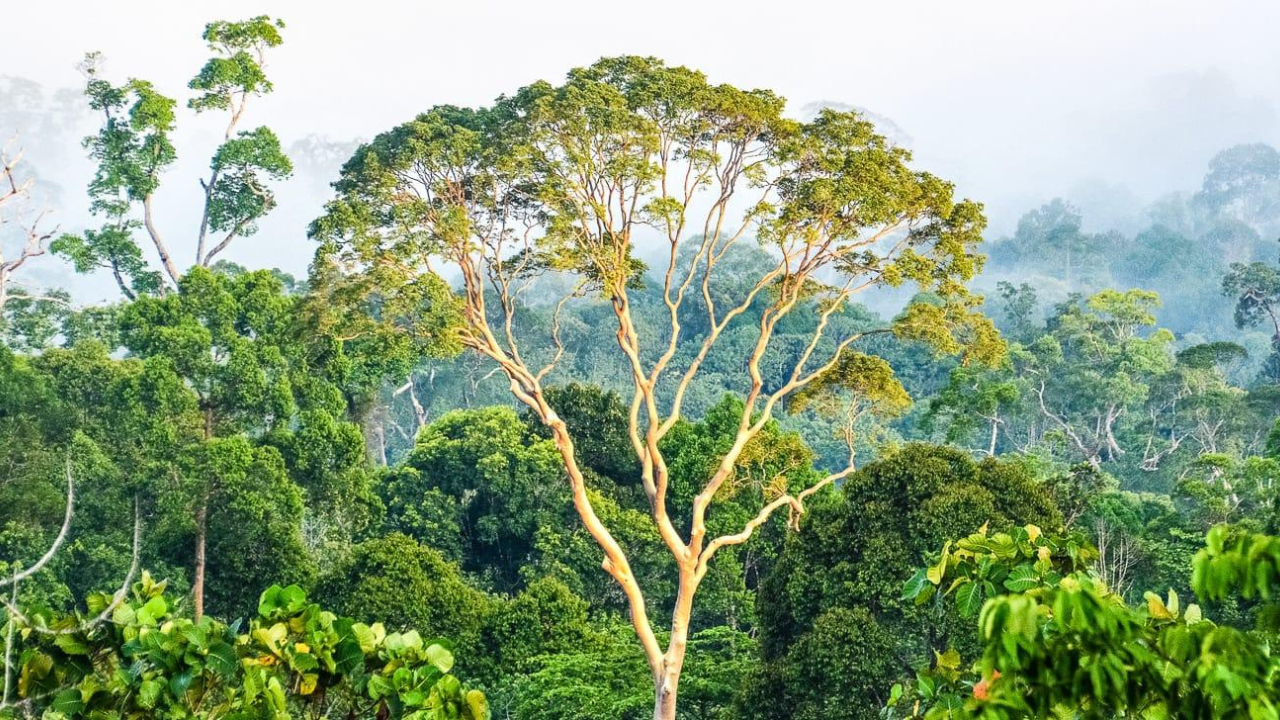
To investigate the question, scientists travelled to the Kabili-Sepilok Forest Reserve in Malaysian Borneo, home to towering dipterocarp trees that dominate the rainforest canopy.Working alongside professional tree climbers, the research team scaled trees before sunrise to collect samples from different heights throughout the day. In total, they studied 38 trees representing five species, ranging from 7.7 metres to more than 71 metres tall. The researchers measured 25 different traits linked to how water moves through trees, making it one of the most comprehensive studies ever conducted on the hydraulic systems of giant tropical trees.
The hidden plumbing trick inside the world’s tallest trees
The study revealed that giant trees have developed an elegant solution to gravity’s challenge. Rather than relying on the same water transport system throughout their trunks, they produce wider xylem vessels near the base of the tree.These larger water-carrying tubes reduce resistance, allowing water to move upwards more efficiently despite the tree’s enormous height. Scientists compare the effect to replacing a narrow pipe with a much wider one, making it easier for large volumes of water to flow.The researchers also discovered that leaves growing near the tops of these trees are adapted to function under lower water pressure. Instead of requiring the same amount of water as lower branches, they can tolerate drier conditions, effectively rewiring the tree’s overall water transport strategy to cope with height.
The drought that put the trees to the test
The research became even more valuable because it coincided with a severe drought that affected the region between 2023 and 2024.If the traditional theory had been correct, the tallest trees should have shown the greatest decline in growth during the dry period. Instead, scientists found no evidence that taller trees suffered more than shorter ones. Their growth remained remarkably similar regardless of height, suggesting their hydraulic adaptations successfully compensated for the challenges of transporting water over such long distances.
The significance for climate change
The findings could reshape how scientists predict the future of tropical forests in a warming world. Giant trees play an outsized role in rainforest ecosystems, storing enormous amounts of carbon while providing habitat and food for countless species.Because the study suggests these trees are not inherently more vulnerable to drought simply because of their height, some tropical forests may prove more resilient to climate change than previously feared. However, researchers caution that the findings currently apply only to dipterocarp trees and do not necessarily represent all tropical tree species.
Why giant trees are vital for the planet
Towering rainforest trees are among Earth’s most important natural carbon stores. Their massive trunks lock away huge quantities of carbon dioxide, helping slow the accumulation of greenhouse gases in the atmosphere.These giants also shape entire ecosystems by creating forest canopies, producing seeds, regulating local climates and providing shelter for birds, mammals, insects and countless other organisms. Understanding how they survive drought is therefore essential for predicting not only the future of rainforests but also the role they will continue to play in regulating the global climate.
What the discovery tells us about the hidden lives of trees
The research challenges the long-standing idea that trees are passive organisms simply reacting to their surroundings. Instead, it shows they continuously adjust their internal structure as they grow, fine-tuning how water moves from roots to leaves in response to physical challenges such as gravity.Rather than becoming weaker as they grow taller, these rainforest giants actively remodel their internal plumbing and leaf physiology to maintain efficient water transport. The discovery offers fresh insight into the remarkable adaptability of trees and highlights how millions of years of evolution have equipped them to survive in some of the world’s most demanding environments.