Marie Curie refused to patent radium and gave away a fortune: The shocking reason still stuns scientists today |
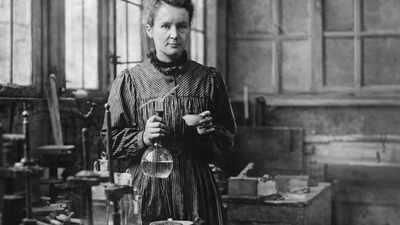
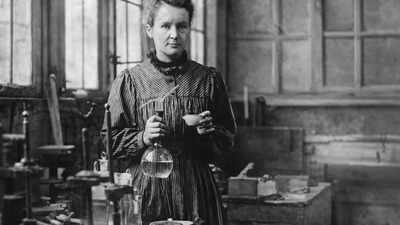
Marie Curie’s story is often told through her Nobel Prizes, her discoveries, and the eerie glow of radium in a darkened lab. But there’s a quieter, almost unbelievable detail that tends to get overlooked. According to The Nobel Prize, she refused to patent radium. Gave it away, basically. A decision that, by most accounts, cost her a fortune. It sounds strange today, when scientific breakthroughs are tightly guarded and commercialised. Her journey, alongside Pierre Curie, unfolded during a moment when physics itself was shifting under everyone’s feet.
Marie Curie gave away radium for free: A decision that changed science forever
In April 1995, something symbolic happened. The remains of Marie Curie and Pierre were moved from their burial site in Sceaux to the Panthéon. It’s a place reserved for France’s most honoured figures, that is, scientists, writers, and national heroes. Marie became the first woman to be honoured there on her own merit. Not just as someone’s wife or assistant. The move was reportedly initiated by François Mitterrand, who wanted to reflect equality in reality, not just in law. The symbolism stacked up. She was a scientist who elevated France’s global reputation. Back at the end of the 19th century, physics was in flux. Nothing was settled. Everything seemed open, unstable, exciting. Around 1886, Heinrich Hertz demonstrated radio waves. At the time, it probably seemed abstract, almost useless. Hertz himself reportedly didn’t imagine what it would become. Within a few years, Guglielmo Marconi sent signals across small distances. By 1901, he spanned the Atlantic. Then 1895 arrived. Wilhelm Conrad Röntgen discovered X-rays. Invisible rays that passed through flesh and revealed bone. It must have felt like magic at the time. People reportedly thought he was mad. He kept it secret at first. But the implications were huge. Medicine changed almost overnight, and physics raced to catch up.
The discovery of radioactivity and Marie Curie’s choice not to patent radium
Not long after, Henri Becquerel stumbled onto something unexpected. Completely by accident. He was studying uranium salts and sunlight, trying to understand luminescence. Cloudy weather disrupted the experiment. Yet, strangely, the photographic plates darkened anyway. No sunlight required. The radiation was coming from the material itself. Spontaneous, continuous, strange. And that’s when Marie and Pierre stepped in. Marie and Pierre worked tirelessly. Marie even coined the term “radioactivity.” They isolated new elements, polonium first, then radium. Radium in particular captured attention. It glowed faintly. Almost magical. Scientists, doctors, and the public were fascinated. It seemed full of promise with medical uses, energy potential, and even a kind of scientific wonder. And here’s the unusual part. Marie Curie reportedly chose not to patent the process of isolating radium. Not even partially.
Why Marie Curie declined patents and shaped modern scientific research
At the time, radium was incredibly valuable. Gram for gram, worth more than gold. She could have patented it. Built wealth. Controlled supply. She didn’t. It seems she believed knowledge should be open. Shared. Available for anyone working to advance research or medicine. Experts often cite this as one of the purest examples of scientific idealism. Or stubbornness. Hard to say. The irony is obvious. Later, her labs weren’t always well-funded. Equipment was basic, sometimes inadequate. Meanwhile, industries built around radium made huge profits. She never chased that money.Looking back, her decision feels almost radical. Today, patents are standard, expected, essential even. Curie’s choice shaped how her work spread. Her discoveries influenced cancer treatments, advanced physics, and opened doors to nuclear science, for better or worse. Hard to measure that impact in money. Marie Curie wasn’t just a scientist who changed physics. She changed how science could be shared.