Middle East on the boil after Khamenei’s death: What does it mean for India’s trade, exports, crude oil & LPG supply?
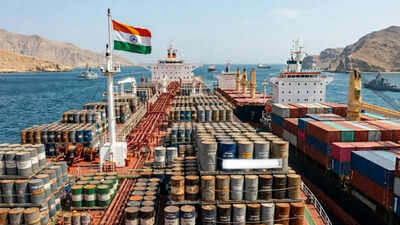
What will be the impact of the ongoing tensions in the Middle East on India’s trade, exports, crude oil and LPG supply? Growing geopolitical tensions in the Middle East following military strikes by the United States and Israel on Iran could disrupt global trade, increase freight and insurance charges, delay cargo movements and trigger a rise in international crude prices, which in turn may inflate India’s import bill, according to experts.The Commerce Ministry has scheduled a meeting on Monday with exporters, shipping companies, freight forwarders and representatives from various ministries to evaluate how rising tensions in the Middle East could affect India’s trade flows.
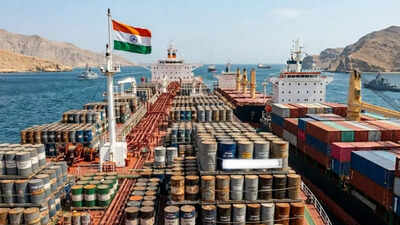
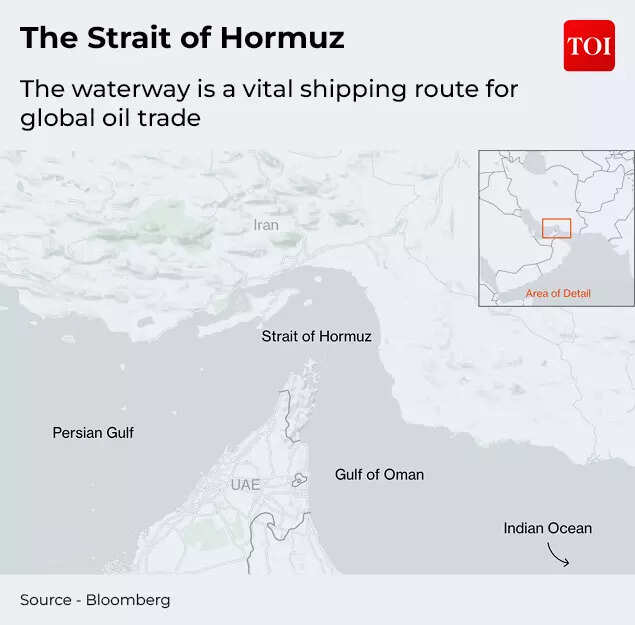
Exporters have raised strong concerns that the conflict could disrupt shipping through the Strait of Hormuz and the Bab el-Mandeb Strait, both of which are crucial maritime corridors. These routes serve as important links connecting India with the Gulf region as well as major markets in North America and Europe.The Strait of Hormuz is a narrow 33-kilometre-wide channel linking the Persian Gulf with the Arabian Sea. While oil is in focus, with regards to disruption in shipments through the Strait of Hormuz, it is important to understand that the passageway is also crucial for other trade as well.According to Ajay Srivastava, founder of Global Trade Research Initiative (GTRI), the immediate impact on India is economic and strategic. “Disruption in the Strait of Hormuz threatens a major share of its crude oil and LNG imports, raising freight costs, insurance premiums, and fuel prices, while a surge in global oil prices could widen the current account deficit and fuel inflation,” he says.Reports indicate that Iran has halted maritime traffic through the Strait of Hormuz, a critical route through which a substantial share of India’s crude oil and liquefied natural gas supplies from Iraq, Saudi Arabia, the UAE and Qatar are transported. Estimates suggest that around 35–50% of India’s crude imports, along with a considerable volume of LNG shipments, move through this strategic corridor.
The Oil Price Spike Risks & LPG Vulnerability:
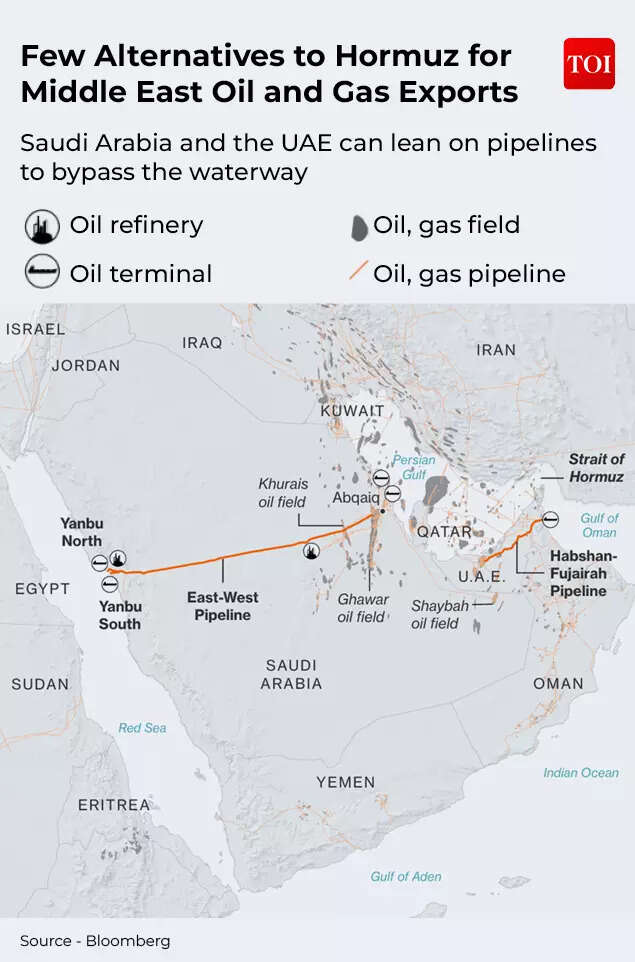
GTRI notes that in response to the closure of the Strait of Hormuz, refiners may reroute cargoes via pipelines to Red Sea ports. India may even source more oil from Russia, the United States, West Africa and Latin America. Finally, there is the option of drawing on strategic petroleum reserves to cushion short-term shocks.
However, as GTRI points out: these alternatives increase costs and transit times. “The impact would be global, not just Indian. Nearly one-fifth of the world’s oil and a major share of LNG trade flows through the strait, and most shipments are destined for Asian economies including China, Japan and South Korea,” says GTRI.According to GTRI, global crude oil prices are expected to rise sharply, as markets price in the risk of supply disruptions. Brent crude had already climbed to around $70–73 per barrel amid rising tensions, and limited conflict could add $5–$20 per barrel, while disruption to Iranian exports or tanker traffic could push prices above $90 per barrel, the think tank predicts.Sumit Ritolia, Lead Research Analyst, Refining and Modelling at Kpler believes that while India may be able to handle rise in oil prices and short-term crude supply disruptions, the LPG supply is at a greater risk of vulnerability.“Escalating Middle East tensions once again highlight a structural reality: India remains materially exposed to the Strait of Hormuz – not just for crude, but even more so for LPG and LNG,” says Sumit Ritolia.
Approximately 2.5–2.7 million barrels per day of India’s crude oil imports pass through the Strait of Hormuz, with major supplies originating from Iraq, Saudi Arabia, the United Arab Emirates and Kuwait. Over the past few months, the share of Middle Eastern crude in India’s import mix has grown as refiners reduced part of their intake of Russian oil. This shift has increased the relative importance of Gulf supplies, making India more sensitive in the near term to any disruption in Hormuz transit.Shipping data from Kpler indicates that Russian crude cargoes remain available in waters around the Indian Ocean and Arabian Sea, including supplies held in floating storage. If flows from the Middle East were to tighten, Indian refiners could potentially increase purchases of Russian grades within a short period, says Ritolia.Although India sources crude from multiple regions, Gulf supplies continue to hold a logistical edge, with shipping times typically ranging from five to seven days compared with approximately 25 to 45 days for cargoes arriving from the Atlantic basin.
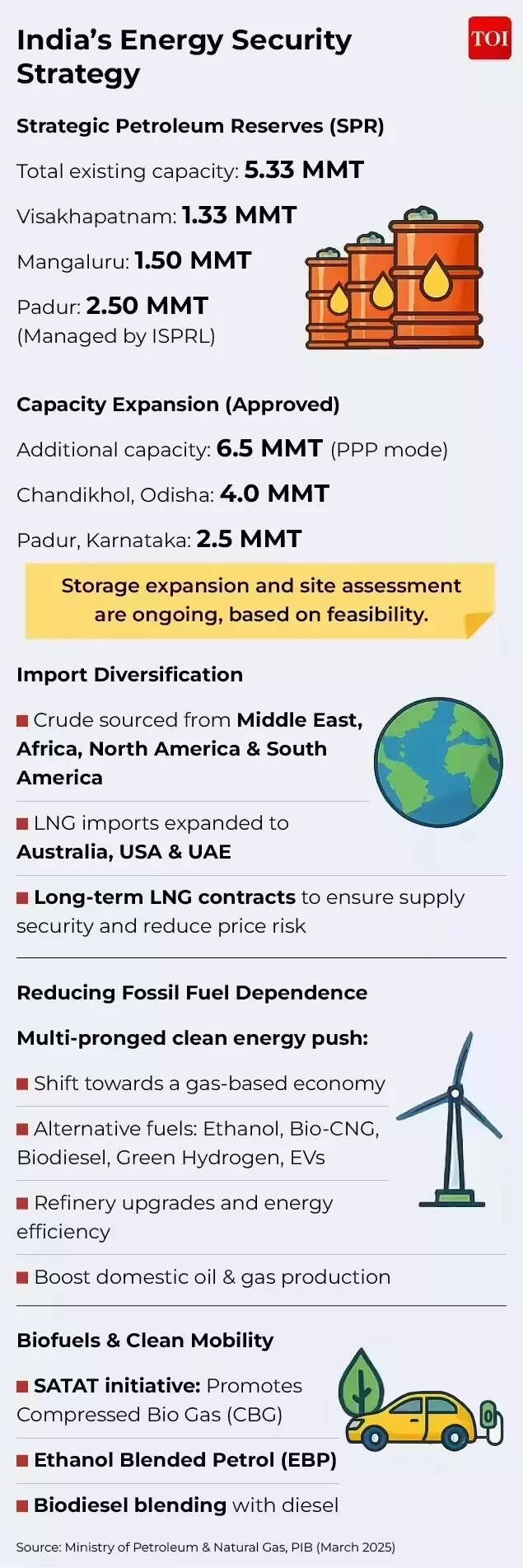
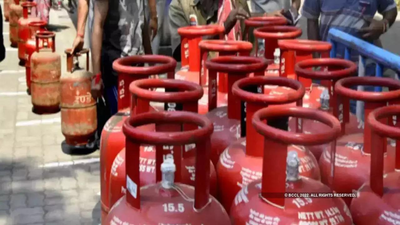
Importantly, India imports roughly 80–85% of its LPG requirements, with most of these supplies coming from Gulf producers and moving almost entirely through the Strait of Hormuz. In contrast to crude oil, India does not maintain strategic reserves of LPG on a comparable scale, making supply chains for this fuel more vulnerable to logistical disruptions.
Risks To Trade & Exports
As GTRI notes, India’s trade with Iran remains modest due to long-standing US sanctions that restrict banking channels, shipping, and energy transactions. “In 2025, India exported goods worth about $1.2 billion to Iran, dominated by agricultural products — rice alone accounted for roughly $747 million, followed by bananas ($61 million) and tea ($51 million). On the import side, India bought about $408.6 million worth of goods from Iran, including petroleum coke ($135.7 million), apples ($71.5 million), and dates ($33.3 million). India’s trade with Iran is limited but further instability may disrupt these flows,” GTRI says.However, trade and exports to other parts in the region, and transiting through the Strait of Hormuz face risks.The Commerce ministry has arranged the discussions to review how the rapidly changing situation may influence India’s external trade.The Federation of Indian Export Organisations President SC Ralhan has said the hostilities have already started affecting established global logistics networks. He noted that airlines are modifying flight paths, while sea trade across the Red Sea and vital Gulf passages is facing increased uncertainty.If diversions continue, cargo bound for Europe and the United States may have to be routed around the Cape of Good Hope, extending transit times by an estimated 15 to 20 days. Such disruptions are expected to push up freight charges and insurance costs for exporters.Industry representatives have said it may take several days before there is clarity regarding shipping capacity, revised routes, insurance cover and freight pricing.
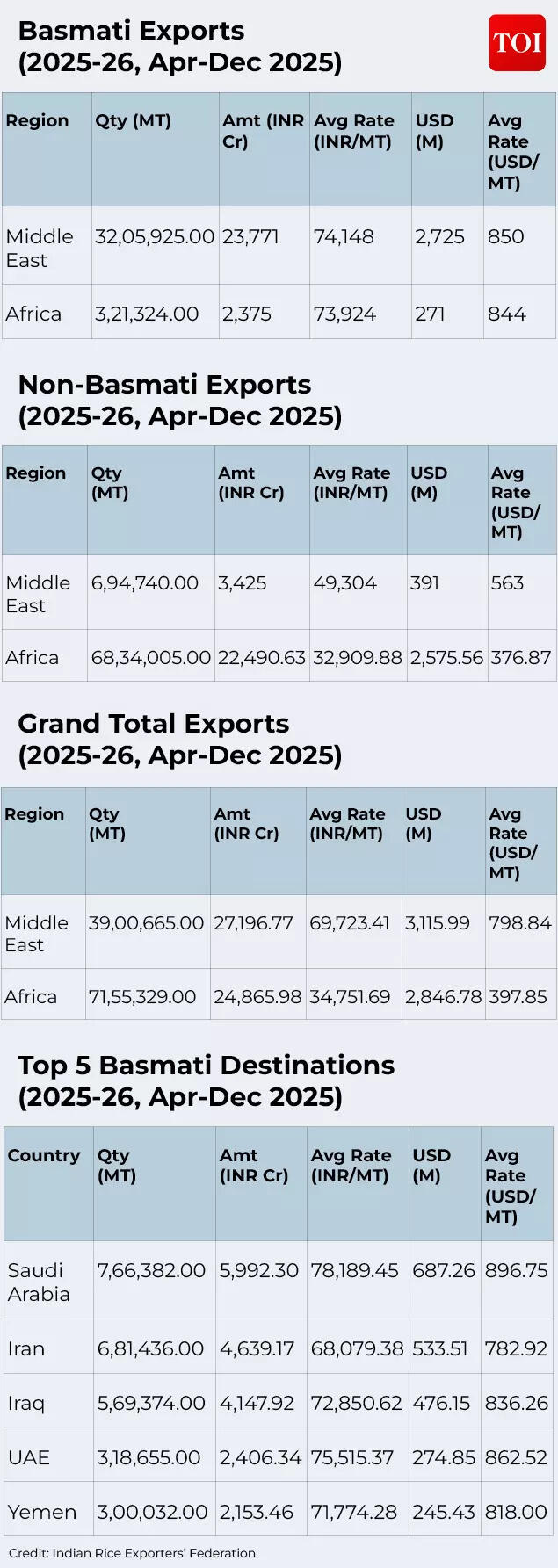
The Indian Rice Exporters Federation on Sunday urged its members to refrain from taking on fresh cost, insurance and freight obligations for shipments to Iran and other Gulf markets, cautioning that the situation could disrupt logistics and drive up transportation and insurance expenses.The organisation cautioned that developments in Iran and the United Arab Emirates could quickly influence bunker fuel prices and affect the availability of both container ships and bulk carriers. It warned that freight charges for containers and bulk cargo could rise sharply at short notice, leaving exporters vulnerable to losses on contracts with fixed delivered prices.The federation pointed out that five major destinations for Basmati rice – Saudi Arabia, Iran, Iraq, the United Arab Emirates and Yemen – are located in West Asia and together account for nearly half of India’s Basmati exports.West Asia hosts key maritime corridors through which a significant portion of India’s exports to major destinations such as the United States and Europe are transported. Together, these markets account for roughly 56% of the country’s merchandise exports.Trade analyst Biswajit Dhar said that the conflict has already affected shipping operations and could create difficulties for Indian exporters.“Oil prices may rise to $120-130 per barrel, and it would push our import bill, and may hurt inflation,” Trade analyst Biswajit Dhar told PTI, adding that a prolonged crisis could also affect remittance inflows.He further noted that negotiations for a free trade agreement with the Gulf Cooperation Council (GCC) could slow if instability persists. India has recently initiated discussions for a trade pact with the GCC, which comprises Saudi Arabia, the UAE, Qatar, Kuwait, Oman and Bahrain.Around 10 million Indians currently live and work across GCC countries.India’s free trade agreement with the UAE came into effect May 2022 and it has recently concluded a Comprehensive Economic Partnership Agreement with Oman.The Bab-el-Mandeb Strait serves as an essential maritime link connecting the Red Sea and the Mediterranean region with the Indian Ocean. Ships that depart from Indian ports typically travel west across the Arabian Sea, go through the Red Sea, pass through the Suez Canal and then continue into the Mediterranean before reaching their European destinations.The alternative route via the Cape of Good Hope is longer and slower but reduces exposure to disruptions in the Suez Canal region. It is generally preferred for bulk cargo movements or during periods of political instability in the Middle East.