Bharat Bandh today: Which sectors will be hit and why trade unions are protesting | India News
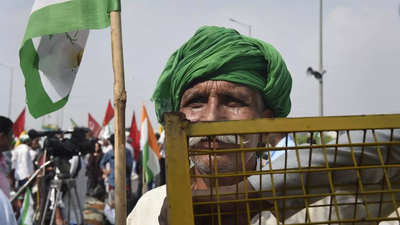
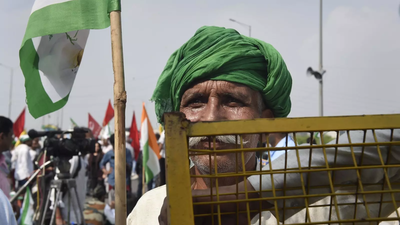
NEW DELHI: Over 10 central trade unions called for a nationwide Bharat Bandh on Thursday against the government’s “anti-worker” policies. The bandh was supported by farmer organisations and other groups across sectors.The strike call was announced as a mark of “resistance to anti-worker, anti-farmer and anti-national pro-corporate policies of the central government.”Trade unions said nearly 30 crore workers from various sectors were likely to participate in the agitation.The protest was expected to partially affect services such as banking, insurance and transport, with unions serving strike notices across departments and industrial establishments.Also read | Bharat bandh today: Are banks shut amid nationwide strike on February 12?
Why the strike was called
The Samyukt Kisan Morcha (SKM) called upon farmers to join trade union workers in making the all-India general strike a success. In a statement, the SKM said the strike sought the withdrawal of four labour codes, the Electricity Bill-2025, the Seed Bill-2025, the VB-G RAM G Act-2025, restoration of the old pension scheme and implementation of minimum wages for workers, including scheme workers.The platform of agricultural workers’ unions and the NREGA Sangharsh Morcha (NSM) supported and participated in protest demonstrations across the country.“SKM calls upon the people to resist all the new attacks launched by the BJP government on the farmers, the workers and common people,” the statement said.The SKM said the Electricity Bill would raise power tariffs for farmers and domestic users and impose peak-hour charges and smart meters. “SKM is demanding ‘No to Smart Meters’ and 300 units of free electricity to all as is also being promised in BJP election campaigns,” the statement said.It also opposed the Viksit Bharat-Guarantee for Rozgar and Ajeevika Mission (Gramin) (VB-G RAM G) Act, alleging that it would depose the Mahatma Gandhi National Rural Employment Guarantee Act (MGNREGA), and objected to the new Seed Bill, stating it would lead to black-marketing of seeds. The SKM opposed free trade agreements, calling them a blueprint of “economic colonisation” through the denial of minimum wages to workers, minimum support price (MSP) to farmers and the right to employment to unemployed youth.“The Modi government has surrendered the sovereignty and the self-reliance of India to the United States of America,” the SKM alleged.“SKM appeals to all farmers to join en masse in the protest demonstration, burn the effigies of Narendra Modi and Donald Trump and copies of the free trade agreements in solidarity with industrial workers and against all the anti-people, pro-corporate government policies,” it said.Insurance sector workers have also protested against the government’s decision to allow up to 100 per cent foreign direct investment (FDI) in the sector and the implementation of new labour codes.“Services in electricity, banking, insurance, transport, health, education, gas and water supply will be affected due to the nationwide strike call on February 12,” All India Trade Union Congress General Secretary Amarjeet Kaur told PTI.Public sector banks and insurance offices, state transport services in select states, government offices and public sector units, industrial and manufacturing hubs, coal, steel and other core sectors, mining and gas pipeline operations, and rural employment works under MGNREGA in protest areas are expected to see the impact of the agitation.However, all bank unions will not participate in the strike as their united front had already observed a strike on January 27. Bank workers’ unions such as AIBEA, AIBOA and BEFI participated in the protest.
What is likely to remain open
Hospitals, ambulance and emergency health services are expected to remain operational. Metro services are to function subject to local administration decisions.Private offices, IT companies, schools and colleges are likely to remain open depending on state-wise decisions. Essential supply services such as milk and pharmacies are also expected to function.