


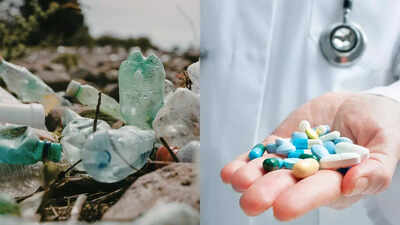
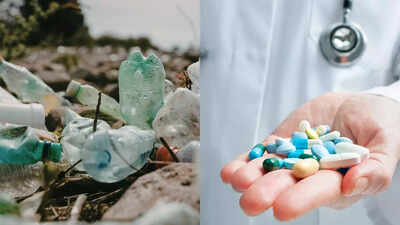
Plastic waste has long been treated as one of the world’s most persistent environmental problems. Bottles pile up in landfills, drift into oceans, and linger for decades without breaking down. Yet a surprising shift in thinking is beginning to take shape. Scientists are no longer looking at plastic purely as waste. Instead, it seems they are starting to see it as a resource. A recent study from the University of Edinburgh suggests that discarded plastic could be transformed into something far more valuable, medicine. In this case, a drug is used to treat Parkinson’s disease. The idea sounds unusual, perhaps even unlikely at first. Still, the research shows real promise and hints at a future where pollution and healthcare needs might intersect in unexpected ways.
How plastic is turned into a Parkinson’s drug
The process begins with a familiar material. Polyethylene terephthalate, or PET, is the plastic commonly used in drinks bottles and food packaging.Scientists first decompose the plastic into its chemical forms. One of the primary chemicals that is formed in the process is terephthalic acid, and it is the beginning of the next set of reactions. After that, genetically modified Escherichia coli comes into the picture. These microbes are specially designed to perform a set of biological reactions that produce L-DOPA from the chemicals. L-DOPA is widely used in the treatment of Parkinson’s disease. It helps replenish dopamine levels in the brain, easing symptoms such as tremors and stiffness.What stands out here is the pathway. A discarded plastic bottle, something with little perceived value, is gradually transformed into a high-value pharmaceutical product.
How plastic waste could reshape pharmaceutical production
Traditional pharmaceutical production often depends on fossil fuels and energy-intensive processes. That approach is effective but not particularly sustainable.This method, using waste plastic as a raw material, might reduce the need for non-renewable materials. University experts say this method might also address the problem of plastic waste, which is becoming a serious concern. PET is being produced in enormous volumes every year, but recycling plants are not able to recycle all of it.Turning it into medicine could address two challenges at once. It reduces waste while also creating something beneficial for human health.
Can this technique work on a larger scale
At present, the technique has been demonstrated at a preparative scale. This means researchers have shown it works in controlled settings, but not yet on an industrial level. The process needs to become faster, more efficient, and cost-effective if it is to compete with established manufacturing methods.Researchers say further optimisation is already underway. They are also assessing the environmental and economic performance of the system.