




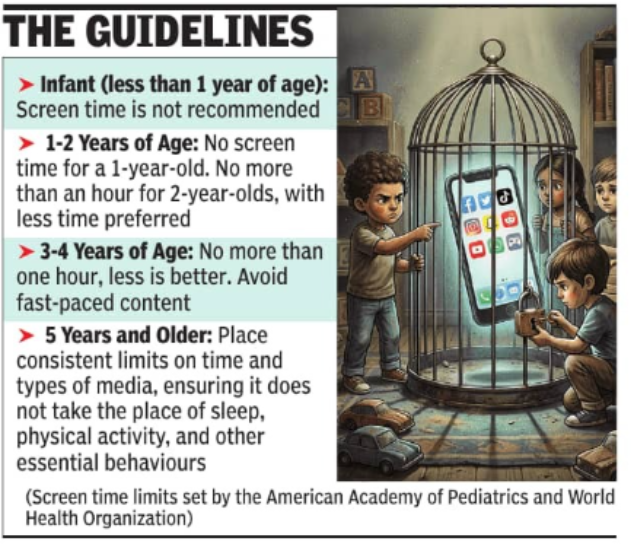
New research highlights how children in India exceed global screen time guidelines, with lasting impact on health and cognitive abilitiesMultiple screens have become an integral part of children’s lives. But is it safe for young adolescents to be spending so much time on screen? Findings from existing research suggest that while devices like smartphones, laptops, tablets and TVs can aid learning, their excessive use is linked to adverse health and developmental outcomes.A recent study*, published in Indian Journal of Psychiatry, examined children and adolescents with mental disorders to assess their screen use habits. The findings are striking: Average daily screen time was 3.1 hours. Importantly, two-thirds of the 212 study participants (average age 13 years) exceeded the recommended screen time limits set by the American Academy of Pediatrics (AAP) and World Health Organization (WHO). These guidelines recommend no screen exposure for children under two years (except video calls), less than one hour per day for ages two to four, and a maximum of two hours daily for those five years and older.

The study revealed that television (66%) and mobile phones (70.3%) were the most commonly used devices, among 212 children and adolescents who were part of the study. Alarmingly, 22.2% of children met the criteria for screen media addiction, based on DSM-5 standards for Internet Gaming Disorder. DSM-5 is Diagnostics and Statistical Manual of Mental Disorders, fifth edition, a guide used by researchers to diagnose, classify and treat mental health disorders.Addiction was more prevalent among boys, those from joint or extended families, and children diagnosed with neurodevelopmental or disruptive disorders.Excessive screen use contributes to obesity, sedentary behaviour, poor dietary habits, and disrupted sleep. Cognitively, prolonged exposure can impair language development, executive functioning and emergent literacy skills. Research even suggests structural brain changes in preschool children with high screen exposure, particularly affecting white matter tracts (which act as brain’s communication networks), critical for learning and communication.Psychosocially, children addicted to screen media often display deception (sneaking or lying to use devices), preoccupation, withdrawal symptoms and conflicts within families. Screen use also interferes with friendships and family activities, while increasing vulnerability to cyberbullying, unsafe online content and negative emotional states.The study underscores the urgent need for parental awareness and regulation. Parents often allow children with neurodevelopmental disorders extra screen time as a coping mechanism, but this leads to more problems. In joint family settings, inconsistent parenting rules can further exacerbate the issue.In conclusion, screen media use among children is not inherently harmful, but its excessive and unregulated use poses significant risks to physical health, cognitive development and emotional well-being. With nearly one-fourth of children in psychiatric care showing signs of addiction, routine evaluation of screen habits and strict adherence to recommended guidelines are essential steps toward safeguarding the next generation.(* Problematic screen media use in children and adolescents attending child and adolescent psychiatric services in a tertiary care center in North India, by Venkatesh Raju, Akhilesh Sharma, Ruchita Shah, Ravikanth Tangella, Sana Devi Yumnam, Jyoti Singh, Jaivinder Yadav, and Sandeep Grover)