


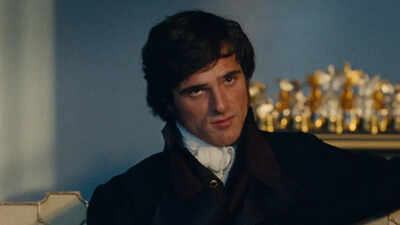
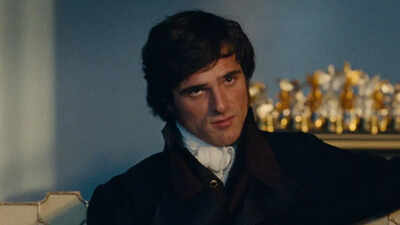
When Emerald Fennell announced her new film version of ‘Wuthering Heights’, jaws dropped all over Hollywood and book circles. Jacob Elordi as Heathcliff, Margot Robbie as Catherine Earnshaw — two of the buzziest names in film, suddenly dropped into one of literature’s most haunted love stories. The internet, predictably, lost its mind. Some folks cheered the boldness. Others, though, tore into the casting, especially Elordi’s, kicking off a bigger conversation about what it really means to bring a classic like this to life in 2026.
‘Wuthering Heights’: What is it about?
Before diving into the drama, let’s step back. ‘Wuthering Heights’ isn’t your typical love story. It’s set in the wild, windy Yorkshire moors and follows Heathcliff, a foundling taken in by Mr. Earnshaw, and Catherine, a force of nature who loves him but chooses money and status over their bond. That choice sets off a storm of obsession, revenge, and heartbreak spanning two generations. Emily Brontë didn’t write a cozy romance — her novel is raw, sometimes cruel, and digs deep into what it means to be an outsider. It’s famous for its emotional intensity and refusal to sugarcoat suffering.
Why Jacob Elordi’s casting sparks ‘concerns’
Since the casting news, the debate’s been relentless, especially about Elordi as Heathcliff.Heathcliff’s Identity in the book vs. movie: In the novel, Heathcliff’s identity isn’t just a detail — it’s the engine of his story. Brontë hints that he’s not white, describing him with words like “gypsy” or even “Lascar,” and the other characters treat him as an outsider. That prejudice shapes everything. So, when a white Australian like Elordi lands the role, a lot of people see it as erasing a huge part of what makes Heathcliff who he is. They argue it flattens the story, turning Heathcliff into just another brooding heartthrob and missing the point about class, race, and why he’s so cut off from everyone else.Changing Heathcliff’s vibe: Early buzz praises the film’s style and performances, but some longtime fans aren’t convinced. They say the movie smooths out Heathcliff’s rough edges, making him more swoon-worthy than the complicated, sometimes frightening figure Brontë gave us. Strip away his darkness, and the tragedy feels more like a standard movie romance than the wild, destructive love story it’s supposed to be. In the book, Heathcliff’s mystery and outsider status aren’t just window dressing — they’re the heart of the novel’s intensity.Other casting and style choices: It’s not just Elordi alone. Some people are side-eyeing the casting of Catherine, too — mainly her age and look. The vibe seems sleeker, more stylized, less gritty than Brontë’s original. Emerald Fennell, the director, has defended her choices, saying Elordi channels the Heathcliff she pictured and can deliver the emotional punch the role demands. Margot Robbie has chimed in, too, basically saying, “Wait until you see it. Trust us.”
Experts’ take on the casting
Claire O’Callaghan, who teaches Victorian literature at Loughborough University, tells Variety, “The ambiguity makes Heathcliff’s character really inclusive.” She adds, “He ends up speaking to all kinds of people, cultures, and communities, especially those who felt the impact of colonialism, who were othered, abused, and oppressed.” Some folks argue that maybe Emily Brontë didn’t actually know who or what Heathcliff was supposed to be. O’Callaghan isn’t buying it. She believes Brontë knew exactly what she was doing. “She’s powerful and deliberate in her choices — that’s what novelists do.”Andrea Kaston Tange, another Victorian literature professor over at Macalester College, sees Brontë’s decision to make Heathcliff ‘different’ as a not-so-subtle reminder of where Northern England’s wealth came from, a history people there didn’t exactly love to discuss. “Heathcliff is symbolic. When you name someone, call them whatever you want, and then erase where they really came from — there’s a long history of that,” she points out, thinking of Victorian England. “A nameless child of color turning up on the streets of Liverpool in the mid-1800s — that’s loaded. So, when Heathcliff suddenly fits right into the upper middle class, it feels off.”Some people still claim Brontë had no clue about the racial tensions swirling around her, or that Heathcliff simply can’t be a person of color. O’Callaghan calls that “naive.” She’s written about the Brontës for years. “The Brontë kids were writing about colonialism when they were young,” she explains. “Back in the late 1820s, they made up a federation called Glasstown, based on Africa. Their stories had British toy soldiers invading this new land, setting up camp, and taking over. The indigenous folks? Moved out of the way. These stories ran for years — sure, there’s romance, but they’re really about colonialism. And in them, you find several characters of color, usually as oppressed or abused people.”Casting a white actor as Heathcliff is nothing new — Laurence Olivier, Richard Burton, and Ralph Fiennes all played him. James Howson was the first actor of color to play Heathcliff in English, in Andrea Arnold’s 2011 film. Still, lots of people see every white Heathcliff as a missed chance to cast a person of color.“It’s not about one movie,” says Soraya Giaccardi Vargas, a senior researcher at USC’s Lear Center. “It’s about decades of erasure. BIPOC communities are still massively underrepresented in media. So, whenever there’s a shot to cast an actor of color and producers go another way, it stirs up questions: Do these communities really matter to the people making these decisions?”When Emerald Fennell faced backlash over casting Jacob Elordi as Heathcliff at the Los Angeles premiere of ‘Wuthering Heights’, she tried to defend her choice. She said the quotation marks in the film’s title showed it was her own interpretation, adding, “You can only really make the movie you imagined when you first read it.”O’Callaghan gets that ‘Wuthering Heights’ means a lot to Fennell. She has talked about reading it when she was 14 or 15. But people keep asking, “Even if you read it young, how did you miss all this? Did you understand what ‘Lascar’ meant, or the racial slur ‘gypsy’?”Kaston Tange relates as well. She says books she read as a teenager look totally different now. “I get it: you read it when you were young, maybe you missed things. But you’re not 15 anymore. You’re directing a movie. You have to pay attention to the whole story — not just Heathcliff and Cathy’s love affair. That’s not really what the book is about.”Interestingly, here’s something that stands out: Fennell’s film casts people of color as Nelly Dean and Edgar Linton — two characters Brontë wrote as clearly white. The movie never brings it up. Kaston Tange isn’t a fan. “Honestly, it just muddies the waters for no good reason. The original novel had its own sharp takes on class, and now it’s all wrapped up in a romance. It’s lost something,” Tange says.O’Callaghan goes further. “This book isn’t just about love. It’s about hate, cruelty, passion, sex, despair, rejection, grief, loss, haunting — all of it. You can’t shove it in a box and call it one thing,” she says.People in the literary world can’t agree, but one thing’s clear: the movie’s made ‘Wuthering Heights’ hot again. As mentioned in the Variety article, in the US, sales more than doubled in 2025, to 180,000 print copies. In the UK, the numbers exploded: January 2026 alone saw over 10,600 copies sold, up from just 1,875 the year before. That’s a 469% jump.In fact, O’Callaghan loves seeing people pick up the novel, but she’s noticed something else, too. “People watch the trailer, check out the movie, and get totally surprised — the book isn’t what they think it’ll be,” she says. “No movie can ever really capture a novel, especially something as wild and layered as ‘Wuthering Heights’. But hey, if it sends people back to the book, that’s a win.”