


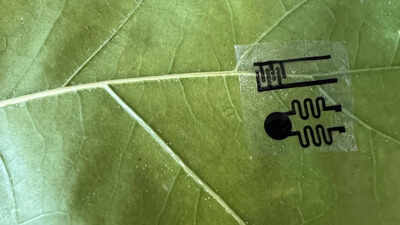
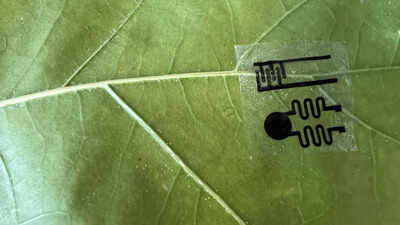
British farmers may soon manage crop conditions using real-time data from advanced plant wearables, similar to how people use smartwatches to monitor sleep, blood oxygen and physical activity.Engineers have developed tiny, tattoo-like leaf sensors and stretchable stem bands that catch distress signals days before a crop visibly suffers from a lack of water, disease or nutrient imbalances.Published in the journal ACS Applied Materials & Interfaces, the innovation gives agricultural workers an intimate, immediate warning system to help crops thrive before curling leaves or stunted growth appear in their fields.Current agricultural monitoring relies heavily on satellite imagery, drones and weather stations. These tools provide visible, infrared and microwave data to map regional greenness, uneven growth, air temperature and soil moisture. While useful, these macro-level measurements focus on conditions that may affect fields in the future or assess damage that has already occurred. The wearable system instead provides a direct look at how the plant is responding to environmental pressures in the moment. It provides a much more personal, contextual level of information about every plant.
Microscopic tattoos powered by plant sweat
The entire wearable setup is designed to operate continuously in harsh field conditions without an external battery or power hookup. Instead, it scavenges microwatts of electricity directly from moisture evaporating from the plant’s surface, solving a major deployment obstacle for remote agricultural technology.To achieve this, the researchers created a thin, flexible leaf sensor using vanadium pentoxide crystals separated into ultra-thin nanosheets. Stacking these sheets into a membrane, they applied a layer of graphene, which is made of carbon atoms, to form a sieve. This sieve allows moisture from the plant to pass through to the nanosheets. As water forms ions and moves through the layers, it generates a small electrical current directly proportional to the amount of moisture exchange with the air.

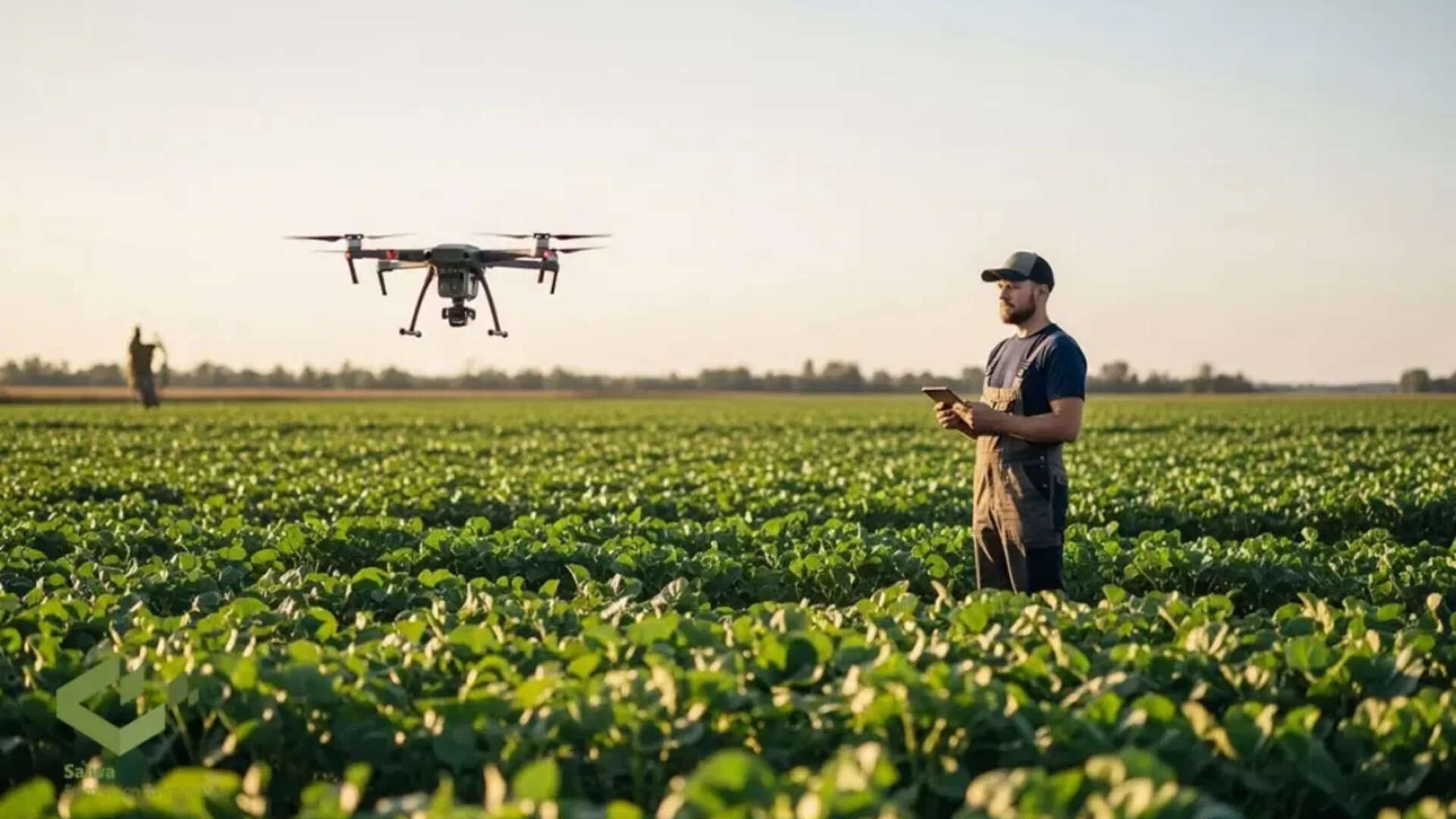
Plant Health Monitoring – Real Time Insights for Farmers
This electrical activity measures the vapor pressure deficit, or VPD. This metric describes how aggressively the dry surrounding air is pulling water from the plant. When VPD is high, the air is dry, forcing plants to close their tiny pores, called stomata, to prevent dehydration. This response protects the crop from drying out, but it also slows down photosynthesis and restricts overall growth.
Kirigami stem bands track long-term health
The leaf sensor monitors immediate atmospheric water loss, but a second device tracks slower biological growth. Wrapped around the plant stem, a stretchable band uses a design inspired by ‘kirigami’, the Japanese art of cutting paper, to expand and deform safely without damaging the plant tissue or restricting natural movement.It is coated with a soft, ion-conducting gel called a eutectogel and the stem sensor changes its electrical resistance as the plant grows or contracts. In healthy conditions, a plant’s stem diameter tends to increase over time. Under biological stress, this growth slows down, or the stem may even shrink. Pairing the two sensors allows farmers to view crop health across two entirely different timescales.“The larger promise is not merely that one plant can wear one sensor,” said Sameer Sonkusale, professor of electrical and computer engineering at Tufts University and senior researcher on the project.They added: “It is that fields could one day contain networks of plant-level monitors, each reporting early signs of thirst, salt stress, disease or nutrient imbalance. Satellites and drones already give farmers a bird’s-eye view. Plant wearables could provide something more intimate: the plant’s-eye view.”
Distinguishing between multiple field stressors
During laboratory trials on bell pepper plants, the dual-sensor system successfully distinguished healthy crops from those facing water shortages and salinity stress. Healthy plants showed rhythmic, predictable changes in VPD over time, following the normal daily cycles of air moisture.In contrast, water-stressed plants exhibited a steadily rising VPD trend. Salinity-stressed plants showed a different pattern entirely, with a reduced VPD compared to the healthy control group, a variation linked to altered water uptake and changes in stomatal behavior. Meanwhile, the accompanying stem sensor accurately tracked the continuous diameter growth in healthy plants and the shrinking diameter in the stressed crops.Nafize Hossain, a graduate student who led the research in the Sonkusale lab, noted that existing agricultural technologies struggle to track multiple stressors simultaneously and rely heavily on bulky external power sources that complicate field deployment.“The leaf sensor is more of an early warning system showing how the plant is responding in the moment, before visible signs appear,” Hossain said.They added: “Other plant sensors exist, but their ability to track multiple stressors and growth-related parameters is limited, and the technology often relies on external batteries, which complicate field deployment.”The sensors are built specifically to withstand real-world outdoor elements. The leaf tattoo is resilient enough to tolerate bending and stretching, while the stem sensor’s kirigami pattern helps distribute strain during sudden environmental disturbances like strong winds.The research team is currently developing a fully functional wireless communication platform to transmit data directly from the fields using long-range (LoRa) or Bluetooth networks. Future iterations of the wearable technology may also be expanded to monitor specific plant hormones, early responses to pathogens, and nutrient levels related to root, fruit and leaf growth.