


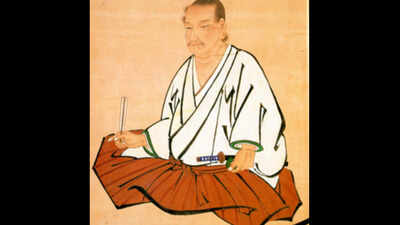
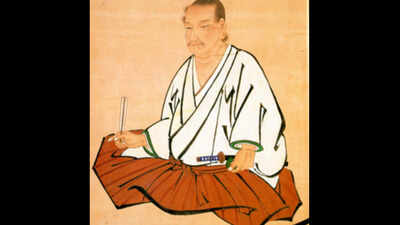
The samurai were the hereditary military nobility and warrior class of feudal Japan. Miyamoto Musashi was a Japanese swordsman, strategist, and philosopher born in the late sixteenth century. He is widely regarded as one of the most accomplished martial artists in history, having fought in over sixty duels without suffering a single defeat. His life spanned a transitional period in Japanese history, moving from the bloody civil wars of the Sengoku period into the long peace of the Tokugawa shogunate.Musashi began his career as a duelist at a very young age, killing his first opponent when he was just thirteen years old.
CJP Jantar Mantar Protest Updates
As he traveled across Japan refining his skills, he eventually created his own unique style of fencing called Niten Ichi-ryu, which involved fighting with two swords simultaneously rather than holding a single blade with both hands. Later in life, Musashi withdrew from active combat to focus on painting, calligraphy, sculpture, and philosophy. Shortly before his death in a cave in 1645, he wrote down his life’s philosophy in a text known as The Book of Five Rings.It is in this book that he wrote one of the greatest Samurai wisdom: ‘You must understand that there is more than one path to the top of the mountain’
Meaning of the quote and the significance of the mountain
There are many ways to do the same thing. And if all lead to success, the ways do not matter; the mountain matters. The quote about understanding that there is more than one path to the top of the mountain comes directly from Musashi’s reflection on strategy, human growth, and spiritual discipline. At its core, the statement is a warning against dogmatic thinking and rigidity. Musashi believed that many people become overly attached to a single method, style, or set of rules, assuming that their chosen way is the only valid road to mastery.When applied to physical combat, the quote means that a true master must not rely on a single weapon or a single rigid fighting technique. A person who only knows how to use a single type of sword will fail when stripped of that sword. A strategist who insists on approaching every battle with the exact same tactic will inevitably be defeated by an opponent who can adapt. To Musashi, the ultimate goal of training was not to memorize specific moves, but to understand the universal nature of conflict and timing so deeply that one could succeed using any tool or approach available.Beyond martial arts, the metaphor of the mountain peak represents any ultimate goal, such as truth, self-mastery, personal success, or spiritual peace. The mountain peak remains fixed, but the routes up its sides are infinite. Some paths are steep and direct, requiring great physical strength. Other paths wind slowly around the slopes, relying on patience and endurance. Some routes require a person to navigate thick forests, while others demand climbing over open rock.Route vs destinationThe quote reminds us that the specific path a person takes is secondary to the actual climb. Two people can follow entirely different disciplines, rely on completely different life experiences, and hold different daily habits, yet both can achieve the exact same high level of wisdom and competence. Problems arise when people confuse the route for the destination. When someone becomes convinced that their specific path is the absolute only way to succeed, they often waste energy judging or opposing others who are simply climbing up a different side of the same mountain.Musashi observed this flaw frequently in the martial arts schools of his era. Many teachers claimed that their specific style was sacred and superior to all others. They taught fixed stances and ritualized movements that only worked in controlled environments. Musashi criticized this because it created a false sense of security. He argued that if a method does not work in a real, unpredictable situation, it is useless, no matter how prestigious its history might be.By encouraging people to look at the mountain rather than getting attached to one specific trail, Musashi promotes extreme adaptability. He advises individuals to remain flexible, open-minded, and pragmatic. If a chosen path becomes blocked by an unexpected landslide or cliff, an adaptable person does not sit down and give up, nor do they try to push through an impossible wall out of stubbornness. Instead, they simply step back, assess the terrain, and find a new way upward.Ultimately, the quote teaches self-reliance and broad perspective. It asks us to respect the diverse ways other people learn and grow, while encouraging us to find the specific approach that best fits our own nature and circumstances. Mastery is not about copying someone else’s steps perfectly, but about reaching the summit through continuous effort, acute awareness, and unwavering resolve.