


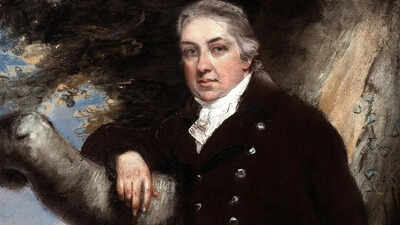
Imagine being so happy about your work that you lose yourself in a daydream while walking through a field. That is exactly what happened to an English country doctor more than 200 years ago. His name was Edward Jenner, and the work that filled him with such joy went on to save more human lives than almost any other discovery in history. The “great calamity” he wrote about was smallpox, a disease that once terrified the entire world. Jenner believed he might be the man chosen to defeat it. He was right. Here is the story behind this quote, what it really means, and why it still matters in our own lives today.
Quote of the day by Edward Jenner
“The joy I felt at the prospect before me of being the instrument destined to take away from the world one of its greatest calamities was so excessive that I sometimes found myself in a kind of reverie.”
Who was Edward Jenner
Edward Jenner was born in 1749 in the small town of Berkeley, in Gloucestershire, England. He grew up in the countryside and stayed close to it for his whole life. He trained as a doctor and then returned home to work as a humble country physician, treating ordinary people in rural villages.He was also a keen lover of nature. He studied birds and even made important observations about the cuckoo. He was the sort of curious, patient man who noticed small things that other people missed. That habit of careful watching would later change the world.Today he is often called the father of immunology. But in his own time, he was simply a thoughtful local doctor with a very big idea.
The disease that terrified the world
To understand why Jenner felt such joy, you have to understand what smallpox was actually like.Smallpox was one of the most feared diseases in human history. It spread easily and killed roughly one in three people who caught it. Those who survived were often left with deep scars on their faces, and many were blinded. In the 1700s, it is believed to have killed hundreds of thousands of people in Europe every single year. Kings, peasants and children were all at its mercy.There was an early form of protection, but it was dangerous. Doctors would deliberately give a person a small dose of smallpox itself, hoping they would get a mild case and become immune. Sometimes it worked. Sometimes the person caught the full disease and died. People were desperate for something safer.
The breakthrough that changed history
Jenner noticed something that local farmers already half believed. Milkmaids who worked closely with cows often caught a mild disease called cowpox. And these same milkmaids rarely seemed to catch deadly smallpox.Jenner wondered if there was a real link. So in 1796, he carried out a bold experiment. He took a tiny amount of material from a cowpox sore on the hand of a dairymaid named Sarah Nelmes. He then placed it into a small cut on the arm of an eight-year-old boy named James Phipps, the son of his gardener.The boy developed a mild cowpox reaction and quickly recovered. Then came the real test. Jenner exposed the boy to smallpox itself. The child did not fall ill. The protection had worked.Jenner had discovered a way to defend people against a killer disease without putting them in danger. He called the method “vaccination”, from the Latin word “vacca”, which means cow. In 1798, he published his findings so the whole world could learn from them.
What is the meaning of the quote by Edward Jenner
Now the quote makes perfect sense. Jenner was not bragging. He was describing a feeling of overwhelming joy and purpose.He used the word “instrument”, which is important. He did not see himself as a great hero standing above everyone else. He saw himself more as a tool, a means through which a huge good might be delivered to humanity. The “calamity” he wanted to take away was smallpox, the disease that had caused so much death and suffering.The most touching part is the word “reverie”. A reverie is a happy daydream, the kind where your mind drifts off because it is so full of a pleasant thought. Jenner was saying that the simple idea of helping to rid the world of this horror made him so happy that he sometimes stood lost in thought in the middle of a meadow.So the real meaning of the quote is this. There is a deep and almost dreamlike joy that comes from working on something far bigger than yourself. It is the happiness of useful purpose.
Importance of this quote in today’s life
This quote matters today because it describes a kind of happiness that is easy to forget in modern life.We are often told that joy comes from comfort, money, success or recognition. Jenner’s words point somewhere else entirely. His joy did not come from fame or reward. In fact, his discovery faced mockery and doubt at first, and he spent years defending it. His happiness came purely from the hope of doing good for others.In a busy, competitive world, that message is powerful. Many people feel tired or empty even when life is going well on paper. Jenner reminds us that meaning is not the same as success. The deepest satisfaction often comes from feeling useful, from knowing your work helps real people.His quote also reminds us how much a single person can matter. He was not a king or a powerful leader. He was a country doctor who paid attention. Yet the ripple of his work reached billions of lives. That is a hopeful idea for anyone who feels small or unimportant.
How to apply this quote in today’s life
You do not need to cure a disease to live by Jenner’s example. The lesson can be applied in small, everyday ways.First, look for purpose in what you do. Whatever your job is, try to connect it to the people it helps, even in a small way. A teacher shapes minds. A cook feeds families. An engineer keeps things safe. Seeing the human good behind daily work can turn a boring task into a meaningful one.Second, value progress over praise. Jenner found joy while his work was still in progress, long before the world thanked him. You can do the same by enjoying the act of building something good, instead of waiting for applause that may never come.Third, stay curious and pay attention. Jenner’s discovery began with a simple observation that others ignored. Train yourself to notice problems around you and ask honest questions. Big change often starts with a small, sharp eye.Finally, think beyond yourself. The next time you feel low, try shifting your focus from what you lack to what you can offer. Helping others, even in tiny ways, has a strange power to lift your own spirits. Jenner felt joy in the meadow precisely because his mind was fixed on the good he might do for everyone else.
Edward Jenner’s dream outlived him and changed the world forever
Edward Jenner’s daydream came true, though he did not live to see the full result. He died in 1823, still convinced that smallpox could one day be wiped out completely.Nearly 160 years later, the world proved him right. In 1980, the World Health Organization announced that smallpox had been completely eradicated. It remains the only human disease ever to be wiped from the face of the earth. The calamity Jenner dreamed of removing is now gone, and his method paved the way for the vaccines that protect us to this day.So this quote is far more than a happy line from an old letter. It is the recorded feeling of a man at the exact moment he glimpsed a better future for all of humanity, and chose to spend his life chasing it.It leaves the rest of us with a quiet question worth carrying through the day. What kind of work could fill you with such purpose that you, too, might lose yourself in a hopeful daydream in the middle of an ordinary afternoon?