


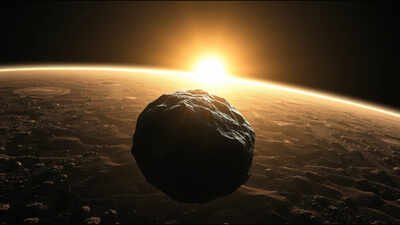
A 1.5-kilometre asteroid orbiting the Sun between Mars and Jupiter now carries the name of Astrid Eeuwes, a Dutch amateur astronomer from Nijmegen who spends much of her time studying micrometeorites, tiny particles of space material that survive their journey through Earth’s atmosphere and settle in places such as rooftops and gutters. The object, previously known by the provisional designation 2018 BS7, has officially become (585349) Eeuwes, after the name was approved by the International Astronomical Union’s Working Group on Small Bodies Nomenclature in May 2026. Eeuwes specialises in finding micrometeorites in rooftop and gutter debris and also gives lectures about micrometeorites and other astronomy topics. Her work earned her the 2023 Dr J. van der Bilt Prize from the Dutch Royal Astronomical and Meteorological Association. Now, a minor planet carries her name, turning years of citizen science and astronomy outreach into a permanent connection with the Solar System.\
How the asteroid now named after Astrid Eeuwes was discovered in Hungary
The asteroid had been in astronomical records for more than a decade before receiving Eeuwes’ name. According to the Working Group on Small Body Nomenclature Bulletin, the official publication of the International Astronomical Union’s working group responsible for approving minor-planet names, the object was discovered on October 25, 2012, by astronomers Marco Langbroek and Krisztián Sárneczky at Piszkés-tető Observatory in Hungary. The bulletin identifies the discovery site as Piszkés-tető and gives the observatory code as 461.The asteroid later received the provisional designation 2018 BS7 before eventually being assigned the permanent number and name (585349) Eeuwes. The distinction is important because the 2018 designation does not indicate that the asteroid was first discovered in 2018. The official IAU record explicitly gives the discovery date as 2012 while listing the object as 2018 BS7.Langbroek and Sárneczky’s discovery came years before Eeuwes’ name was attached to the object, meaning the asteroid’s connection to her is not related to its discovery. Instead, the naming recognises her own contribution to amateur astronomy and public engagement with space science.
Why Astrid Eeuwes was chosen for the asteroid’s name
The IAU’s official citation describes Eeuwes as a Dutch amateur astronomer who has specialised in finding micrometeorites in rooftop and gutter detritus. These tiny particles are remnants of material from space that survive passage through Earth’s atmosphere and can accumulate among ordinary debris on buildings.Her work goes beyond simply collecting the particles. The IAU specifically notes that she gives lectures on micrometeorites and other astronomy topics, making her work accessible to people outside professional scientific institutions. She was also the recipient of the 2023 Dr. J. van der Bilt Prize from the Dutch Royal Astronomical and Meteorological Association, recognition that predates the asteroid naming.That makes the naming particularly notable because Eeuwes is being recognised not as a professional astronomer at a major research institution, but for the contribution she has made through amateur astronomy, micrometeorite research and science communication.The asteroid’s naming also illustrates how the minor-planet naming process can preserve contributions that might otherwise remain largely outside the formal scientific record. Once approved, a name becomes part of the permanent astronomical designation of the object.
What the asteroid’s new name means for Eeuwes
The asteroid is now permanently catalogued as (585349) Eeuwes, linking Eeuwes’ name to an object that will continue its orbit around the Sun in the asteroid belt. The official WGSBN bulletin lists the object alongside dozens of other newly named minor planets in its May 25, 2026 issue.For Eeuwes, the recognition brings an unusually direct connection between the small pieces of space material she studies on Earth and a much larger object travelling through space itself. Her work focuses on particles that can be collected from seemingly ordinary places such as rooftops and gutters, while her new namesake is a kilometre-scale body moving through the asteroid belt millions of kilometres away.The naming also puts her in the long tradition of amateur astronomers whose contributions have become part of the permanent astronomical record. The IAU’s citation makes clear that her recognition rests on her specialised micrometeorite work, astronomy lectures and contribution to public understanding of space science.