


For centuries, pilgrims have crossed some of the most unforgiving terrains on earth just to catch a glimpse of a mountain surrounded by mysteries. That’s the strange, beautiful paradox at the heart of the Kailash Mansarovar Yatra, where the destination is never touched, only witnessed, prayed to, and circled from a respectful distance.Every year, thousands of devotees go on this gruelling trek through the high Himalayas, driven by beliefs that date back millennia, but still hold enormous power today. What makes this pilgrimage so enduring isn’t just its physical difficulty, but the layers of meaning stacked onto it by Hindus, Buddhists, Jains, and followers of the Bon tradition.

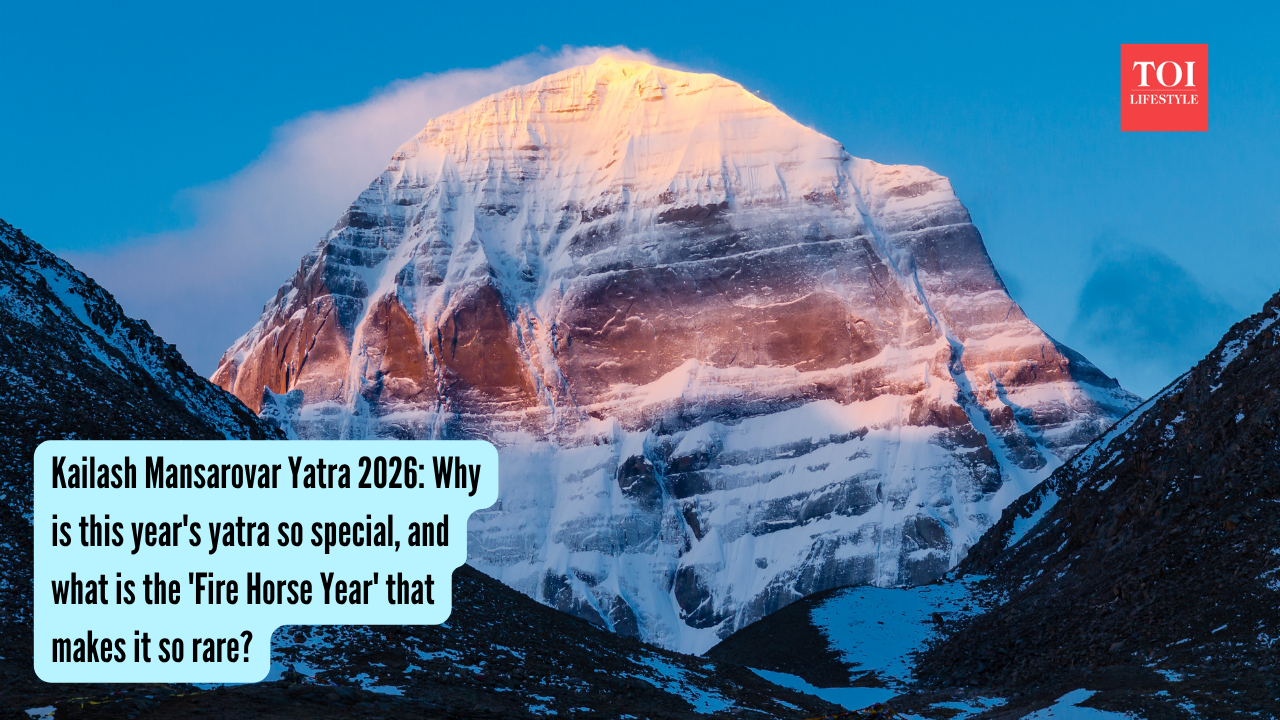
Mount Kailash (Photo: canva)
But what makes this year’s yatra so special?Let’s dig in to find out
What is the Kailash Mansarovar Yatra
The Kailash Mansarovar Yatra takes devotees to Mount Kailash and Lake Mansarovar in Tibet’s remote highlands. Hindus regard Kailash as the eternal abode of Lord Shiva and Parvati, Buddhists call it Kang Rinpoche, Jains believe their first Tirthankara attained liberation there, and Bon followers see it as the spiritual centre of existence. Climbing the peak is, however, prohibited, so pilgrims instead complete the sacred 52-km Kailash Parikrama, or Kora, circling it on foot.
Why 2026 is a rare Tibetan horse year
According to Tibetan tradition, 2026 falls under the Horse Year, one of twelve animal years in the Tibetan zodiac cycle, which repeats only once every 12 years. The horse is associated with courage, freedom, and spiritual momentum. Since Mount Kailash is regarded as the centre of the universe in Tibetan belief, a Horse Year is considered the most spiritually potent time to undertake the yatra. The last such year fell in 2014, and the next won’t arrive until 2038.
So, what makes the Kailash Yatra 2026 so special?
What makes 2026 rarer still is that it also happens to be a ‘Fire Horse Year’, a combination that occurs only once every 60 years under the Tibetan and Chinese elemental-zodiac cycle. Fire is traditionally linked to purification and transformation, while the horse symbolises movement and courage. Together, this pairing is believed to create an especially powerful window for spiritual renewal, making the wait for its return a matter of decades, not years.
Why is the parikrama believed to carry extra merit
Central to the yatra is the Kailash Parikrama, a demanding three-day trek around the mountain. As per Tibetan Buddhist belief, completing this circuit during a Horse Year is considered spiritually equivalent to completing it 13 times in an ordinary year. This belief has historically drawn a noticeable surge in pilgrim numbers during past Horse Years.
Why is Lake Mansarovar so revered in this sacred cycle?
Sitting at roughly 4,590 metres, Lake Mansarovar is among the highest freshwater lakes in the world and forms an essential part of the pilgrimage. Devotees traditionally bathe in its waters, believing it cleanses accumulated karma, which is considered even more significant during the Fire Horse Year. With this rare alignment of the 12-year and 60-year cycles, 2026 is a truly once-in-a-lifetime opportunity for the Kailash Mansarovar yatra.