


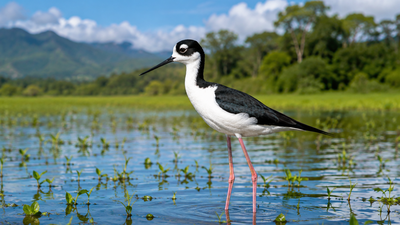
Hawaii’s native Hawaiian stilt, known as aeʻo, has made a remarkable recovery after decades of population decline pushed the bird to roughly 200 individuals in the 1940s. Habitat loss, hunting and introduced predators had severely affected the long-legged wetland bird. More than five decades of legal protection, wetland restoration, predator control and monitoring have since helped the population grow to more than 1,500 birds. In July 2026, the US Fish and Wildlife Service recognised that progress by reclassifying the aeʻo from federally endangered to threatened. A new study based on more than 50 years of nesting data also found improvements in nesting and chick-fledging success, although the species remains dependent on continued conservation and faces threats including habitat loss and sea-level rise.
Hawaii’s native stilt fell to around 200 birds
The Hawaiian stilt (Himantopus mexicanus knudseni) was once much more widespread across the Hawaiian Islands, but its numbers declined sharply during the 20th century. By the 1940s, only around 200 birds were thought to remain. The decline was driven by several pressures, including the destruction and alteration of wetlands for agriculture and development, hunting and predation from introduced animals. The bird was eventually listed as federally endangered in 1973, giving conservation agencies a legal framework to protect the remaining population and its habitat.
Communities and scientists helped rebuild the population
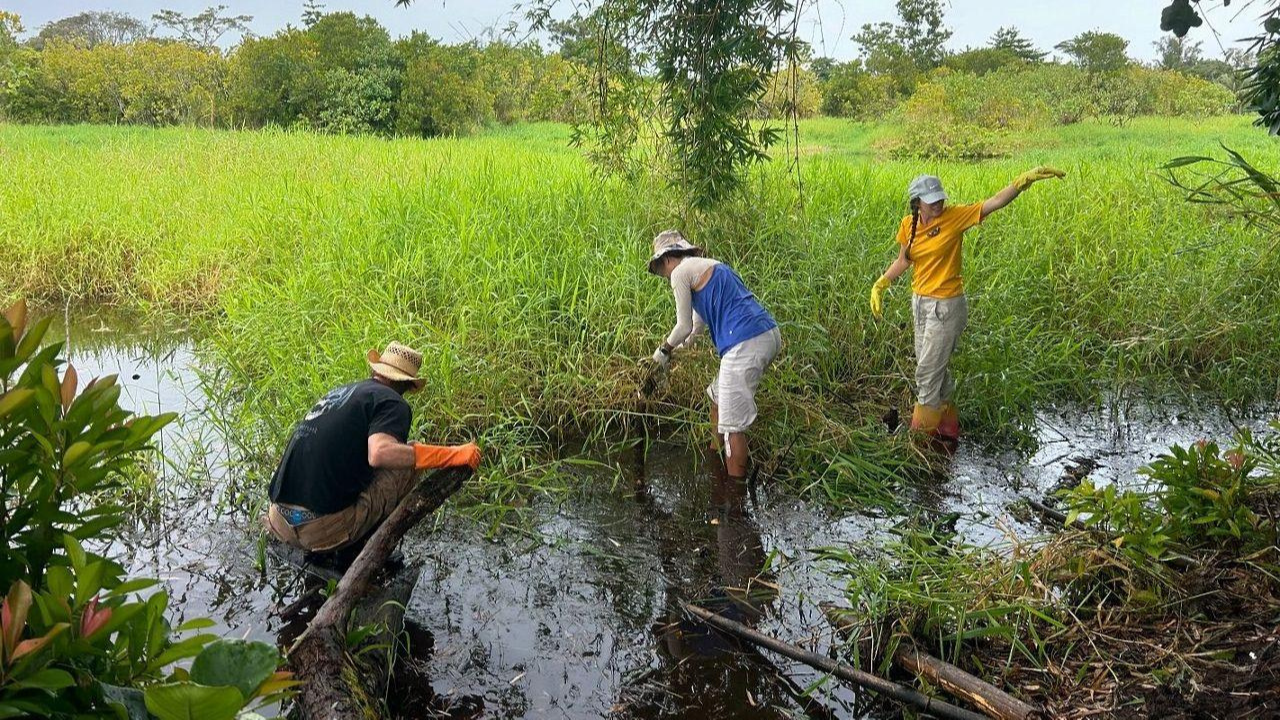
The recovery has not been the work of a single organisation. It has involved the US Fish and Wildlife Service, Hawaii’s state wildlife managers, researchers, the US military, private landowners, conservation organisations and local communities. Conservation measures have included controlling introduced predators such as rats, mongooses and cats, managing water levels, removing invasive vegetation and protecting and restoring wetlands. Researchers have also monitored nests, eggs and chicks over decades to understand which interventions were helping the birds reproduce successfully. The US Fish and Wildlife Service specifically credited the State of Hawaii, the military, private landowners and local organisations as important conservation partners in the species’ recovery.

More than 1,500 Hawaiian stilts now survive
The population has grown substantially from its historical low point and is now estimated at more than 1,500 birds. Researchers describe the aeʻo as a conservation success story in progress, rather than a species that has completely recovered. A 2026 study examined more than five decades of reproductive information from 2,056 nests and 1,051 fledglings across nine Oʻahu wetlands between 1963 and 2020. The researchers found that both nesting success and fledging success increased over time, with the findings suggesting that conservation actions helped reduce nest failures and improve chick survival.The study also found that the strongest reproductive results occurred at locations with predator exclusion and minimal flooding, providing evidence that active management of wetland conditions can make a meaningful difference. However, not every reproductive measure improved. Clutch size, hatching success and overall reproductive success did not show significant increases over the period studied.
The bird is no longer federally endangered
The recovery reached an important milestone in July 2026, when the US Fish and Wildlife Service officially reclassified the aeʻo from endangered to threatened under the Endangered Species Act. The change came after decades of conservation work and assessments showing that the population had been stable to increasing for several decades across the islands where the bird occurs. The agency also introduced a species-specific Section 4(d) rule intended to provide flexibility for conservation and habitat-management activities while maintaining protections for the bird.The change in status does not mean the Hawaiian stilt is safe from extinction. The US Fish and Wildlife Service said the species continues to face threats from introduced predators, habitat loss and modification, type C botulism and future sea-level rise. Continued predator, vegetation and water-level management is expected to remain important for maintaining the population’s current trajectory.
Restored wetlands could determine what happens next
Wetlands are central to the aeʻo’s recovery because the birds feed and nest in lowland coastal wetlands, including areas with shallow water and exposed mudflats. The 2026 study found that expanding managed wetland habitat could be particularly important for further recovery. The birds have also been documented colonising restored wetlands and Indigenous wetland agro-ecosystems, showing that carefully managed human landscapes can provide useful habitat.However, the future of some coastal wetlands is threatened by sea-level rise. Researchers say expanding and restoring suitable wetlands will therefore be important not only for increasing the population but also for ensuring that habitat remains available as environmental conditions change. Community-led and culturally grounded restoration efforts could play an increasingly important role in that process.
A conservation success story that is not finished
The Hawaiian stilt’s journey from roughly 200 birds in the 1940s to more than 1,500 today demonstrates what long-term conservation can achieve. More than 50 years of legal protection, habitat management, predator control, scientific monitoring and cooperation between government agencies and communities have helped move the species away from the brink. But the aeʻo remains conservation-dependent, meaning its continued survival still relies on active human intervention. Its new threatened status is therefore better understood as a milestone in an ongoing recovery, rather than the end of the conservation effort.