


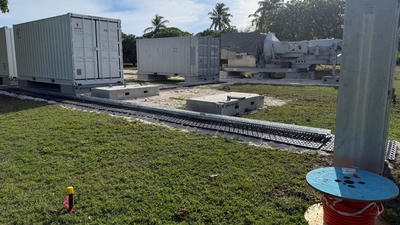
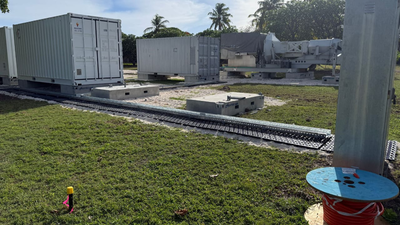
BENGALURU: The Indian Space Research Organisation (Isro) has completed transportation of its antenna to be installed at the telemetry, tracking and command (TTC) for the station it is setting up in Australia’s Cocos (Keeling) Island for tracking of the Gaganyaan orbital module.TOI was the first to report that Isro and the Australian Space Agency (ASA) were in talks for the said tracking station at Cocos (Keeling) Islands, in 2021. And, in 2022, the implementation arrangement with ASA was executed for establishing transportable TTC terminal at Cocos Island for ascent phase support. The Australian Space Agency officially confirmed the development and said: “Australia’s support for India’s Gaganyaan Human Space Flight Programme has reached new heights with Isro’s tracking antenna, and control, storage and mess containers from Nova Systems arriving at Site 5 of the Old Quarantine Station on the Cocos Islands.”Isro will need a 360° view for Gaganyaan as it cannot afford to have any blind spot, and the station in Australia is part of a larger initiative to have stations in multiple locations, aside from using stations belonging to other space agencies through agreements.An ASA spokesperson had told TOI earlier that aside from providing the site for the tracking station at Cocos Island, ASA would also lead cross-government coordination on Isro’s request to place temporary ground station tracking facilities. “…This includes facilitating advice to Isro from a number of Commonwealth agencies which will need to grant approvals for the project to go ahead,” the spokesperson had said.Isro, which is targeting the launch of the first uncrewed mission under Gaganyaan this year, has said that it has completed more than 8,000 ground tests in 2025, moving into the final phase of preparations for its first uncrewed mission.As per Isro, a High-Level Review Committee was set up for close monitoring, alongside a comprehensive zero-based audit of documents.“Organisational changes were introduced in the Environmental Control and Life Support System based on available expertise across centres. An Integrated Mission Review Committee is examining critical aspects to address design and simulation gaps and strengthen mission strategy.”All propulsion tests required for human rating have been completed. Software simulations are under way at multiple test beds, with environmental tests expected to conclude shortly to keep the uncrewed mission on schedule.On the hardware front, the first Integrated Air Drop Test validated parachute deployment and sea recovery of the crew module. Parachute deployment and recovery systems were also tested through air-drop and drogue parachute trials. Experience from the Axiom-4 mission, which carried Group Captain Shubhanshu Shukla to the International Space Station, is being fed back into training and mission planning.