


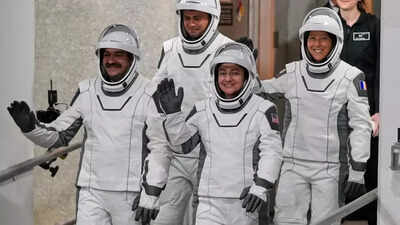
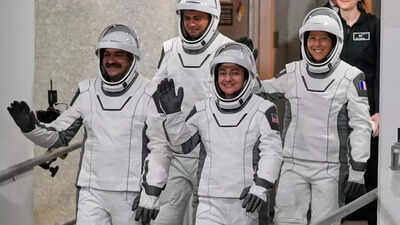
The International Space Station is back to full strength. Four new astronauts arrived over the weekend, sliding into orbit to replace a crew that left earlier than planned after a sudden medical emergency. It was a tense few weeks for NASA. For the first time in 65 years of human spaceflight, an astronaut had to be evacuated for health reasons. That decision left the station running lean, with just three people on board. The orbiting laboratory felt, by all accounts, a little quieter than usual. Now, with a new team settling in for what could be eight or nine months, things seem to be returning to normal, at least as normal as life 277 miles above Earth can be.
International Space Station crew arrival after SpaceX launch
The new crew blasted off from Cape Canaveral aboard a SpaceX spacecraft and docked with the International Space Station on Saturday. On board were NASA astronauts Jessica Meir and Jack Hathaway, French astronaut Sophie Adenot, and Russian cosmonaut Andrei Fedyaev. As the capsule locked into place, Adenot reportedly called out a cheerful “Bonjour!” It was a small, very human moment after a highly technical journey through space.A couple of hours later, the hatches opened. Smiles floating in microgravity. “Let’s get rolling,” Meir said, as the expanded crew prepared to begin their mission.
NASA keeps quiet after astronaut’s sudden illness on space station
NASA has been tight-lipped about what actually happened. The astronaut who fell ill on 7 January has not been named. Officials cite medical privacy, which is understandable. Space agencies, experts say, tend to tread carefully when it comes to crew health.One of four astronauts who launched last summer experienced what NASA described as a serious health issue. The decision was made to bring the crew home more than a month early. They reportedly spent their first night back on Earth in a hospital before returning to Houston. That left only three astronauts on the station, one American and two Russians. NASA paused spacewalks.
Meet the astronauts carrying experience and national pride into orbit
Jessica Meir is no stranger to orbital life. A marine biologist by training, she previously flew to the station in 2019 and took part in the first all-female spacewalk. That moment made headlines around the world and still feels historic.Andrei Fedyaev has also lived and worked aboard the station before. A former military pilot, he brings experience and reportedly a calm presence, something crews tend to value in tight quarters.Sophie Adenot is making history of her own. A military helicopter pilot, she is only the second French woman to travel into space. That milestone resonates strongly back home in France, where space exploration continues to capture public imagination.Jack Hathaway, a captain in the US Navy, rounds out the quartet. Perhaps less publicly known, but every ISS crew member arrives after years of training, simulations, and survival drills that most of us would struggle to imagine.
International Space Station returns to busy schedule
With seven people on board again, operations are expected to ramp up. Spacewalks may resume soon. Scientific research will likely return to a fuller schedule. The ISS supports hundreds of experiments, from medical studies to materials science. Some of that work cannot easily be replicated on Earth. Microgravity changes everything. Fluids behave differently. Muscles weaken. Even bacteria can act in unexpected ways.NASA has said it did not alter its preflight medical checks for the new arrivals. That detail stands out. It suggests confidence in existing screening processes, even after a rare emergency.