
E20 sparks concerns among riders
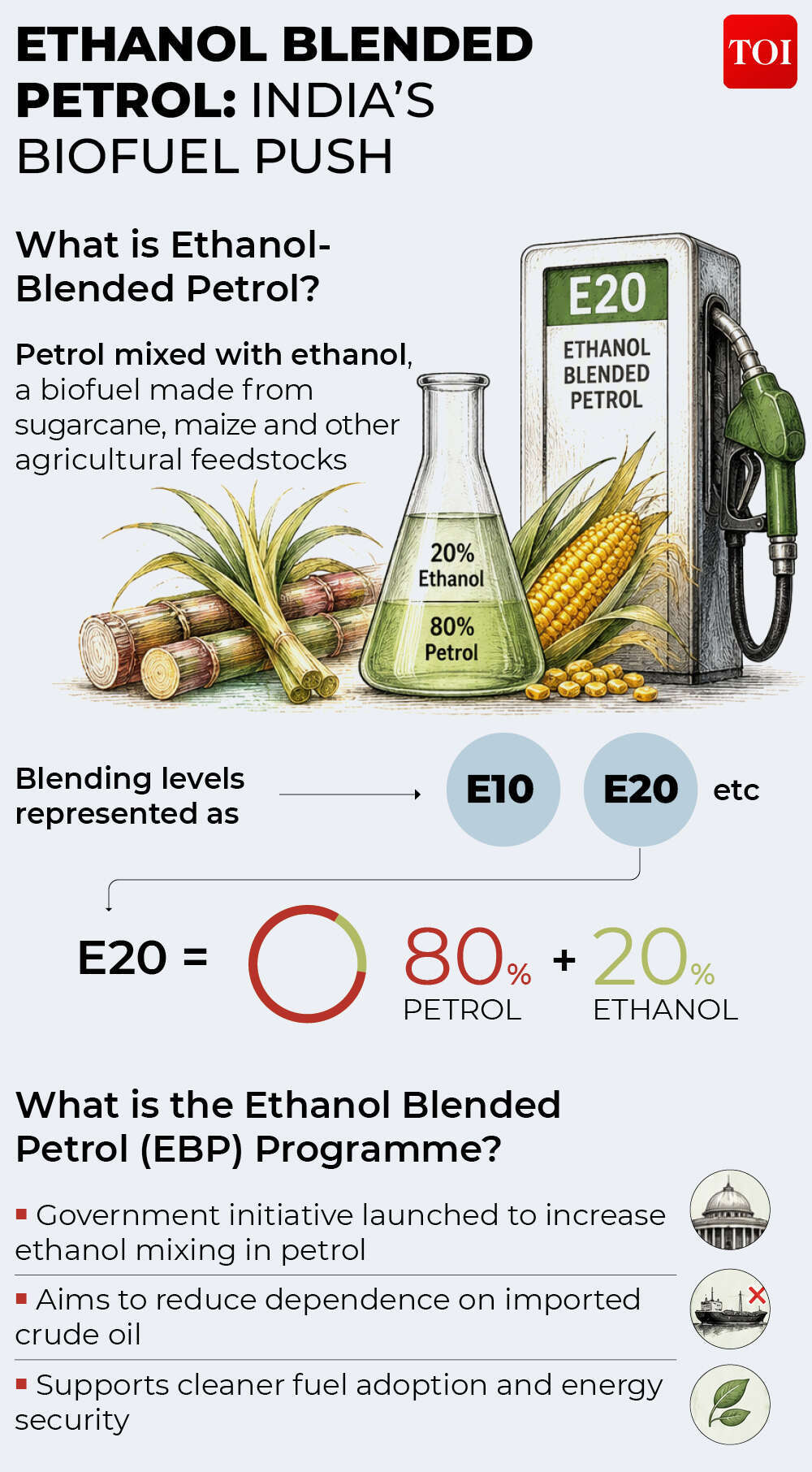
The Centre’s push for mandatory 20% ethanol-blended petrol, or E20, has triggered a political row, with Opposition leaders citing a 2021 NITI Aayog report to question the nationwide rollout. They argue that the Centre departed from the phased transition and safeguards proposed in the report before making E20 the standard fuel at petrol pumps across India in April 2025.The controversy escalated after a Supreme Court hearing on petitions challenging the E20 policy. During the hearing, Attorney General R Venkataramani referred to E20 as an “experiment”, saying its results would be known next year. While the Centre later denied that E20 itself was being described as an experiment, videos of the court proceedings went viral, fuelling fresh criticism and renewed focus on the NITI Aayog roadmap.
What does NITI Aayog report say?
Released in 2021, the NITI Aayog report laid out India’s roadmap for transitioning to higher ethanol blending in petrol. It argued that higher ethanol blending would reduce crude oil imports, improve energy security, lower emissions and create a stable market for agricultural feedstock. At the same time, it prescribed the conditions under which the shift to E20 should take place.The report recommended a phased rollout, with E10 remaining available across the country until 2025 as a “protection fuel” for existing vehicles, while E20 was to be introduced gradually from April 2023 before becoming widely available by 2025.It also recognised that older vehicles would not perform the same on E20. The report estimated that fuel efficiency could decline by 6-7% in four-wheelers designed for E0 and calibrated for E10, 3-4% in similarly designed two-wheelers, and 1-2% in newer four-wheelers designed for E20. It added that engine modifications and calibration could reduce these losses.On vehicle compatibility, the report said tests found no abnormal wear or damage to engine metal components, but some rubber and plastic materials, including elastomers, performed poorly with E20 and would need to be replaced with ethanol-compatible components in newer vehicles.The expert committee also suggested tax incentives to offset the drop in fuel efficiency, recommending that E20 be priced lower than regular petrol through tax relief to encourage consumers to switch.The report further proposed that manufacturers introduce E20-compatible vehicles in phases, with material-compliant vehicles from April 2023 and fully E20-tuned vehicles from April 2025.
Why are people worried?
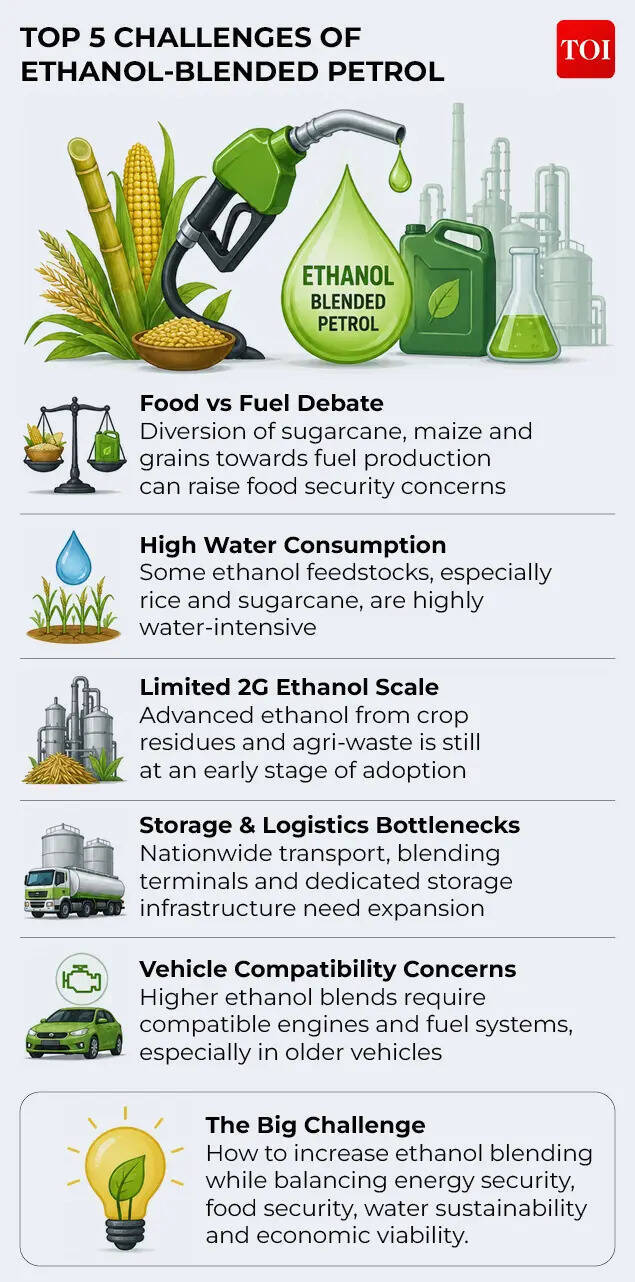
The biggest concern has been mileage.Since E20 became available nationwide, many vehicle owners have complained that their cars and two-wheelers are delivering fewer kilometres per litre. Government-backed studies by the Automotive Research Association of India (ARAI), Indian Oil and SIAM estimate that fuel efficiency may decline by around 3-4%, while fuel consumption could increase by up to 6% in some vehicles. However, many consumers claim the real-world impact is higher.Concerns over older vehicles are also rooted in findings of a 2021 ARAI study, which the government and automobile manufacturers have repeatedly cited in support of the E20 rollout. While the study found no significant corrosion or damage to metallic engine components, it noted that certain rubber parts in fuel systems—such as hoses, gaskets, seals and O-rings—showed signs of faster deterioration with E20 and “may need replacement” in E10-compatible vehicles.
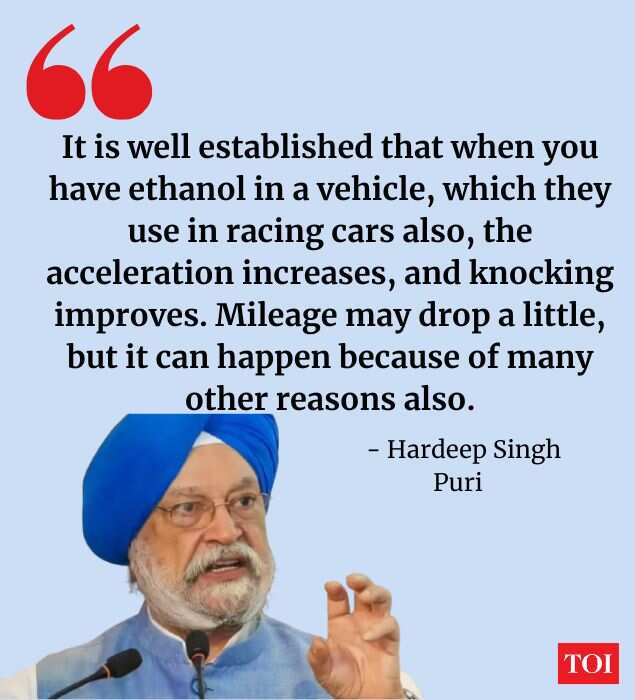
The study also recorded mixed results in engine durability tests. One BS-IV four-wheeler engine completed testing without issues, while a BS-VI turbocharged engine developed an exhaust valve problem during durability testing. However, experts associated with the study said such failures can occur for multiple reasons and cannot automatically be attributed to E20 alone. Tests on engines from three two-wheeler manufacturers did not flag any durability concerns.Overall, the study concluded that E20 did not adversely affect metallic engine components or emissions performance. It did, however, estimate that fuel consumption could rise by 2-6% compared to E10, depending on the vehicle.

What happened in the Supreme Court?
The issue gained national attention after the Supreme Court heard petitions challenging the E20 rollout, with petitioners raising concerns over its impact on consumers and seeking an independent evaluation of the policy.During the hearing, Attorney General R Venkataramani referred to E20 as an “experiment” whose results would become clear next year. The remark quickly went viral.The government later clarified that Venkataramani had used the term only in the context of ethanol supply volumes and not the E20 policy itself. The Attorney General also told Reuters that his comments had been misunderstood.
Why are opposition parties protesting?
Opposition leaders argue that the Centre rolled out E20 nationwide despite concerns over mileage and compatibility with older vehicles. They have cited the NITI Aayog report to claim the government did not fully follow its own roadmap, which recommended a gradual transition and safeguards for existing vehicles.The political attack has coincided with growing complaints from motorists, many of whom say they are spending more on fuel because of reduced mileage.The controversy intensified after the Supreme Court hearing, with Congress leader Priyank Kharge accusing the Centre of treating motorists as “guinea pigs”. Referring to the Attorney General’s “experiment” remark, Kharge said the government was conducting “an experiment on 3.6 crore Indians” while “mileage is plummeting” and “engines are getting bust”. He demanded that the Centre “Roll back E20. First, prove. Then, deploy.”NCP (SP) MLA Rohit Pawar also questioned the policy, alleging that “Pushing ethanol blending beyond 20 per cent in older vehicles will cause technical damage. One hundred per cent ethanol is unfeasible until flex-fuel cars are widely introduced in India.” He argued that flex-fuel vehicles should become more widespread before higher ethanol blends are considered.

What has the government said?
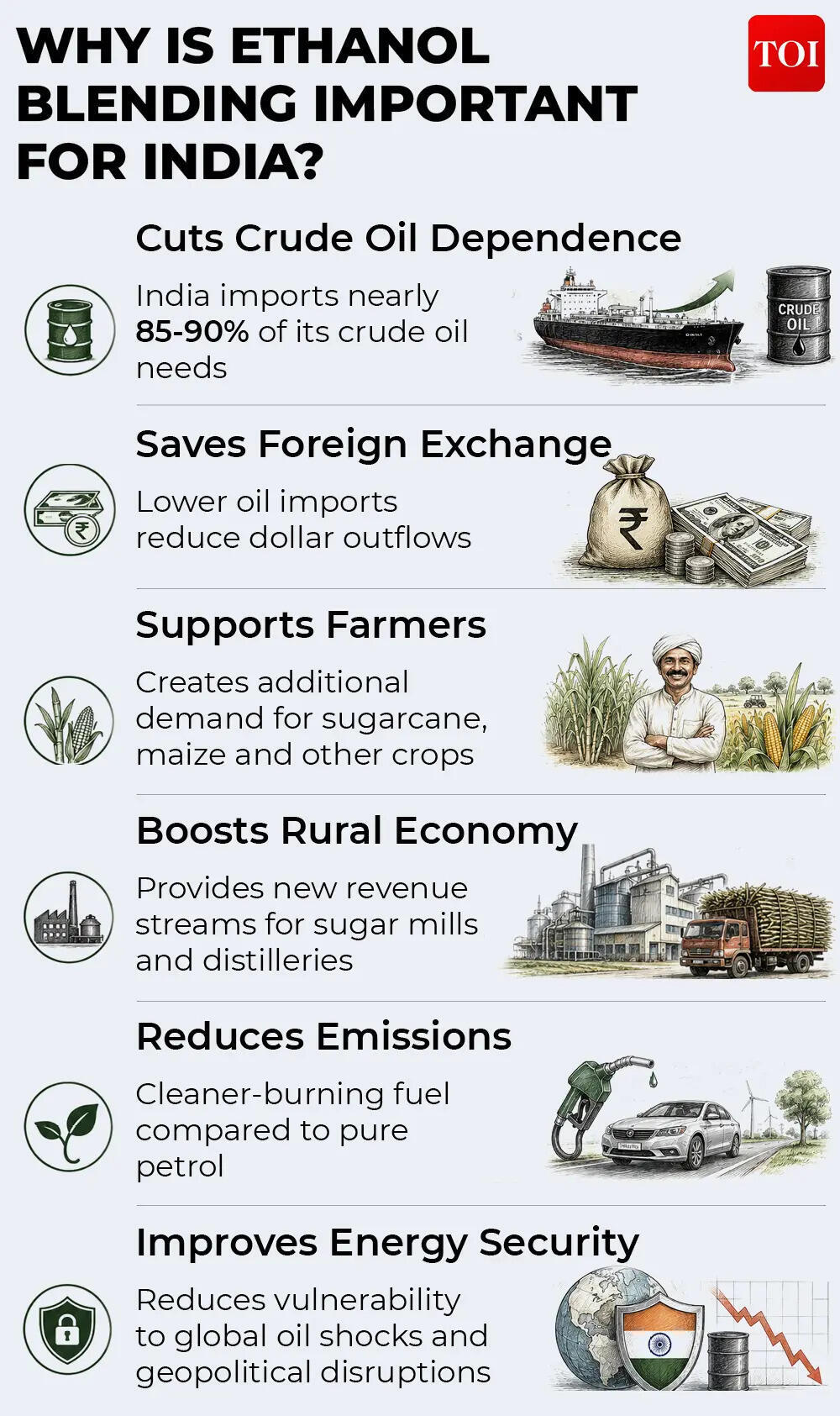
The Centre has strongly defended the E20 programme, saying ethanol blending has reduced India’s dependence on imported crude oil, saved foreign exchange and strengthened the country’s energy security. It also notes that India achieved 20% ethanol blending five years ahead of its original 2030 target.Rejecting claims that India is an outlier, the government says the country is following a global trend towards higher ethanol blending.It has pointed to the United States, where E10 is the standard petrol blend and E15 is being rolled out more widely, with millions of flex-fuel vehicles capable of running on blends of up to E85.Brazil, considered a global leader in ethanol adoption, mandates E27 as its standard petrol blend and is moving towards increasing it to around 35%. More than 80% of new vehicles sold there are flex-fuel models capable of running on E27, E30 or even pure hydrous ethanol.The government has also cited Japan’s phased introduction of E10, along with ethanol blending programmes in Canada, Thailand and several European countries, arguing that blending ethanol into petrol is part of a broader global shift towards cleaner transport fuels.The Centre maintains that E20 is backed by scientific studies and says any move beyond 20% ethanol blending will be preceded by further research and consultations with stakeholders. While the government sees the programme as a long-term step towards energy security, the current debate has shifted to whether its nationwide rollout fully reflected the phased approach envisioned in the 2021 NITI Aayog roadmap.