


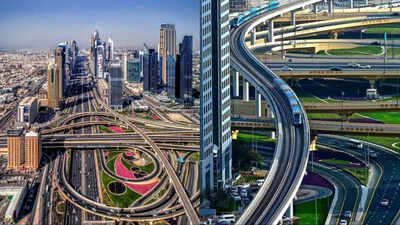
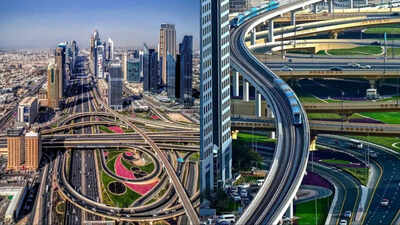
Dubai, one of the fastest-growing urban centres in the world, is taking ambitious and multi-layered steps to tackle chronic traffic congestion and future mobility challenges as the city’s population and vehicle numbers rise. Recently, the Roads and Transport Authority (RTA) rolled out a set of strategic plans and ongoing infrastructure upgrades aimed at reducing travel times, improving safety and supporting Dubai’s vision of a smart, sustainable transport ecosystem.Here’s what residents, commuters and watchers of Gulf urban development need to know.
Why traffic congestion matters in Dubai
Dubai’s rapid urban expansion and economic diversification have driven a steady increase in vehicles on the road, roughly 10% annually, according to RTA officials. This growth puts pressure on key roadways during peak commuting hours, especially in residential-to-business corridors, around schools, and along major arteries like Sheikh Zayed Road and Ras Al Khor Road.Traffic congestion is not just a nuisance; it affects daily life, productivity and emissions, prompting RTA to reshape mobility planning around both short-term relief and long-term innovation.
Smart tech: AI and predictive traffic management in Dubai
One of the most impactful elements of Dubai’s congestion-fighting playbook is the introduction of AI-powered traffic technologies.
- AI-Driven Traffic Signal Control – In 2025, the RTA began a major upgrade to its traffic signal system called UTC-UX Fusion, which uses artificial intelligence and digital twin technologies to dynamically optimise traffic lights in real time. According to RTA data, this upgrade has already boosted traffic flow across key intersections by up to 37%, with average travel times reduced by 10% to 20% in early trials. By 2026 completion, this system will span hundreds of major intersections, significantly reducing wait times and smoothing traffic waves across the road network.
- AI Traffic Lab and Predictive Modelling – Separate from signals, Dubai also launched an AI-powered traffic lab that uses real-time data and predictive algorithms to forecast congestion before it spikes, helping authorities manage events, construction zones and peak periods more proactively.
Together, these technologies reflect Dubai’s ambition to become a leader in intelligent transport systems, using data to manage mobility.
Major road projects and infrastructure upgrades in Dubai
New roads, exits and bridges in Dubai
Dubai’s RTA continues to expand and reconfigure infrastructure to improve traffic flow:
- A new exit at Bu Kadra Interchange significantly reduced rush-hour travel times, slicing peak travel time by over 50% at key connection points.
- A recently opened bridge on Al Qudra Road has increased traffic capacity by nearly 200% and cut waiting times by more than half on a critical east-west corridor, easing flow for almost 400,000 commuters daily.
- Upgrades to the Dubai Healthcare City exit to Sheikh Zayed Road aim to double vehicle throughput and dramatically ease congestion in one of the city’s busiest zones.
Traffic enhancements across 50+ locations
RTA also completed a broad program of traffic improvements at 50+ spots around Dubai in 2024 and beyond, including lane expansions, new entries/exits and roundabout reconfigurations, some reducing travel times by up to 60%. These improvements, especially around major residential and commercial intersections, directly support smoother peak-hour flows and broader system resilience.
School-focused traffic solutions in Dubai
Traffic congestion around schools is a perennial challenge, especially during morning drop-off and afternoon pick-ups.
- School Zone Traffic Upgrades: RTA completed traffic works in school zones affecting multiple areas, expanding parking capacity, reconfiguring entrances/exits, and installing enhanced safety features, leading to 25 %–40 % reductions in congestion near educational institutions.
- School Bus Pooling Pilot: Looking further ahead, RTA will pilot a school transport pooling initiative in 2026, partnering with private operators to reduce the number of private vehicles on the road during peak times, easing congestion and offering safer, efficient alternatives for student travel.
This is part of a broader push toward shared and multi-modal mobility, reducing pressure on the road network while encouraging sustainable travel habits.
Next-gen mobility: Pods, air taxis and underground transit in Dubai
While infrastructure upgrades tackle today’s congestion, Dubai is also pushing toward futuristic mobility solutions that promise transformative impacts on how people move in the city.
- Driverless Vehicles and Pods: Recent announcements show that autonomous transit routes, including driverless pods linking metro stations to key destinations, are being unveiled as part of Dubai’s 2026 mobility ecosystem. Additionally, Dubai has launched operations of driverless RT6 taxi vehicles, a major milestone in its adoption of autonomous public transport technologies, enhancing both efficiency and safety.
- Air Taxi Services: Dubai’s Air Taxi programme, which has already reached about 80% completion according to RTA officials, aims to introduce urban vertical flight mobility as a future option for commuters, bypassing road congestion entirely.
- Dubai Loop Underground Network: Perhaps the most ambitious of all is the Dubai Loop project, a high-speed underground transportation network being built in collaboration with The Boring Company. The first phase, which began construction in early 2026, covers a 6-kilometre section of a planned 24-kilometre system that could transform urban travel and significantly relieve surface road congestion.
This subterranean mobility solution could slash travel times and ease demand across major corridors. It is a radical innovation for the region’s transport landscape.
Dubai’s multi-modal, sustainable transport and e-hail integration
Dubai’s congestion strategy isn’t limited to cars and roads; it includes multi-modal integration with public transit and e-mobility.
- E-Hail and Shared Mobility: RTA’s e-hail strategy has seen significant growth, reducing the number of private vehicles on the road by promoting ride-hailing platforms during peak hours. A local analysis showed that this shift reduced daily vehicle numbers and carbon emissions while improving peak-period traffic flow.
- Encouraging Mode Shift: By strengthening links between metro, tram, bus, pods and e-hailing, Dubai is encouraging commuters to choose alternatives to private cars, a key step in reducing congestion over the long term.
For commuters, this means faster peak travel times because of infrastructure expansion and advanced traffic signal control, reduced school congestion through dedicated measures and pooling pilots, better flow around critical corridors like Healthcare City and Al Qudra Road, more efficient intersection control with AI and predictive analytics and fewer private vehicles via shared mobility and e-hailing uptake. Next-gen transit solutions like driverless pods, air taxis and underground networks are being rolled out gradually to reshape urban mobility entirely.Dubai’s traffic strategies reflect a broader ambition to build a human-centred mobility ecosystem, one that integrates, technology, sustainability and quality of life goals, alongside economic growth and global competitiveness. The focus on smart infrastructure, shared mobility and futuristic transport innovations positions the emirate as a global leader in urban mobility planningFor commuters, residents, investors and city planners alike, the RTA’s multi-pronged strategy offers hope that the gridlock of the past can give way to a more efficient, safer and future-ready transportation reality.