


We come across a common perception from people standing in front of a painting that’s just one line, maybe a smear of blue across white: It gets misjudged. People who are not art connoisseurs often take simple as insufficient and tend to forget the years or decades of inspiration that goes behind the single line or outline. Even without any crowded details to admire and no technical trick to marvel at, just space, a little colour, mean something so profound that it’s worth a fortune, and not only in terms of money, but psychologically and emotionally.But when peered carefully and for a bit longer, we might notice that something changes and the eye keeps returning to it. There’s no obvious reason why, but that is it’s actual beauty.We’ve grown up believing that hard work should look ‘hard’. Sweat has to show. A cluttered canvas feels like it deserves it all, a bare one feels like a shortcut, maybe even a con.But looking from an artist’s point of view, they will tell you it’s almost the opposite. Getting to “simple” is usually the hardest part, the thing that comes after years of getting it wrong, throwing things out, and slowly figuring out what a painting doesn’t need anymore.

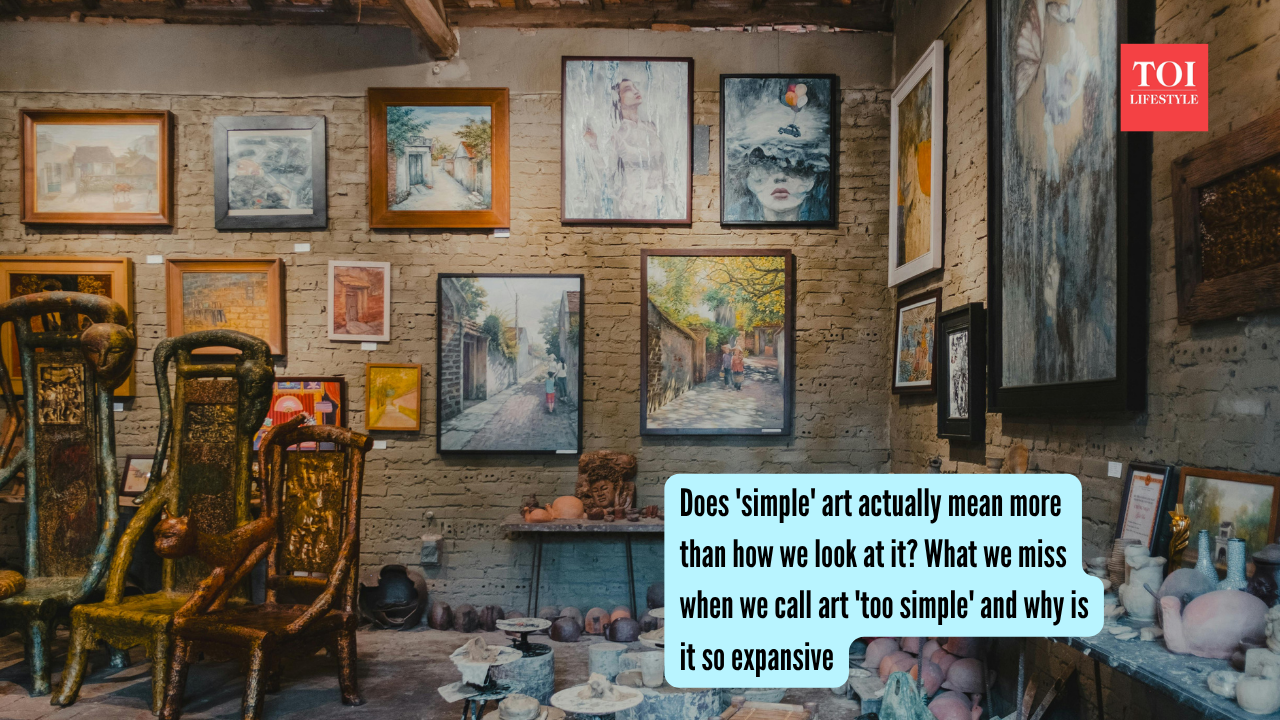
Representative Image (Photo: Canva)
So, what makes ‘simple’ art expensive?
We sat down with three artists, each working in a very different world of Indian art, and asked them to explain that one blank space we keep underestimating. What they said stuck with us longer than we expected.
It is the culmination of many years of experience and emotions
But interestingly, the confusion always comes from the same perspective, as we assume that the more crowded and detailed a work is, the more it should cost. Simplicity, by that logic, feels like a shortcut.On the contrary, the artists who actually make this work see it very differently. For contemporary artist Abhay Sehgal, who creates art based on psychology, Indian culture, and ideas from around the world, the price isn’t attached to the object at all, but to the person behind it, he said to the Times of India, “It’s the artist’s life that you are capturing in a frame, and it’s not simply an artwork”. According to Sehgal, what looks effortless is really the residue of everything the artist lived through to arrive there, “There are a lot of emotions involved than just brushstrokes.” The decision to strip a canvas down to something quiet, he means choosing simplicity, is the hard part itself, and it is meaningful because all the emotions and years of experience finally come together in a single, simple stroke.
This art is not simple, it is decades of imagination and hard work
Mumbai-based graffiti artist Zake, one of India’s pioneering street artists who is known for painting plain city walls into powerful art about identity and rebellion, said to TOI, “You aren’t paying for the five minutes it took to draw that single line; you are paying for the fifteen years it took to learn exactly where to place it”.According to Zake, the difference in perspective is believing that visible effort means more skill. But real mastery, he explains, is actually the opposite, “True mastery isn’t about how much noise you can add to a canvas, it’s about how much you can strip away until only the absolute, raw truth remains.”
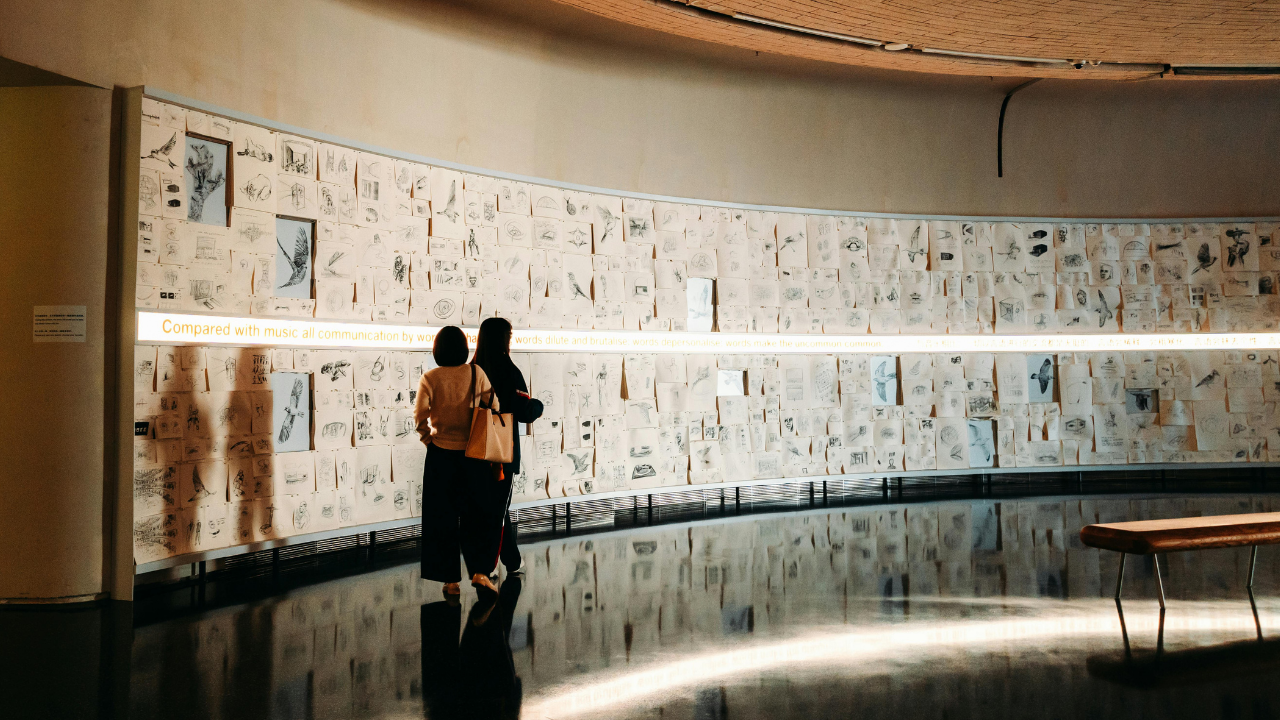
Representative Image
We have been wired to see more details and lines in art to call it beautiful
That discomfort we feel in front of a sparse canvas may say more about us than about the art. Talking to TOI, Rajendra Kumar Rawat, aka Stanlee, an Indore-based graffiti and spray artist trying to change urban visual culture through murals and digital design said, “We live in a world conditioned to value complexity, so when art looks ‘simple,’ it challenges us and makes us uncomfortable”.Minute detailing in the work shows us the hours, but minimalist work hands the effort back to us, asking us to slow down and feel something in the silence. And that simplicity, he points out, is something of an illusion, “It looks simple only because the artist did the heavy lifting of simplifying the universe for you.”
So, have we been measuring the wrong metrics so far?
Put the three perspectives together, and the real answer comes into focus. Expensive “simple” art confuses us because we’re measuring the wrong thing. We see five minutes and a single stroke, but we overlook the years of practice, the failed attempts, and the emotional weight that taught the artist what to leave out.While today we are wired to admire complexity because it shows its work. Simplicity hides it, because the labour happened long before the brush touched the canvas, in silence, while letting the rest go.The next time a minimalist piece makes you rethink its price, it’s worth changing the perspective from counting just the lines.So, you’re not paying for what’s on the canvas. You’re paying for everything the artist had to understand before they could leave so much of it off.