


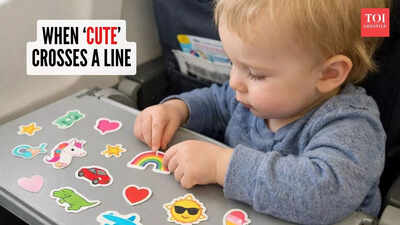
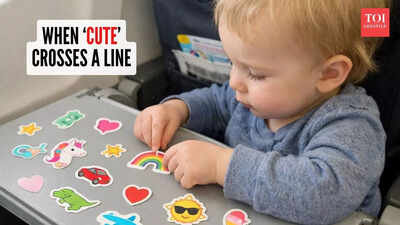
A Reddit post from an Indian aviation forum showed a child pasting emoji stickers on an IndiGo aircraft’s seat tray. The caption called it “the kind of vandalisation I don’t mind.” What followed was not gentle agreement. The comments exploded with anger, concern, sarcasm, and a few soft voices trying to slow the debate down. Some saw harmless fun. Others saw the first step toward teaching a child that public property has no rules.This moment matters because it shows how sharply parenting choices get judged in public spaces. More importantly, it shows what children learn when adults disagree loudly.
Why many people didn’t find it “cute”
A large section of commenters reacted with discomfort and even rage. Their concern was not about stickers alone. It was about habits being formed early. One comment said, “This is what teaches a child that it is ok to deface public property. Much rather nip this habit in the bud.” Another warned, “Today this, tomorrow vandalism with pen or worse.”For these voices, the fear was long-term thinking. Public places already suffer from poor civic behaviour. They saw this act as a symbol of the “chalta hai” attitude many Indians complain about but still practice. To them, stopping a child early felt like responsibility, not cruelty.
When parenting gets judged in public
Some comments went beyond concern and turned harsh. One user wrote, “Typical Indian parent and their entitlement.” Another said, “Bad parenting 101.” These reactions show how quickly parenting becomes public property.In shared spaces like flights, malls, and parks, people expect invisible rules to be followed. When a child breaks those rules, parents are judged as careless or entitled. There is little room for context. No one asks if the parent planned to clean it later. The moment freezes, and the label sticks.
The quieter voices asking for balance
Not everyone believed strictness was the only answer. One reply said, “If it causes harm to someone then it’s wrong.” Another added that expecting parents to control children perfectly at all times can slide into unrealistic standards.These comments did not defend vandalism. They questioned the idea that every mistake defines a child’s future. Children explore with hands, colours, and objects. The real lesson lies in what adults do next, not only in stopping the act.
What children actually learn in moments like this
Children do not remember online debates. They remember reactions. If an adult laughs and calls it cute, the child learns that public space has no boundaries. If an adult explodes with shame or fear, the child learns that mistakes bring humiliation.The most useful lesson sits in between. A calm explanation works better than anger or applause. Saying, “This is not ours, so we don’t stick things here,” teaches ownership and respect at once. It treats the child as capable of understanding, not as a problem to silence.
What parents can take away from this debate
This incident is not about stickers. It is about intention, response, and repetition. A few thoughtful points emerge from the chaos:
- Public spaces are classrooms. Children learn civic sense by watching adult behaviour more than hearing lectures.
- Correction does not need drama. Quiet removal and explanation often leave a deeper mark than public scolding.
- Calling behaviour “cute” sends stronger signals than parents realise. Words frame memory.
- Not every mistake predicts the future, but repeated permission shapes habits.
Disclaimer: This article is based on a public Reddit discussion and reflects opinions shared by users. It does not intend to label any individual parent or child. The purpose is to encourage thoughtful reflection on parenting choices in public spaces.