


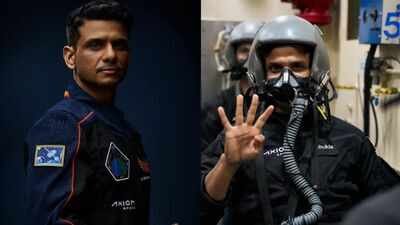
During a special segment on CNN-News18, Group Captain Shubhanshu Shukla, India’s trailblazing astronaut who flew to the International Space Station on the Axiom-4 mission, sat down to answer questions from young students across the country. Most questions were about rockets, science, and the mechanics of space travel. And then a Class 8 student named Vedansh asked something entirely different. “What does space teach you about life that you could never learn on Earth?” The room went quiet. And Shubhanshu Shukla, visibly moved by the depth of the question, smiled and leaned forward. What followed was one of the most beautiful answers any astronaut has ever given, not about science, not about technology, not about the cosmos, but about how to be a human being.
‘Our own size in this entire scheme of things is actually very, very small’
28 Jul 2026 | 16:22
How do you teach children about money and financial responsibility?
Shubhanshu began by acknowledging that space changes everything about the way you see ordinary life. “The everyday experience that we have on Earth changes significantly when you are part of such a mission,” he said. “It does teach you a lot of things.” And then he took Vedansh, and everyone listening, on a journey of perspective that no classroom, no textbook, and no teacher on Earth could have provided. When you look at Earth from the outside, he said, it appears vast. Enormous. Overwhelming in its scale. But then you begin to think about where Earth actually sits in the universe.Earth is not the biggest planet in our solar system. Jupiter is. Our solar system is not the biggest in our galaxy. Our galaxy is not the biggest in its cluster. Our cluster is not the biggest in the supercluster. And on and on, the scale of the universe expanding outward in every direction, almost beyond the capacity of the human mind to grasp it. “Our own size in this entire scheme of things,” Shubhanshu said quietly, “is actually very, very small. You actually cannot make out who is where or who you are.” He paused. And then he said the line that will stay with every parent and child who hears it. “So the things which we get upset about, I think it is not necessarily.”
The advice that came from 400 kilometres above the earth
After offering Vedansh the universe’s most powerful lesson in perspective, Shubhanshu Shukla gave him something even simpler to hold onto. “Be good. Be kind. Enjoy your life. Help others. That is all you can do. And be a better person.” Six instructions. No jargon. No complexity. No hierarchy of achievement or ambition. Just the quiet wisdom of a man who has seen the Earth from the outside, who has watched the entire planet turn slowly in the darkness of space, and returned with the understanding that kindness is not a small thing. It may be the only thing that truly matters.
The surprise that nobody expected: Satellites everywhere

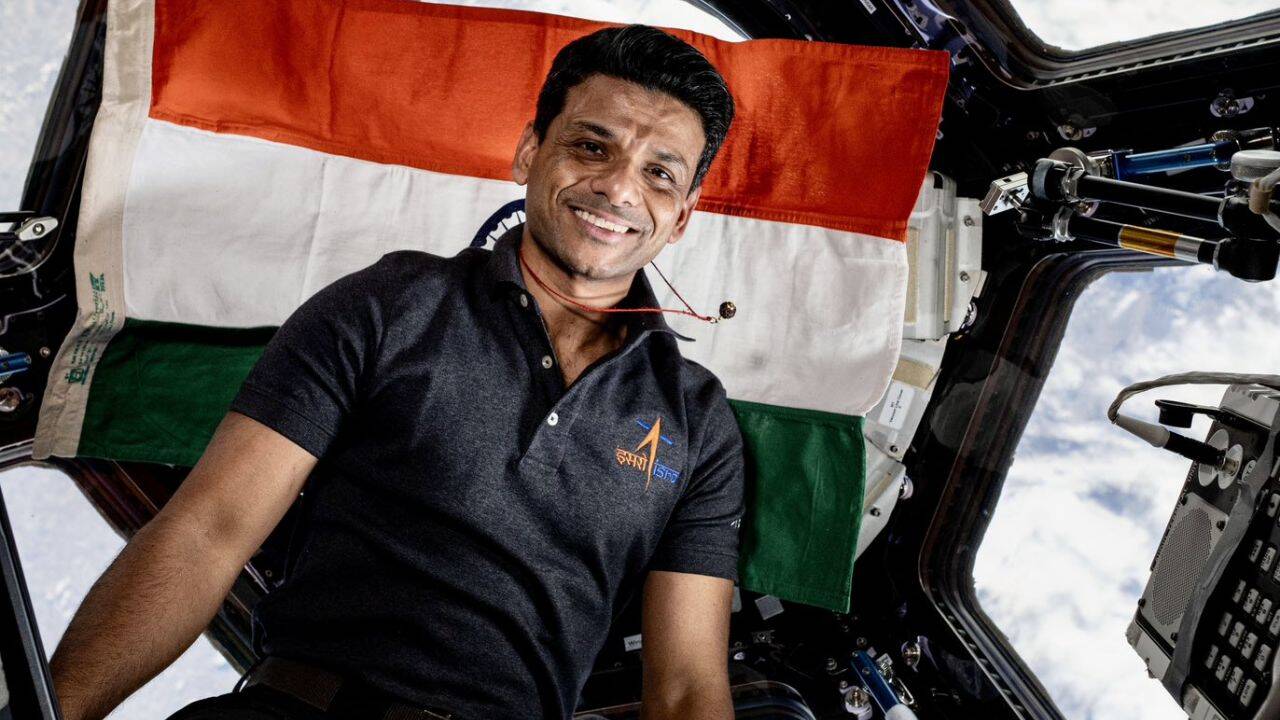
Shubhanshu also shared something that genuinely surprised him about his experience in space, something that was not in any training manual or pre-mission briefing. He had expected to be dazzled by Earth. And he was. But what he did not expect was to look out into space and see it crowded with satellites. Hundreds of them. Orbiting. Blinking. Quietly circling the planet in enormous numbers. “I was excited to see Earth from space,” he said. “But I was surprised to see how many satellites are already up there.” It is a reminder that even in the vastness of space, humanity’s footprint is visible. That the universe we imagined as infinite and empty is, at least in the layers closest to home, already shared, and already filling up.
What every Indian child can take from this
Shubhanshu Shukla’s answer to Vedansh was not a science lesson. It was a life lesson, delivered from the perspective of someone who has literally seen the world from the outside. And for Indian children who are growing up in a world that measures them constantly by marks, by ranks, by competition, by comparison, his words carry something important. Perspective is the greatest gift you can give yourself. The exam you are stressed about, the argument with a friend, the failure that feels enormous, from 400 kilometres above the Earth, none of it can even be seen.Kindness is not a consolation prize. It is not something you do when you are not good enough at anything else. It is, according to a man who has been to space and back, the most important thing a person can choose to be. Curiosity changes everything. Vedansh was a Class 8 student who asked one question, one honest, curious, thoughtful question, and received an answer that will be remembered and shared far beyond that studio. That is what curiosity does. It opens doors that no amount of cramming ever could. Your problems are real, but they are not as large as they feel. The universe is incomprehensibly vast. You are one person on one planet in one solar system in one galaxy in one cluster. That is not a reason to feel small. It is a reason to feel free.
The answer that came back to Earth
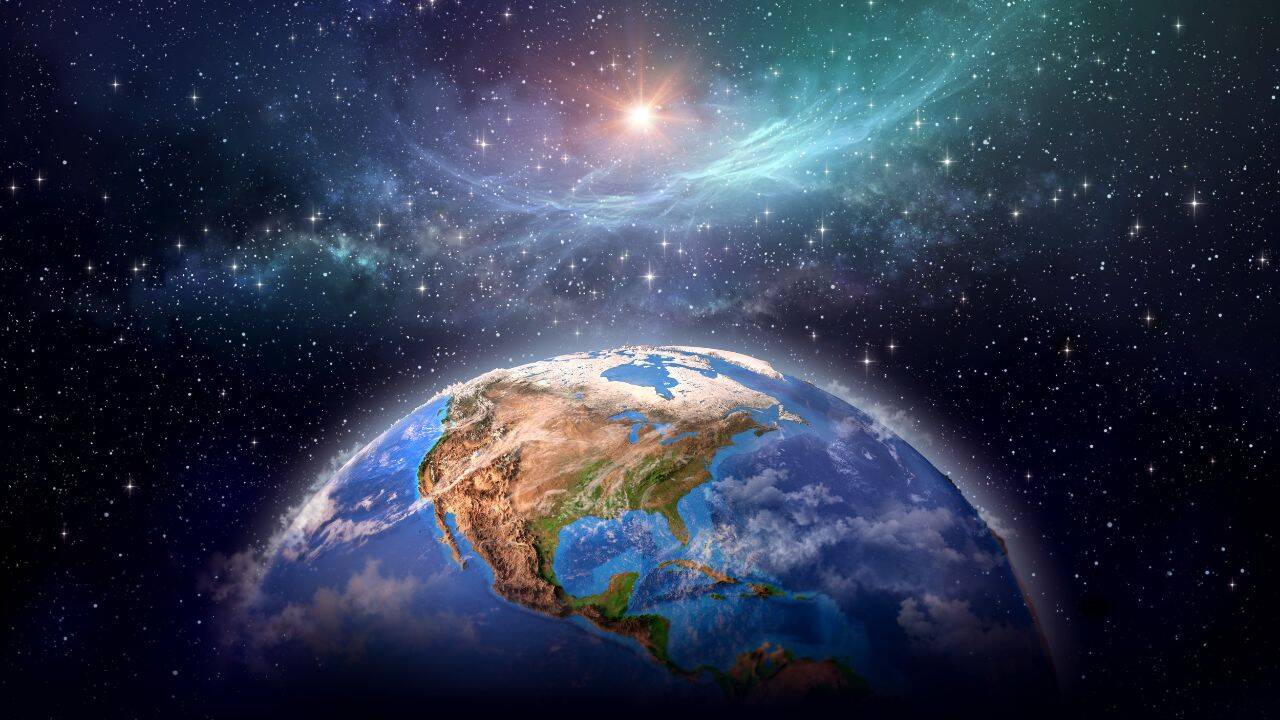
Vedansh asked what space teaches you about life. Shubhanshu Shukla answered from 400 kilometres above the ground, where the noise of comparison and competition and everyday worry cannot reach, and where the only thing that remains clear, in all directions, is how extraordinary it is to be alive on this particular planet at all. Be good. Be kind. Help others. Enjoy your life. From space, that is all that is visible. And perhaps that is all that was ever truly important.