


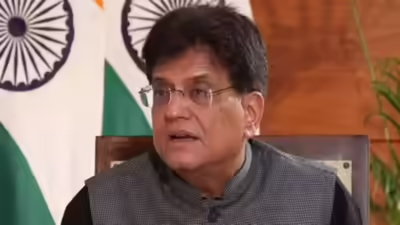
India may import aircraft, engines and spare parts worth about $100 billion from the US under the interim trade pact, a move that could help boost tourism and bring down airfares, Commerce and Industry Minister Piyush Goyal said on Friday. According to a joint statement issued by both sides on Saturday on the framework for the first phase of the bilateral trade agreement, India has expressed its intention to purchase $500 billion of US energy products, aircraft and aircraft parts, precious metals, technology products and coking coal over the next five years, PTI reported. He said the import of aeroplanes could improve connectivity and lower travel costs. “…with the US, we are hopeful to get more aeroplanes into the country, which would be good for our tourism, which would be good for our mobility and hopefully bring down the airfares for all of us…It should open up remote area connectivity into the country,” he said here at ET Now Global Business Summit. “Very easily I can see before my eyes, just the aviation sector, meeting probably a hundred billion dollars of imports – Boeing planes, aircraft engines and spare parts in the next five years,” he said. Goyal also said India needs coking coal to support expansion in steel production and the US is a key supplier of the commodity. The Indian steel sector is targeting to increase production to about 300 million tonne from the current 140 million tonne. He said this would double the requirement of coking coal. “We need nothing less than $30 billion of coking coal. Currently two countries mainly supply coking coal. If there’s more competition and if more countries come into play and provide us our needs, will that not give us better quality, better pricing?” Goyal said. He added that India’s trade pacts with the EU and US open access to a combined market of nearly $55-60 trillion. Both the EU and US have high per capita income, he said adding “does anybody in this room think that they can compete with India on any product”. The minister added that India has fully protected the interests of farmers.