


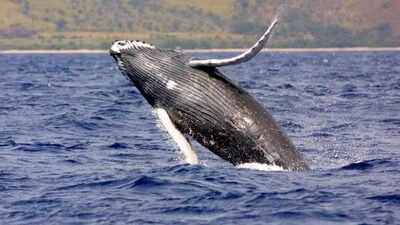
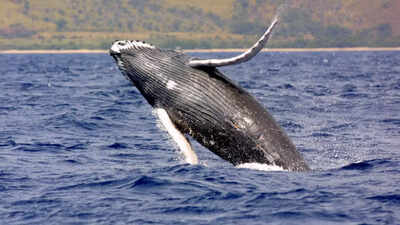
Humpback whales surface, leap out of the water, slap the sea with their massive fins and tails. And its seems very similar to whales, but humpbacks have something extra. Up to 60 feet long, weighing as much as 40 tons. Some can live close to 90 years. They travel thousands of miles every year from tropical breeding grounds to cold, nutrient-rich feeding areas. But, humpback conservation threats from humans add a risk. Fishing nets, busy shipping lanes, and even ocean noise. Still, these whales persist. They are playful, dramatic, and somehow enduring. Humpback whales are more than just giant mammals. They are performers, athletes, and symbols of resilience. Each breach, tail slap, or bubble-net feeding session is a reminder of the ocean’s wonder.
Humpback whale patterns and feeding habits
They are mostly black in colour but many have white patches on bellies, fins, and tails. Southern Hemisphere whales often show more white than northern ones. Each tail is unique. Scientists spot whales by tail shape, scars, and colours. Like fingerprints. This helps track behaviour, movement, and health over decades. Some carry scars from fights or entanglements. They eat krill and small fish. Filter huge amounts of water through baleen plates. Bubble-net feeding is clever. A group swims in circles, blows bubbles to trap fish, then lunges up to catch them. It looks like play. Like a choreographed move. But it works.
Humpback whale migration and reproduction
Humpbacks live in all oceans. They travel long distances. Some go 5,000 miles from summer feeding spots to winter breeding areas. North Pacific whales swim from Alaska to Hawaii in around 28 days. North Atlantic whales move from the Gulf of Maine to the West Indies or Cape Verde. Southern Hemisphere whales feed in Antarctic waters. Calving happens in shallow, warm waters. Adults dive deep for food. Exhausting trips. But they do it every year. It seems instinctive.Whales mature between 4 and 10 years. Females usually have one calf every 2–3 years. Some calve yearly. Gestation about 11 months. Calves 13–16 feet long. Stay near mothers up to a year. Mothers protect them, swimming close, nudging them with fins. Bonds are temporary but strong.
Human impacts and threats to humpback whales
Humans make life risky. Vessel strikes common in busy lanes. Can be fatal. Fishing gear traps whales. Injuries, fatigue, sometimes death. Climate change alters water temps and food. Migration, feeding patterns shift. Whale-watching boats can stress whales, though they seem to tolerate them. Noise underwater messes with communication. All this adds up. Even strong humpbacks are vulnerable.Before 1985, commercial whaling nearly wiped them out. Populations dropped 95% in some places. The International Whaling Commission’s ban helped. Scientists track whales with photos, maps, and habitat protections. Management reduces entanglement, avoids collisions, and protects feeding areas. Humpbacks are performers, athletes, survivors. Each splash, breach, and feeding display is a reminder. Protect them, and you protect the oceans too.